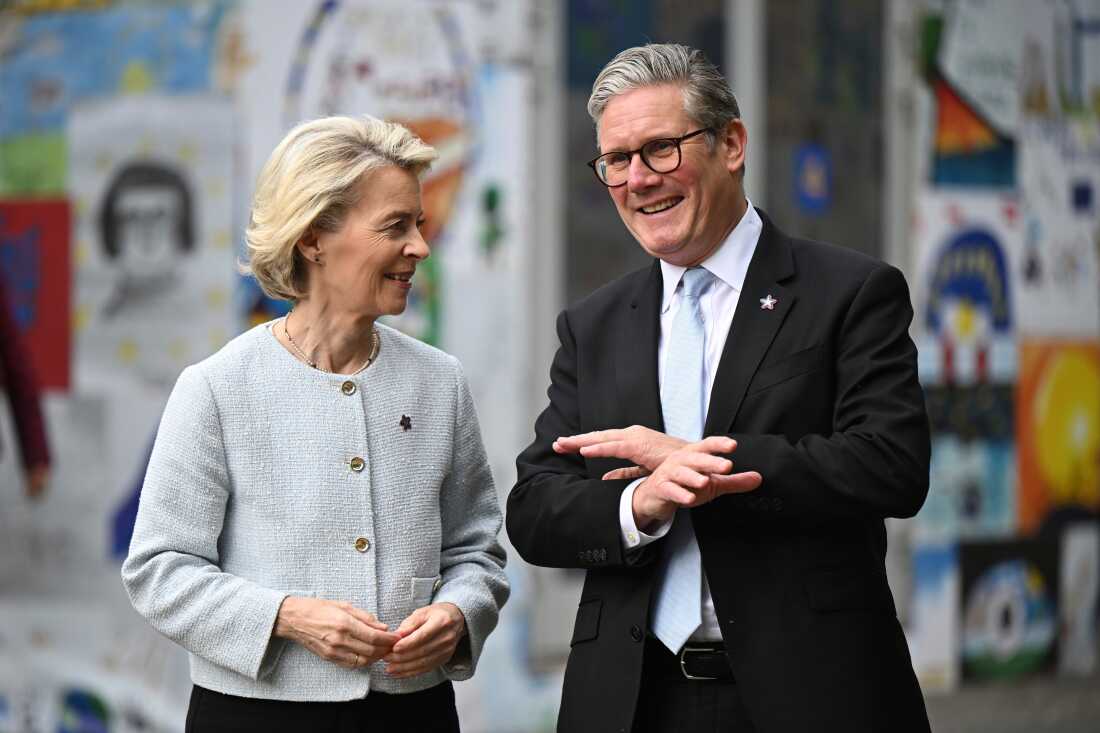
LONDON (Realist English). Prime Minister Keir Starmer’s resignation has triggered a double political crisis in the United Kingdom: the European Union has unilaterally postponed a key summit on post‑Brexit relations, while within the Labour Party a split is brewing over the “coronation” of Andy Burnham as the new prime minister.
EU Postpones Summit, Irritating London
On June 22, just hours after Starmer announced his resignation, European Council President António Costa said the EU–UK summit, scheduled for July 22, had been postponed indefinitely. The decision, taken without consulting the British side, irritated Starmer’s government. The summit date had been agreed only a week earlier on the sidelines of the G7 summit in France.
The London negotiating team had hoped to finalise an agreement that could include a significant reduction in tuition fees for EU students at British universities. However, finalising the Brexit “reset” negotiations now passes to Starmer’s successor — in effect, to Andy Burnham.
Costa expressed hope that Starmer’s successor “can continue this good path of resetting relations.” At the same time, a senior EU official said that if Burnham takes an ambitious approach, talks could even “accelerate.”
Labour MPs Divided on Leadership
Dramatic developments followed as Andy Burnham was sworn in as MP for Makerfield on June 22. Burnham quickly became the favourite in the leadership race, with former Health Secretary Wes Streeting, who could have been his main rival, immediately declaring his support. Cabinet minister Nick Thomas‑Symonds also backed Burnham, saying he had the “track record” and was “best placed to beat Reform at the next general election.”
However, at least two senior Labour MPs are considering running to avoid a “coronation” of Burnham without a formal contest:
- Darren Jones, Chief Secretary to the Treasury, has not ruled out a bid. Allies of Jones, however, say he “just wants to learn more about Burnham’s platform, especially on economic policy.”
- Al Carns, a former armed forces minister, said he was considering running.
Under Labour Party rules, candidates need the support of at least 81 MPs. With more than 200 MPs reportedly backing Burnham, the chances of a successful challenge are considered unlikely.
Reaction from Political Parties
Reform UK leader Nigel Farage called for an early general election, saying Burnham would not have a “mandate” if he became prime minister without an election. Conservative leader Kemi Badenoch called Starmer a “terrible prime minister” and said the Labour Party had “held him hostage” and prevented him from taking tough decisions.
Liberal Democrat leader Sir Ed Davey said Britons were “tired of the endless prime ministerial merry‑go‑round.”
Political uncertainty is compounded by the approaching 10th anniversary of the Brexit referendum (June 23, 2016). Burnham, known for his pro‑European stance, had previously said he would like to see the UK in the EU “in his lifetime,” but during the Makerfield campaign he committed not to revisit Brexit arguments in the current parliament.
As one EU official stressed, Burnham is expected to show “ambition and determination” in the negotiations.