ABERDEEN PROVING GROUND (Realist English). The US Army has officially moved the TITAN (Tactical Intelligence Targeting Access Node) programme from prototyping to serial production. On August 31, the Pentagon awarded two contract orders totalling $192 million to Palantir Technologies and Anduril Industries.
Under the agreements, Palantir will receive $127 million and becomes the programme’s prime contractor. Anduril will receive $65 million for developing and integrating the hardware systems. Eight production systems — four basic and four advanced — are to be delivered within 18 months.
From Prototype to Production: How TITAN Changes Intelligence Gathering
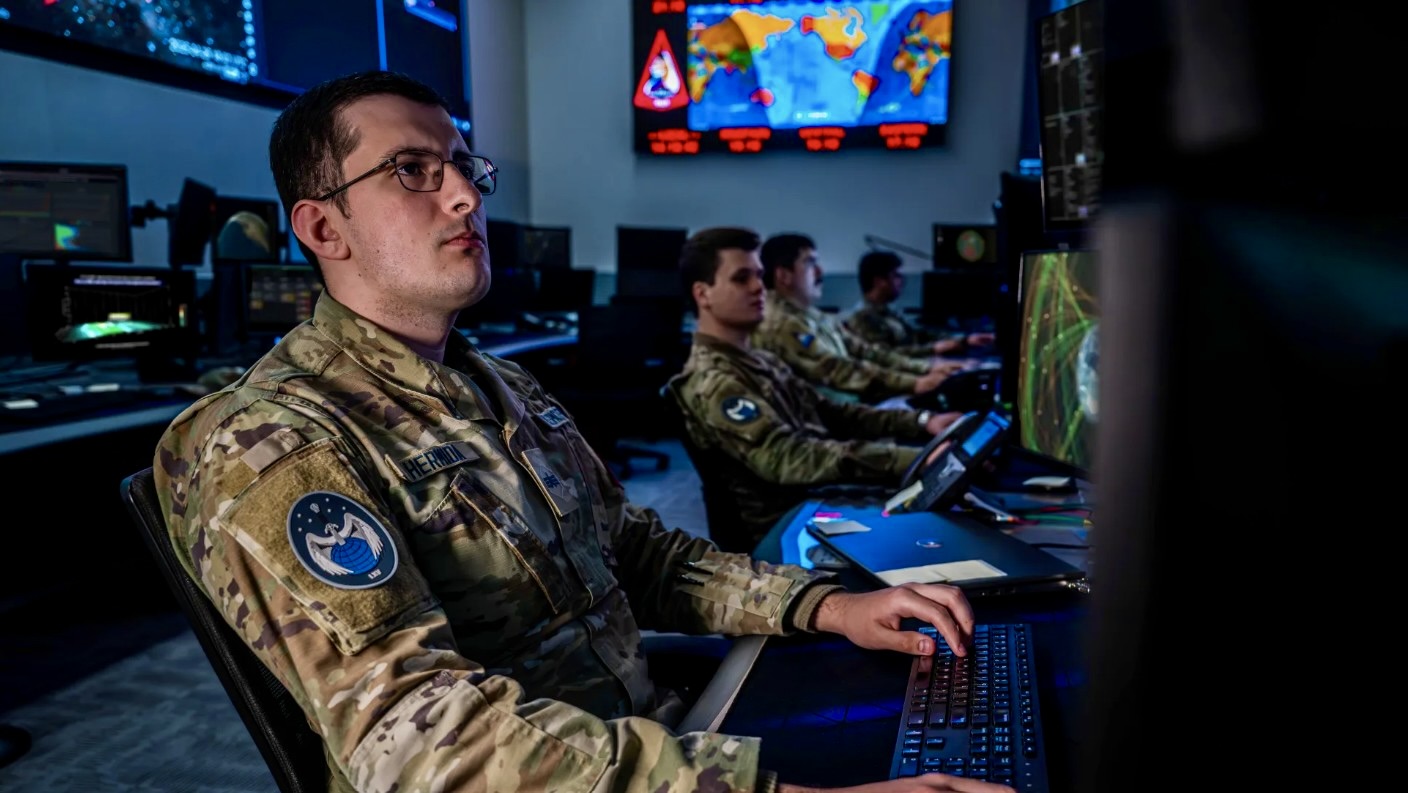
The TITAN programme is a mobile intelligence station equipped with artificial intelligence and machine learning. Its mission is to collect data from satellites, high‑altitude platforms, airborne and ground sensors, process it, and provide commanders with real‑time targeting information for precision weapons.
The system’s key advantage is reducing the time between target detection and engagement. As Colonel Jonathan Lipscomb, the programme manager for intelligence systems and analytics, stated, TITAN “significantly reduces sensor‑to‑shooter timelines through automated target selection, fusing a unified intelligence picture.”
| Parameter | Details |
| Total contract value | $192 million |
| Palantir | $127 million (prime contractor) |
| Anduril | $65 million (hardware) |
| Number of systems | 8 (4 Advanced + 4 Basic) |
| Delivery timeline | 18 months |
| Existing prototypes | 9 units in operational use |
| Additional orders | Expected in FY 2027 |
Source: US Army, Breaking Defense, Military Times
Two Variants: “Basic” for Mobility and “Advanced” for Capability
The programme provides for two variants of the station:
The “Basic” version is designed for division‑level use. It is mounted on the Joint Light Tactical Vehicle (JLTV) and Infantry Squad Vehicle‑Utility (ISV‑U) — light tactical vehicles that provide high mobility.
The “Advanced” version is a corps‑level asset for military intelligence brigades and multi‑domain operations units. It is mounted on heavier Family of Medium Tactical Vehicles (FMTV) trucks and offers greater computing power and bandwidth.
The systems are designed to be as stealthy as possible and protected from detection and engagement on the battlefield. The Army is also developing a “platform‑agnostic” version of TITAN that can be housed in a case and used off‑vehicle.
Contractor Roles: Who Is Responsible for What
Palantir Technologies serves as the prime contractor and is responsible for:
- Overall production and delivery management;
- Software that operates the station;
- Integration of technologies from subcontractors;
- Sustainment of existing prototypes in the field.
Anduril Industries is responsible for:
- Production of hardened, vehicle‑mountable systems;
- Integration of power and thermal management subsystems;
- Assembly and integration of operator modules and shelters;
- Manufacturing at Anduril’s facility in Costa Mesa, California.
The team also includes L3Harris Technologies, Sierra Nevada Corporation, Strategic Technology Consulting and World Wide Technology.
Four Years of Prototyping: How Soldier Feedback Shaped the Design
The TITAN programme has been in the prototyping phase since 2022. Prototypes have been tested in various climate conditions — from the Pacific region to Europe. Early tests in the Philippines revealed issues related to high humidity, which the Army, according to officials, addressed through more rigorous engineering design.
As Palantir USG President Akash Jain emphasised, the TITAN design “was shaped by the soldiers who used it, in the conditions in which they used it, and to the standards they set.”
Colonel Lipscomb noted: “These efforts are the result of soldier feedback that we received over four years of prototyping from units that used TITAN prototypes in various configurations across diverse operational environments.”
The Army will retain nine existing prototypes for operational use.
A “New Era” of Intelligence: AI on the Battlefield
TITAN’s transition to production marks a significant milestone in modernising US Army intelligence capabilities. Rather than relying on large fixed infrastructure vulnerable to detection and strikes, the system allows soldiers to receive and process intelligence in real time directly in the field.
As Colonel Lipscomb stated, TITAN “improves the speed of target identification and geolocation through multiple sensors.” The system is intended to enable soldiers to act on current information without needing to pass data through fixed command posts.
Betting on Speed and Autonomy
The Army’s decision to put TITAN into serial production confirms the Pentagon’s commitment to integrating artificial intelligence into combat systems. $192 million for eight stations is not just equipment procurement — it is an investment in a new philosophy of warfare, where information processing speed becomes the decisive factor.
Yet open questions remain. Can an integrated system, pulling data from dozens of sources, operate without failure under active electronic warfare conditions? How reliable will the “hardened” stations prove in actual combat, rather than on training ranges? And most importantly — will the reduction of “sensor‑to‑shooter” timelines accelerate decision‑making to the point where human control becomes a mere formality?
For now, the Army is getting its “digital TITAN,” while Palantir and Anduril secure record contracts. The future of battlefield intelligence is already taking shape — and it features algorithms, not humans, at the centre of decision‑making.