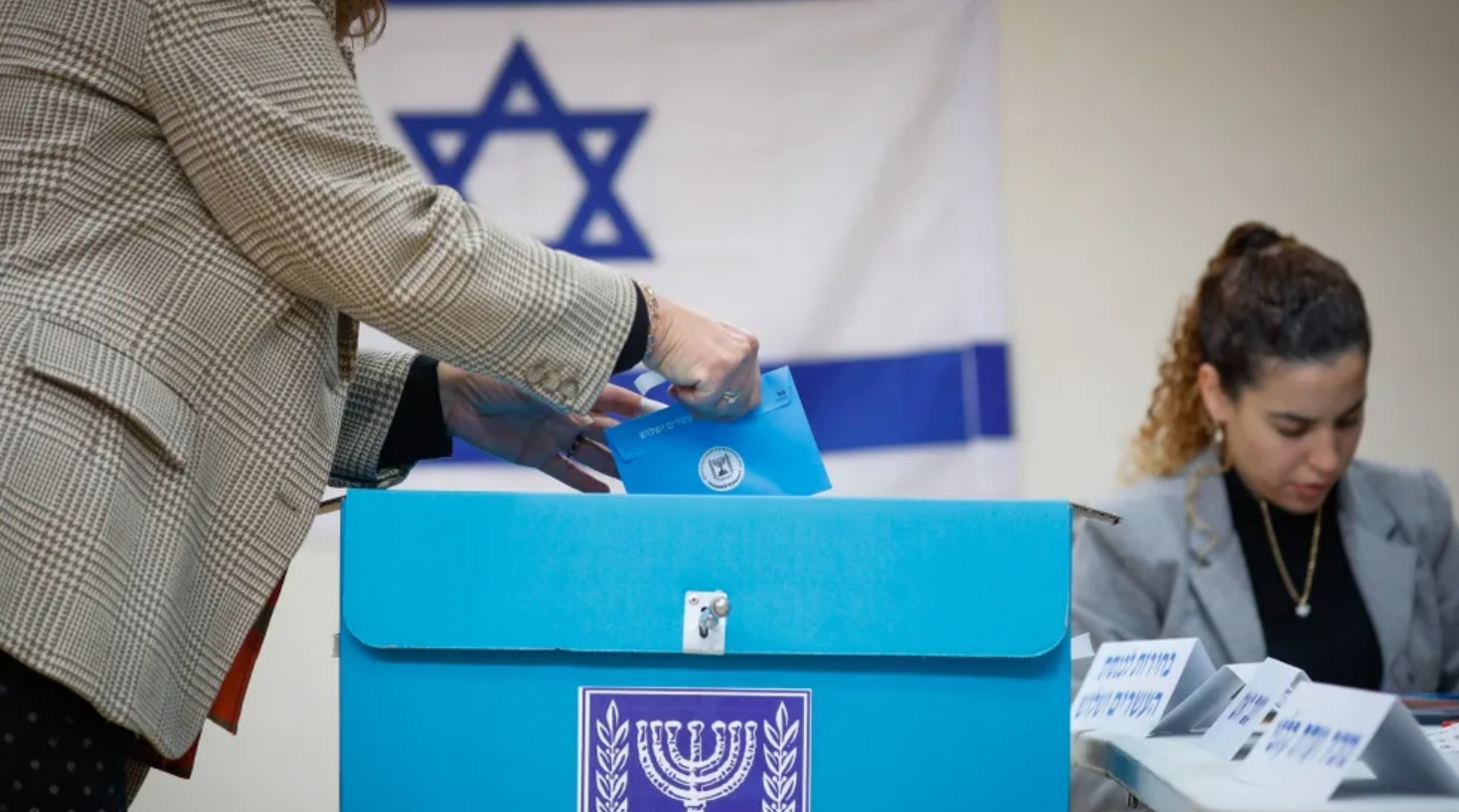
JERUSALEM (Realist English). At 7:00 local time, polling stations opened in Israel for elections to the 26th Knesset. These are the first parliamentary elections since the Hamas attack of October 7, 2023, which killed about 1,200 people and led to the capture of 251 hostages. The vote is seen as a referendum on the political future of Prime Minister Benjamin Netanyahu, who has been in power for a total of 19 years.
Turnout and procedure
About 7.3 million Israelis are eligible to vote; more than 12,000 polling stations are open and will operate until 22:00. The ballot features 37 parties, but according to polls only about 13 pass the 3.25% electoral threshold. According to survey data, turnout could be record-high: 74% of respondents said they intend to vote, whereas in 2022 turnout was 70%. Preliminary exit poll results will be announced immediately after polling stations close, but official results, including the count of “double envelopes” (votes from soldiers, diplomats, and hospital patients), will be published only on November 4.
Balance of power: no one has a majority
According to the latest polls from three leading television channels, the bloc of parties led by Gadi Eisenkot (“Yashar”) receives 52–56 mandates, while Netanyahu’s bloc (“Likud” and allies) gets about 50. Arab parties receive 14–16 seats. Thus, neither of the two main blocs reaches the threshold of 61 mandates needed to form a government in the 120-seat Knesset.
Eisenkot’s “Yashar,” a former IDF Chief of Staff whose son and two nephews were killed in Gaza, leads with 22–23 mandates. Netanyahu’s “Likud” comes second with 19–21 mandates. Naftali Bennett’s “B’Yachad” party receives 14–15 seats, Yair Golan’s “Democrats” — 8–10, Avigdor Lieberman’s “Yisrael Beiteinu” — 8. The far-right “Otzma Yehudit” party of Itamar Ben-Gvir receives 8 mandates, Bezalel Smotrich’s religious-Zionist party — 6–8. The ultra-Orthodox “Shas” and “United Torah Judaism” receive 7–8 seats each.
Key campaign issues
The central theme of the elections was Netanyahu’s responsibility for the October 7 failure. A Channel 12 poll showed that 65% of respondents place primary responsibility on the prime minister for the mistakes that led to the attack.
Netanyahu refused to acknowledge personal responsibility or establish an independent state commission of inquiry, instead betting on military achievements against Hamas, Hezbollah, and Iran. Families of the deceased hostages accused him of exploiting their deaths in the campaign.
The second issue is Iran’s nuclear program. Both Netanyahu and Eisenkot consider Iran an existential threat but differ on tactics: Netanyahu promises to “finish the job” and topple the regime in Tehran, while Eisenkot calls regime change unachievable by military means and proposes broader use of covert operations. Both oppose a Palestinian state and demand Hamas’s disarmament.
The third issue is the economic consequences of military policy. Netanyahu acknowledged concerns about possible banking sanctions, proposing blockchain technology as a workaround; the Bank of Israel rejected this proposal, and 109 economists and business leaders warned of the risk of “serious economic damage.”
Possible scenarios
Since neither bloc has a majority, the outcome depends on coalition negotiations. President Isaac Herzog, after the official results, will task the candidate with the best chance of securing the support of 61 lawmakers with forming a government.
If Eisenkot’s bloc can reach an agreement with Arab parties and part of the right, a change of power is possible. If Netanyahu manages to attract the far-right and ultra-Orthodox parties, he will retain the post. If negotiations reach a dead end, repeat elections or the creation of a “national unity government” at the president’s initiative are possible.
The 2026 elections are not just a power struggle between two politicians. This is a test of Israeli democracy’s ability to ensure a change of power after the most severe security failure in the country’s history. Even if Netanyahu loses, a fundamental shift in Israel’s foreign policy should not be expected: his rivals are no less hawkish toward Iran and Palestine.
The difference lies in style, degree of risk, and readiness for dialogue, not in the direction of policy. For the region, this means maintaining high tension regardless of the election outcome. For Netanyahu himself — either political survival or the end of a career that, longer than anyone else in Israel’s history, has shaped the country’s image.