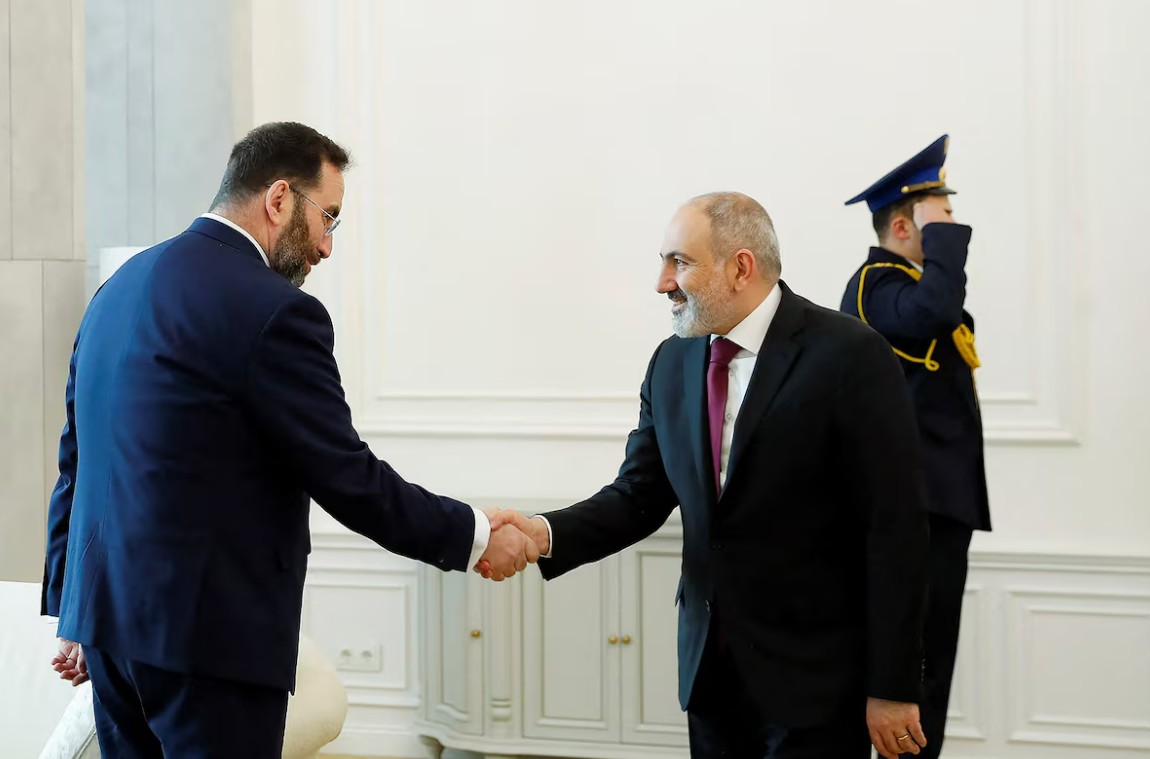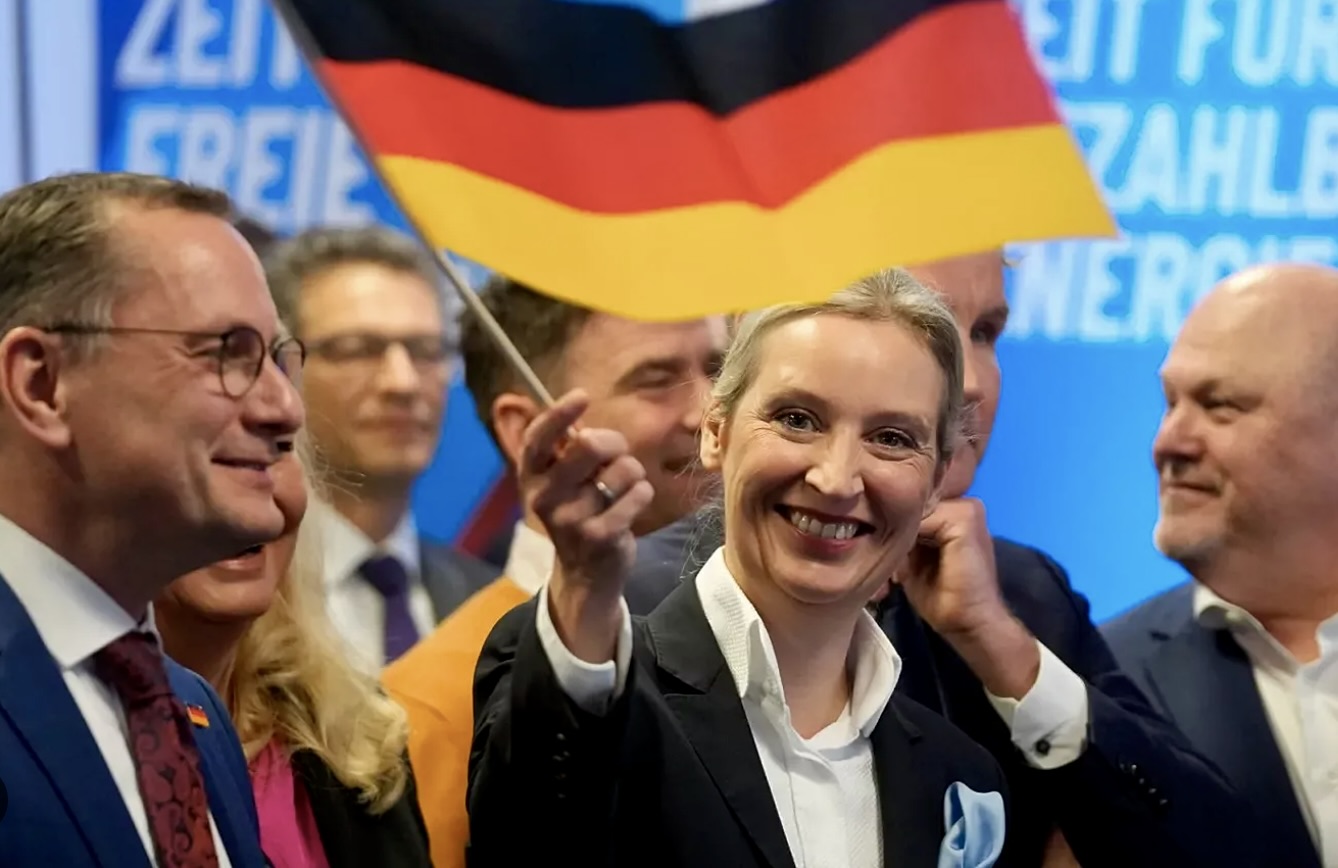
BERLIN (Realist English). Just days before the state elections in Saxony‑Anhalt, German Defence Minister Boris Pistorius (SPD) and Baden‑Württemberg’s Premier Cem Özdemir (Greens) issued an unprecedented joint appeal: the Constitutional Court should consider outlawing the most radical faction of the far‑right Alternative for Germany (AfD).
In a joint column for the Frankfurter Allgemeine Sonntagszeitung, the politicians called for “initiating a party ban procedure as soon as possible, focusing on the clearly völkisch (nationalist‑ethnic) state branches of the AfD in Thuringia, Saxony, Saxony‑Anhalt and Brandenburg.”
Who Is Demanding What and How
Boris Pistorius, one of Germany’s most popular politicians (SPD), and Cem Özdemir, the premier of Baden‑Württemberg (Greens), have put forward an initiative that runs counter to the positions of their own party leaders. Their demand is not for a complete ban of the AfD, but for a targeted strike against its most radical structures in eastern Germany.
| Initiator | Party | Position | Proposal |
| Boris Pistorius | SPD | Defence Minister | Ban of radical AfD state branches |
| Cem Özdemir | Greens | Premier of Baden‑Württemberg | Ban of radical AfD state branches |
The Argument: Why “Völkisch” Elements Should Not Be in Parliament
In their column, Pistorius and Özdemir draw a clear distinction between two currents within the AfD:
- The “German‑national” current. In the politicians’ view, this part of the party “may, under certain conditions, be compatible with the Basic Law” and should be fought politically in parliament and society.
- The “völkisch” (ethnic‑nationalist) current. This part, they say, “openly calls the foundations of the constitution into question and despises democracy.” To fight this ideology through political means alone, in their view, is “naïve,” because the AfD “will do everything in future to conceal the völkisch part of its party, to relativise or reinterpret the positions of its völkisch protagonists.”
The politicians insist that the procedure they propose is “legally possible, supported by evidence, and mandated by the constitution.” “We trust the Federal Constitutional Court to make the right decision independently and sovereignly,” they stated.
Elections and Party Divisions
The initiative comes just days before the state elections in Saxony‑Anhalt, where the AfD holds strong positions. This is no coincidence: it is precisely in the eastern states — Thuringia, Saxony, Saxony‑Anhalt and Brandenburg — that the radical wing of the party is most influential.
Earlier, in June 2026, a group of eight lawyers from the non‑governmental organisation “Society for Freedoms” prepared an opinion concluding that the AfD is an anti‑constitutional party. More than 1,000 lawyers supported the call for a ban on the AfD. Vice‑Chancellor Lars Klingbeil (SPD) has also recently spoken in favour of a ban procedure.
Procedural Barriers: Who Can Initiate a Ban
The call by Pistorius and Özdemir remains a political appeal. Under German law, only the Bundestag, Bundesrat, or the federal government may file an application for a party ban with the Federal Constitutional Court.
At present, none of these bodies has the necessary majority for such a step.
Opposition Reaction: “The AfD Must Be Defeated at the Ballot Box, Not Banned”
The initiative met with fierce opposition from the conservative CDU/CSU bloc.
- Alexander Dobrindt (CSU), Federal Interior Minister, stated: “The AfD must be defeated at the ballot box, not banned.”
- Günter Krings (CDU), Vice‑Chairman of the CDU/CSU parliamentary group, warned: “A hasty speculative motion will at best benefit only the party it is aimed against.”
Political Signal or Beginning of the End?
The call by Pistorius and Özdemir is the most prominent demand for legal action against the AfD in recent years. However, it remains more of a political démarche than a concrete plan of action. The lack of support from the CDU/CSU and the absence of unity even within the governing parties make an immediate ban unlikely.
Nevertheless, the very fact that the Defence Minister and the premier of a major state are openly calling for a ban on a part of a party that, according to polls, is one of the most popular in Germany, signals a deep crisis of trust in democratic institutions. The question remains open: is this call the beginning of the end for the AfD, or will it only strengthen its position as a “martyr party” in the eyes of its electorate?
As Günter Krings warned, a hasty motion “will at best benefit only the party it is aimed against.” It is precisely this threat — turning the AfD from a political force into a symbol of resistance to the “system” — that remains the main risk for all those now demanding its ban.