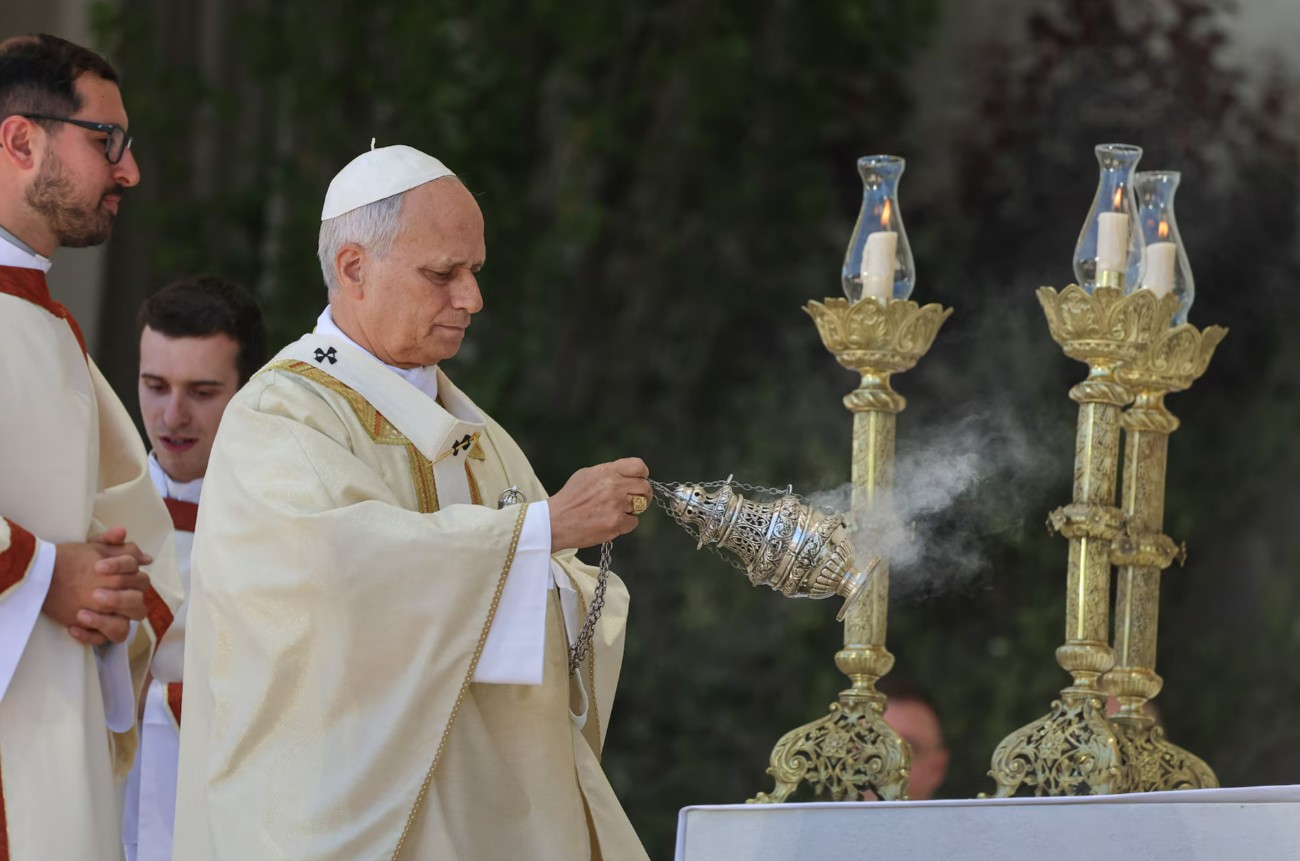
BUENOS AIRES (Realist English). The faithful began gathering the evening before: many spent the night outdoors to get seats closer to the stage. Access to the square opened at midnight, and 9 November was declared a national holiday in the country so that people could attend the service. Thousands of pilgrims came from various provinces of Argentina, some traveling more than 1,000 kilometers. Crowds stretched for miles along Avenida del Libertador, people waved Vatican flags and chanted “Long live Pope Leo!”
Content of the homily
In his homily, the pontiff emphasized the role of the family as a pillar of the church and society. “The family is the place where faith, human virtues, the culture of work, respect for elders, the protection of life and fidelity to one’s word are passed on,” he said, addressing those gathered. The pope also urged Argentines not to give in to those who consider the Christian family outdated, stressing that “today it remains, as never before, a pillar amid the many uncertainties of our time.”
Political subtext: criticism of economic policy
The Mass took place against the backdrop of tense relations between the Vatican and the government of President Javier Milei. The day before, on 8 November, Pope Leo XIV urged the Argentine authorities not to let harsh austerity measures hit the poorest segments of the population. During a visit to the Cottolengo Don Orione center for people with disabilities in Claypole, he stated that “the progress of a nation is also measured by how it welcomes all people with disabilities and special needs.”
These words came amid cuts to social programs and funding for care services that the Milei government is implementing as part of its austerity policy. President Milei and his sister Karina were present at the Mass.
Circumstances of the tour
The visit to Argentina was part of Pope Leo XIV’s 12-day tour of South America, which began in Uruguay. This is the first papal visit to Argentina since 1987, when John Paul II visited the country. Leo XIV’s predecessor, Pope Francis, a native of Argentina, never visited his homeland during his papacy. After Argentina, the pope will head to Peru and return to Rome on 17 November.
The Mass in Buenos Aires demonstrated not only the scale of support for the pontiff but also his readiness to use moral authority to intervene in sensitive socio-economic issues.
Addressing the theme of disability and poverty at a time when the Milei government is carrying out unpopular reforms turns the pastoral visit into a political statement. For Leo XIV, who remains a reforming pope, this is also an opportunity to strengthen the church’s position in a region where it is losing influence under pressure from evangelical denominations.
The key question is whether this criticism of Milei will mark the beginning of a more systemic confrontation between the Vatican and the Argentine authorities or will remain a symbolic gesture, backed only by moral weight but without practical consequences.