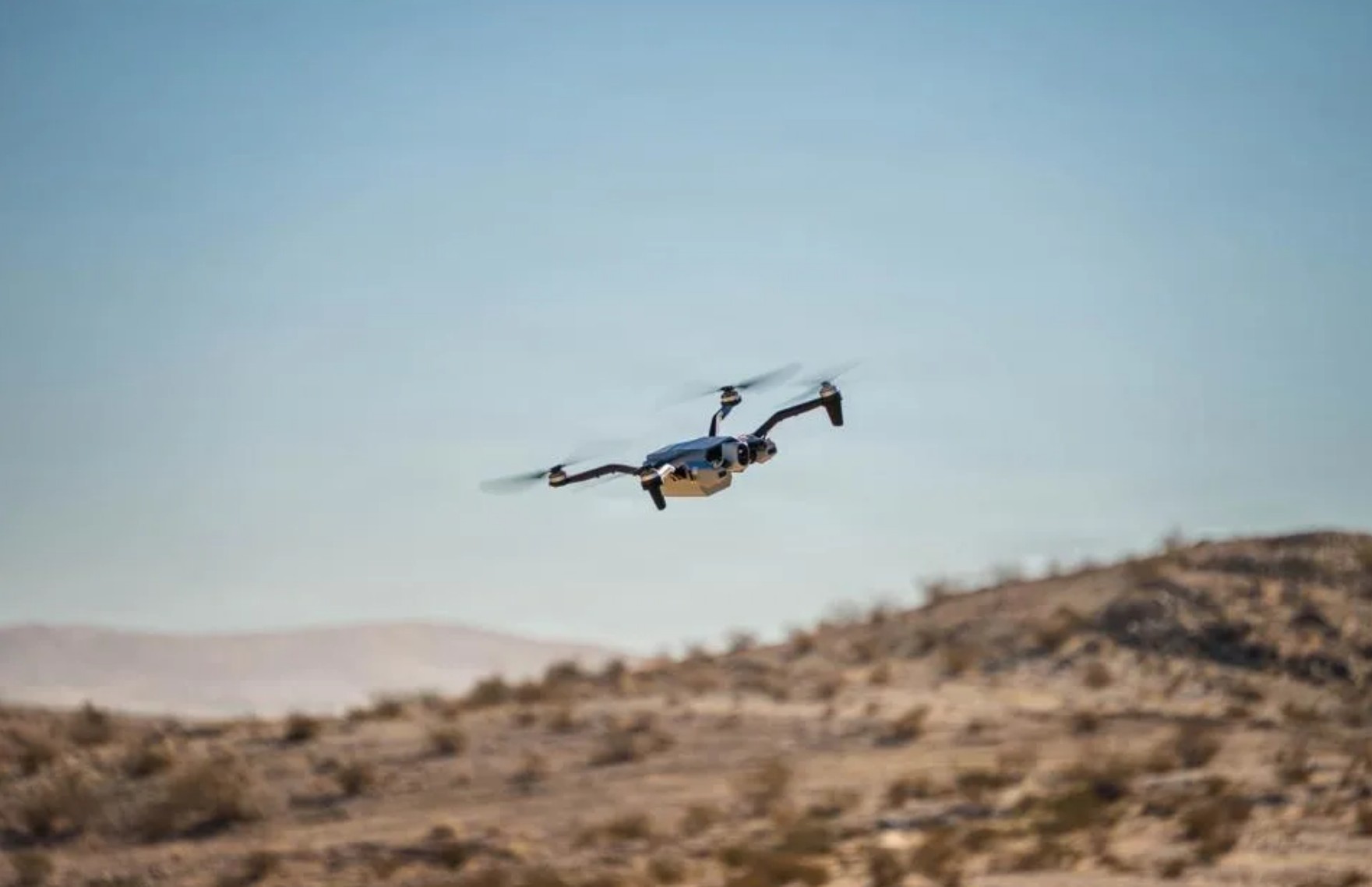
NEW YORK (Realist English). The US military conducted a series of exercises in which drones were used to adjust mortar fire. In September 2026, soldiers of the 3rd Battalion, 161st Infantry Regiment of the Washington National Guard practiced the “drone — mortar” pairing at the Yakima training area, using Bumblebee and Black Widow platforms to detect targets, obtain coordinates and assess strike results.
Officials called this a “key task” — linking unmanned systems to the process of directing indirect fire. Battalion commander Lieutenant Colonel Josh Brown stated: “Our goal was to successfully integrate unmanned systems into the ‘sensor — shooter’ chain for indirect fire. We exceeded expectations.”
IMLC Experiment: 8 out of 9 Hits Versus Zero
The US Army’s Infantry Mortar Leader Course (IMLC) conducted a structured study comparing traditional methods with drone-adjusted fire. The results were unequivocal: when using small drones to collect data for 120-mm mortars, eight out of nine first shots hit the target directly, and only one adjustment was needed to transition to fire for effect.
For comparison: with traditional methods using a forward observer, all nine shots landed 100–300 meters from the target, and an average of two adjustments were required. This means a 50% reduction in time and ammunition — an improvement that directly affects survivability and the tempo of operations on the battlefield.
“Technology is a multiplier, not a crutch. When the screen goes dark, we rely on the basics,” summarized one of the instructors.
Sudan and Colombia: Commercial Quadcopters as Weapons
In Sudan, armed forces adapted commercial drones to drop mortar shells. The MMY01 (82 mm) and MMY02 (120 mm) high-explosive fragmentation munitions, produced by the state-owned Military Industry Corporation, were modified for dropping from drones — including ordinary DJI Matrice quadcopters.
A similar incident occurred in Colombia, where FARC rebels used a standard DJI quadcopter equipped with a homemade release mechanism and an improvised mortar bomb to attack police. As analysts note, this demonstrates how cheap commercial drones are turning into precision weapons of the front line.
Dual Purpose: Reconnaissance and Strike
Beyond adjusting fire, drones are increasingly used for remote mining. Russian military forces employ FPV drones equipped with release systems to place anti-personnel and anti-tank mines on enemy routes, complicating rotation and ammunition resupply.
However, this same weapon raises serious concerns regarding human rights compliance. The Euro-Mediterranean Human Rights Monitor documented the use of quadcopters by Israeli forces for “deliberate killings of Palestinian civilians” in Gaza, including cases where drones dropped munitions on children, farmers and shepherds.
It is noted that the technical capabilities of drones allow the operator to “observe the target, verify its identity and track movement” — which, according to human rights advocates, rules out the excuse of misidentification.
Key Parameters of Drone-Mortar Integration
| Aspect | Data |
| Accuracy with drone (US) | 8 out of 9 hits with first adjustment |
| Accuracy without drone (US) | 0 out of 9, spread 100–300 m |
| Reduction in time and ammunition | 50% |
| Sudan munitions | MMY01 (82 mm), MMY02 (120 mm) |
| Payload capacity of Russian octocopter | >20 kg |
Answers to Questions
Will armies worldwide be able to integrate drones into mortar crews fast enough to maintain an advantage? — Technology is spreading faster than doctrine: commercial quadcopters are already used in Sudan and Colombia, while regular armies are only beginning systematic integration.
Will regulators and human rights advocates be able to develop standards limiting the use of commercial drones for attacks on civilians? — Not yet: documented cases in Gaza show that the technological capabilities of drones (surveillance, identification, tracking) do not prevent their use against civilians.
Will the “multiplier” turn into a “crutch,” as IMLC instructors warn, if drones are suppressed by electronic warfare? — This is a key risk: if communication with the drone is lost, the crew must retain the ability to fire using traditional methods. IMLC instructors insist on preserving basic skills.