KYIV (Realist English). Ukraine has shown its most vulnerable point in an interview with CNN: US-made Patriot air defence launchers are sitting idle in fields, their canisters empty, and the last launch was carried out 10 weeks ago.
CNN became the first media outlet to gain access to the system on Ukrainian territory, allowing Ukrainian officials to reveal one fact: the country has practically exhausted its supply of interceptor missiles.
“It’s a heartbreaking sight when you have the equipment but you can’t intercept a single missile,” said Dmitry, the system’s chief engineer, whose name was changed for security reasons.
According to him, he has not seen the Patriot system fire in six weeks.
‘Missiles fly over your head and you can’t do anything’
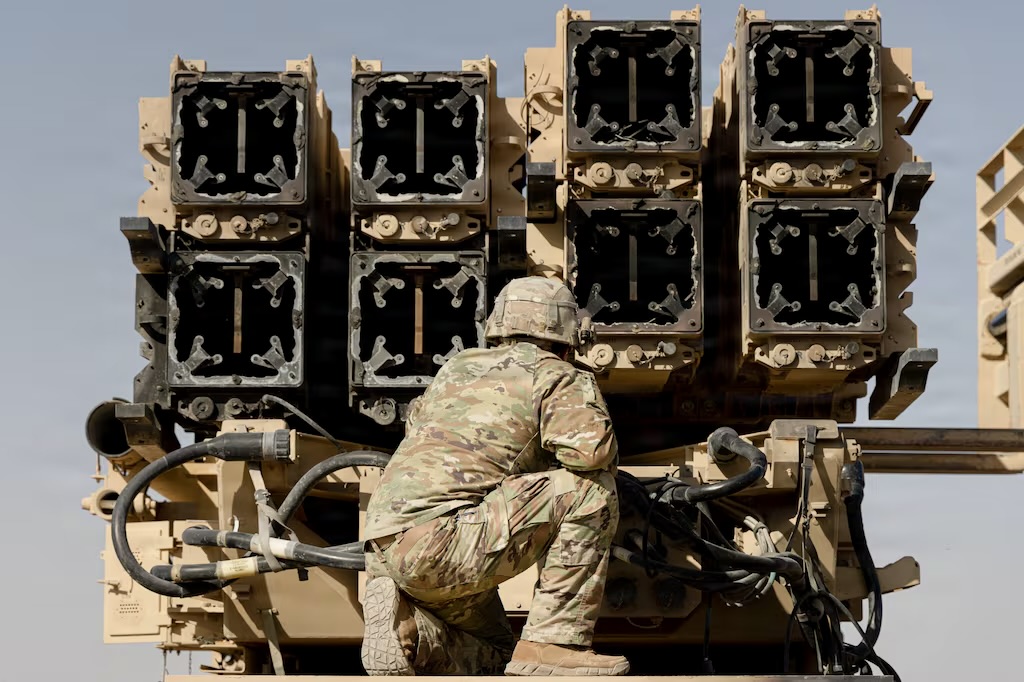
CNN showed footage of an empty launcher standing in the middle of a cornfield near Kyiv. All 16 tubes of the system bear traces of regular use, but they are now empty. Dmitry struggled to contain his emotions as he spoke of the helplessness in the face of Russian ballistic missiles:
“Ballistic missiles fly over your head, and you can’t do anything about them, and behind you are civilians.”
The first time his unit had no interceptors for a launch was back in December 2025. “It’s hard to describe – a strong and bad feeling,” Dmitry admitted. “It’s like you know how to walk but you can’t walk. You know how to breathe but you can’t breathe.”
Global crisis: the Gulf war ‘ate’ the missiles
The shortage of Patriot missiles is a global problem. According to CNN, coalition forces in the first four days of the war with Iran used an average of 225 Patriot interceptors per day.
For comparison: Lockheed Martin produced only about 620 PAC-3 interceptors for the entire 2025 year – roughly 1.7 missiles per day. Wealthy Gulf states, according to some reports, used dozens of interceptors to shoot down cheap Iranian drones.
“We predicted we would have problems,” Dmitry said. “We were very shocked by how many missiles they launched at once… the very missiles we could have used against Russian ballistic missiles.”
According to estimates by the Center for Strategic and International Studies (CSIS), US stocks of PAC-3 MSE interceptors have fallen from more than 2,300 to approximately 800 since the start of the Israel-Iran war.
5% vs 1%: Zelensky’s calculation
Ukrainian President Volodymyr Zelensky told CNN that Kyiv needs 5% of US Patriot missile stockpiles to survive the winter, but Ukraine currently has only about 1%.
“I want to get them,” Zelensky said. “His word is the word of the President of the United States. And I hope I will get it.”
Ukraine does not disclose exactly how many interceptors it has left.
Production in Ukraine: ‘a complex procedure that takes years’
At the NATO summit in Ankara in June, US President Donald Trump offered Ukraine a licence to produce Patriot interceptors. Representatives from Raytheon and Lockheed Martin visited Kyiv, but later Trump expressed doubts about the implementation of the agreement.
A White House official told CNN that no decisions or guarantees had been made regarding Patriot production in Ukraine.
Zelensky, for his part, said he had offered manufacturers full ownership and control over any interceptor production plant on Ukrainian territory: “It will be your company. It will be our brains, our hands, our engineers.”
However, Dmitry, the system’s chief engineer, admitted that even if intellectual property restrictions were lifted, Ukraine would not be able to quickly start production: “It is a very complex procedure, and it requires many…”.
Ukraine is facing an existential dilemma: one of the most effective weapons against ballistic missiles has effectively been rendered inoperable due to a lack of ammunition. The global shortage of Patriot interceptors, exacerbated by the war in the Gulf, leaves Kyiv defenceless against Russian missile strikes ahead of winter.
Solving the problem depends on three factors: the willingness of the US and its allies to redirect existing stockpiles, the ability to increase production, and the political will to allow localised production in Ukraine. For now, Dmitry and his comrades watch missiles fly overhead with no ability to intercept them – and it “breaks the heart” not only of them, but of Ukraine’s entire air defence system.