LONDON (Realist English). The largest players in the AI industry have encountered “financial indigestion.” Their colossal capital expenditures on infrastructure are growing faster than revenue. Traditional sources of financing — their own cash flow and the public debt market — are approaching exhaustion.
This is forcing companies into unprecedented schemes: off-balance-sheet debt financing worth tens of billions of dollars, attracting private credit funds, and “circular deals” between suppliers and clients.
Scale of costs: $800 billion a year and a growing gap
The consensus forecast for AI capital expenditures has grown since the beginning of 2026 from $650 billion to $800 billion. By 2027, $1.1 trillion is expected. The four largest hyperscalers — Alphabet, Amazon, Microsoft, and Meta — together intend to spend more than $500 billion in 2026 alone.
The problem is that these expenditures are growing faster than revenue. According to J.P. Morgan Asset Management, in 2026 capital expenditures will amount to about 93% of hyperscalers’ operating cash flow. In 2023, this figure was 33%. Goldman Sachs calculated: to justify the 2026–2027 investments at a 15% return on capital, the six largest players will need about $1.42 trillion in combined revenue in 2028–2030.
This has already led to Alphabet’s free cash flow turning negative for the first time in decades. In the second quarter of 2026, it was minus $5.9 billion. Amazon, according to Visible Alpha estimates, will “burn” $13 billion this year and $28 billion in 2027.
Financial “indigestion”: from cash flow to debt
Own cash flow no longer covers needs. From 2023 to 2025, AI was a “game” played with the own resources of large companies. Now, according to UBS estimates, the annual financing gap is $400–500 billion. Of this, $150–200 billion comes from debt.
The public debt market is overloaded. From January to July 2026, Amazon, Alphabet, Meta, and Oracle issued $194 billion in bonds. This is almost double the entire 2025 total. Goldman Sachs expected that by year-end the five largest hyperscalers would issue about $250 billion, and in 2027 — $400 billion.
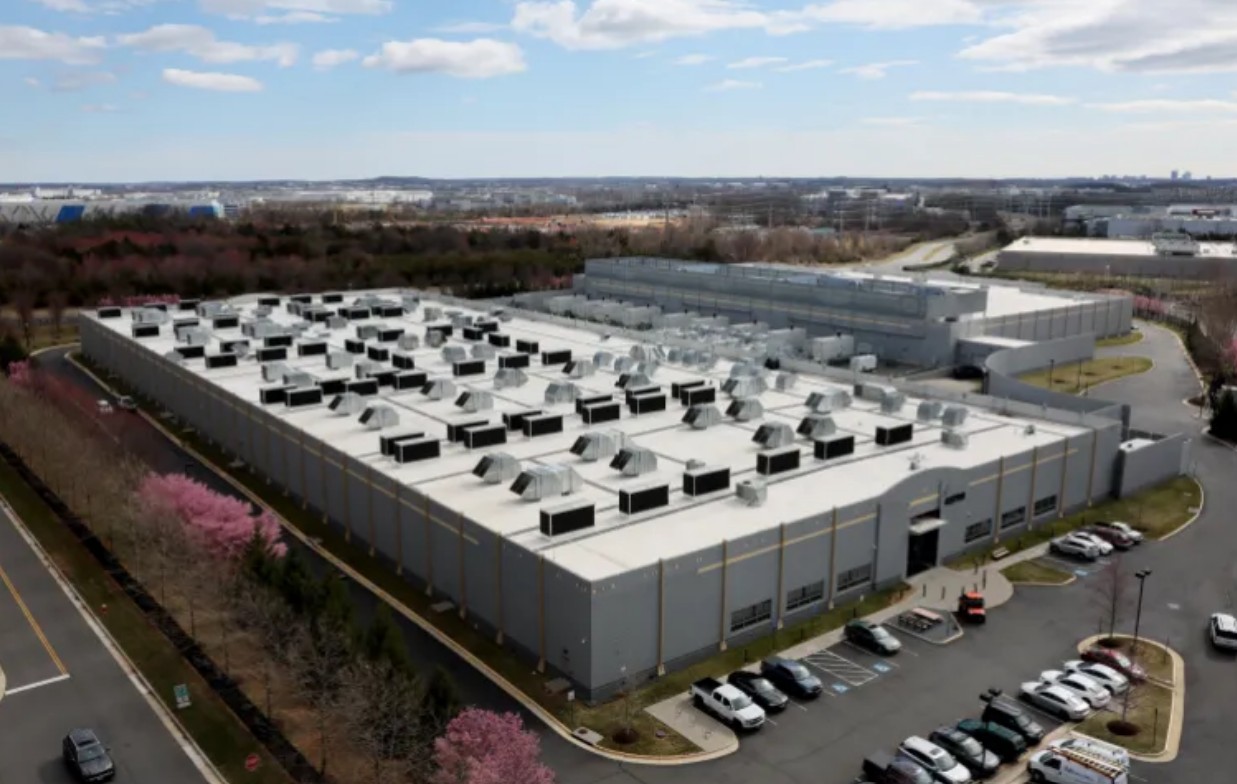
Banks no longer want to hold this debt on their balance sheets. A banking consortium led by Morgan Stanley plans to sell $15 billion in debt linked to Anthropic’s data center in Texas. The project is backed by Google. Broadcom is working to attract more than $50 billion in financing for OpenAI’s chips. Oracle is negotiating with Apollo and Goldman Sachs to finance chip purchases. SpaceX is discussing $40 billion in debt to purchase Nvidia chips.
A new class of borrowers without cash flow has emerged. OpenAI and Anthropic historically rented computing power from cloud providers. Now they want to own infrastructure. They do not have the financial strength for direct purchases and are forced to attract “non-standard” capital.
“Circular deals” and off-balance-sheet structures
The “supplier finances client” scheme has become the norm. Broadcom provided Anthropic with a loan of up to $42 billion for chip leasing. Nvidia is negotiating guarantees of $250 billion for OpenAI. Broadcom guarantees $42 billion in senior debt for Anthropic’s TPU leasing. Another $18 billion in junior debt will be sold after Anthropic’s IPO.
Off-balance-sheet obligations distort the picture. According to UBS calculations, if off-balance-sheet obligations are included, hyperscalers’ total liabilities grow from $808 billion to approximately $3.5 trillion. This includes unpaid leases of $1.25 trillion, service obligations of $1.63 trillion, data center production obligations of $374 billion, and guarantees of $86 billion.
Specialized SPVs finance 90% of assets with debt. According to the Federal Reserve Bank of Kansas City, the most indebted structures in the AI ecosystem are SPVs created by hyperscalers and chipmakers together with private credit funds. “Neoclouds” follow them with a debt-to-assets ratio of 85%.
“Financial indigestion” at the market level
The cost of capital is rising. Even for the best borrowers, the cost of financing has risen by 20–25% since January 2026. For the worst — by 36%.
Private credit fund shares are falling. Blackstone lost 40% over the year and 23% over six weeks. Apollo — 24% over the year and 18% over six weeks. KKR — 40% over the year and 23% over six weeks. This reflects growing concerns about the quality of AI debt on their balance sheets.
Rating agencies and regulators are sounding the alarm. Moody’s warns that AI infrastructure “undermines free cash flow” of hyperscalers. Goldman Sachs warns of a “triple negative cycle”: negative free cash flow leads to falling AI bond prices. This could turn capacity expansion into an excess of computing resources. The Federal Reserve Bank of Kansas City points out that credit risks “ultimately lead back to research laboratories.” If a laboratory cannot scale profitably, indebted cloud operators and data centers will be particularly vulnerable.
Ray Dalio directly warns of a bubble. The founder of Bridgewater stated: “AI is a typical bubble. We are approaching the moment when it will burst.” According to him, the trigger will be rising rates and the need to convert paper wealth into cash.
What this means
The AI industry has encountered a classic growth crisis. The technology works. Demand is real. But the financial architecture cannot withstand the scale. Companies that for two years financed the boom from their own pockets are now forced to seek capital externally. Through debt, off-balance-sheet structures, and private credit funds.
The problem is that AI revenue does not yet come close to covering these costs. Bain & Company estimates that by 2031 the global AI market will need to generate $6 trillion a year to justify infrastructure spending.
Current scenarios yield only $1.8 trillion. The gap is $4.2 trillion. For now, the market believes this gap will be closed by new applications: autonomous transport, physical AI, drug development. But if that belief falters, “financial indigestion” could escalate into an acute crisis. With a chain reaction through the entire stack: from laboratories to cloud operators, from chipmakers to private credit funds.