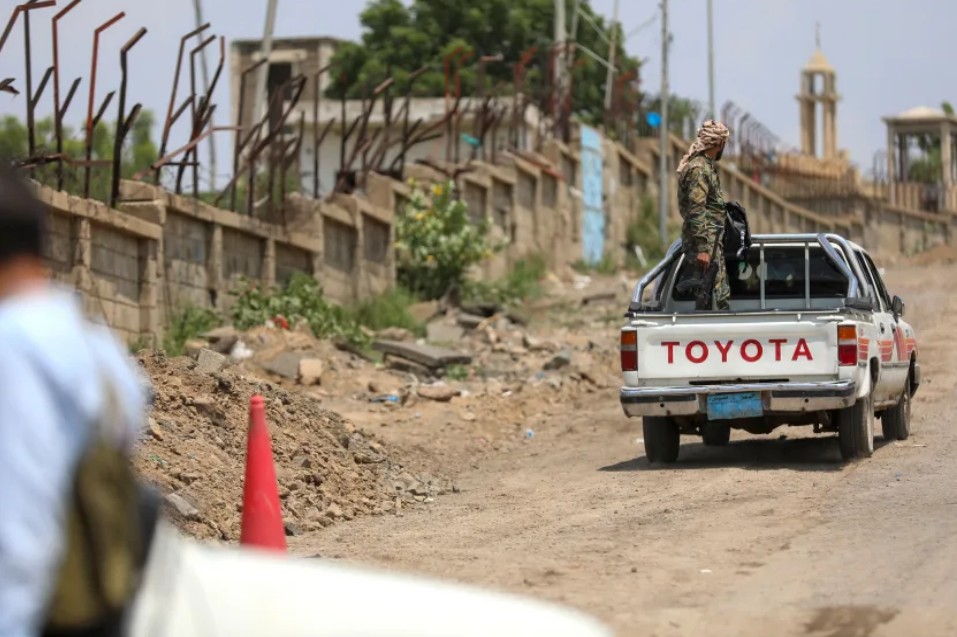
ISLAMABAD (Realist English). Pakistan has confirmed the presence of its military personnel in Saudi Arabia amid a sharp escalation of the conflict with Yemen’s Houthis. The conflict has led to casualties on Saudi territory. Islamabad emphasizes: its role is limited to defensive support and training. It does not involve direct participation in ground operations inside Yemen.
What Pakistan officially confirmed
Lieutenant General Ahmed Sharif Chaudhry, head of Pakistan’s Inter-Services Public Relations (ISPR), confirmed in an interview with CNN: Pakistani servicemen have been deployed on Saudi territory for decades. He linked this to the long-standing defense, diplomatic, and political relations between the two countries.
Chaudhry particularly noted: this presence is not a new deployment after the signing of the Joint Defense Agreement in Mecca. It represents a continuation of existing arrangements. However, he also confirmed that Pakistani forces possess various capabilities in different spheres.
Pakistani Defense Minister Khawaja Asif further delineated the roles. Saudi Arabia is conducting combat operations against the Houthis on its own. Pakistani and Turkish troops play an auxiliary role. They provide necessary assistance but do not lead combat operations. He also mentioned that Pakistan’s participation extends to the reconstruction sphere.
Strength and composition of forces
Pakistani officials do not disclose the total number. A number of media outlets report: the contingent in Saudi Arabia exceeds 15,000 people. It includes at least 6 infantry and artillery brigades. Among those deployed are one major general, four brigadier generals, twelve colonels, thirty-six lieutenant colonels, and about sixty majors and captains.
Regarding equipment, reports say: the Pakistani Air Force has deployed JF-17 fighters, Turkish drones, and Chinese HQ-9 anti-aircraft missile systems in Saudi Arabia. More than 400 naval personnel participate in maritime security and training tasks.
Activation of the Mecca Defense Agreement
The confirmation came amid the activation of the Joint Defense Agreement in Mecca. It was signed in August 2026 by Pakistan, Saudi Arabia, and Turkey. The agreement provides: an armed attack on any of the participants is considered an attack on all three.
On October 5, an emergency meeting of the Strategic Political and Defense Cooperation Council of the three countries was held in Riyadh. It was decided to immediately advance collective defense obligations and provide Saudi Arabia with the necessary military forces and capabilities. The trigger, according to reports, was the Houthi attack on a power plant in Medina. It provides electricity to the Prophet’s Mosque — one of Islam’s holy sites.
Escalation of the Yemen conflict
Houthi military actions have significantly intensified recently. Houthi spokesman Yahya Saree stated: over the past 24 hours, Saudi Arabia carried out 156 airstrikes and missile strikes on six provinces of Yemen. The total number since the current escalation began has reached 1,798. In response, the Houthis claimed to have launched ballistic missiles and drones at King Khalid International Airport in Riyadh and Saudi Aramco facilities in the capital.
The Saudi side confirmed: Houthi attacks on Abha Airport and King Khalid Airport resulted in 3 dead and 36 wounded. It also stated it intercepted ballistic missiles flying toward Riyadh and Khamis Mushait.
Houthi warning and the Iranian factor
Houthi leader Abdul-Malik al-Houthi publicly called on Turkey and Pakistan not to get drawn into the Yemen conflict on Saudi Arabia’s side. He thanked public voices in both countries opposing participation in the war. At the same time, he accused Saudi Arabia of continuing military escalation after the failure of previous de-escalation efforts.
Notably, Pakistani Foreign Minister Ishaq Dar reported: the Iranian side recommended political contact with the Houthis, rather than relying exclusively on military pressure. According to him, both the president and foreign minister of Iran want a speedy end to the conflict. Dar also stated that he informed Tehran about the content of the Mecca Agreement and how Pakistan would implement it.
Pakistan’s dilemma
Pakistan’s position is internally contradictory. On the one hand, its security obligations to Saudi Arabia are clear and long-term. Recently, Riyadh provided a package of financial assistance and investments worth $8 billion. On the other hand, Pakistan borders Iran, and there are significant domestic objections to being drawn into the Yemen war. Opposition leader in the Senate Raja Nasir Abbas warned: intervention in the Yemen war “will be a catastrophe for the country.” It could affect internal stability, social cohesion, and interfaith relations.
Analysts note: Pakistan’s role will likely remain predominantly defensive, technical, and advisory. At present, there are no clear signs of intention to send combat units into Yemen.