MOSCOW (Realist English). July 2026 was a month of redistribution and shifting priorities for Russian tourism.
Against a backdrop of economic constraints, transport issues and geopolitical uncertainty, travellers are increasingly choosing more affordable destinations both within Russia and abroad, while the state is betting on large‑scale investments in new resorts.
Domestic tourism: Anapa overtakes Sochi, Crimea loses ground
Overall demand for tours within Russia fell by about 3% in July compared to the same period last year. However, the regional dynamics were mixed.
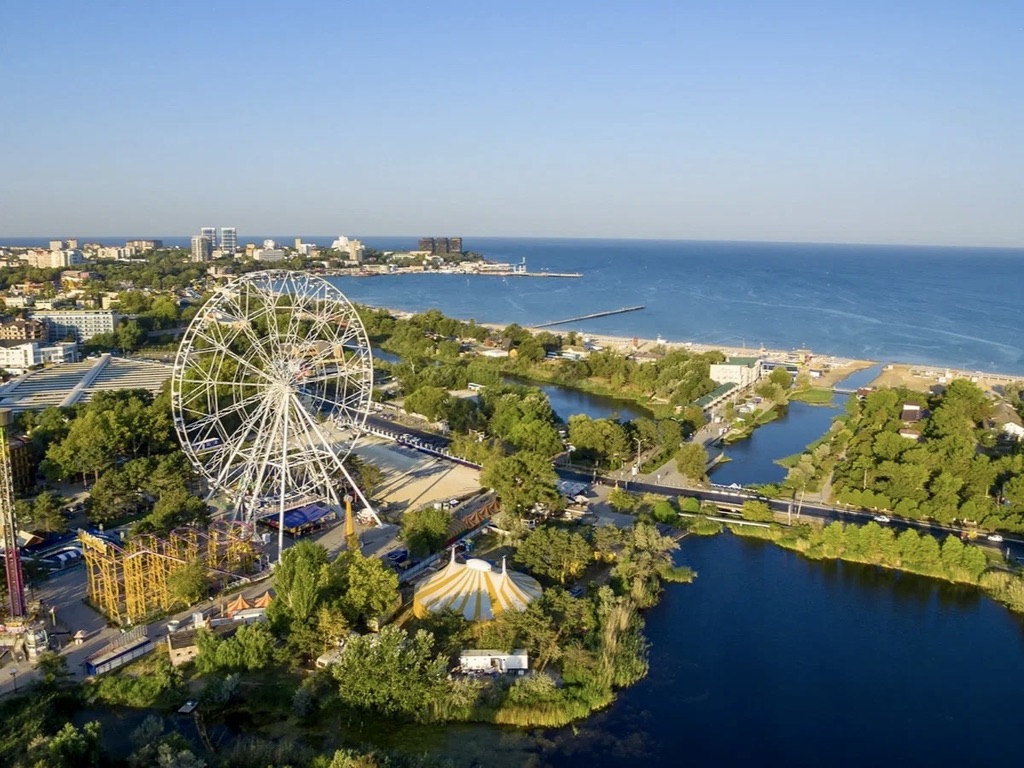
The biggest surprise of the season was Anapa. Tour operator “Dolphin” recorded a two‑fold increase in sales, “Multitour” — almost three‑fold, while ALEAN reported a 36% rise in demand. At the same time, Sochi lost 20–25% of its sales. According to some companies, the drop for Sochi and Tuapse reached 30%.
Gelendzhik showed more stable results: Intourist saw demand rise by 28%, ALEAN by 5%. Overall, the Krasnodar region managed to maintain a slight gain of about 1% compared to last year.
Crimea recorded the sharpest decline. Tour operators expect a drop of up to 50% by the end of the season.
Interest in the North Caucasus regions is growing. Russians are increasingly choosing Dagestan, North Ossetia and Karachay‑Cherkessia for their scenic nature and reasonable prices. In the first half of 2026, Dagestan welcomed 252,900 tourists (compared to 142,800 in the same period of 2025).
The share of bookings for Moscow and the Moscow region increased (from 24.1% to 25.5%), St. Petersburg and the Leningrad region (from 14.4% to 15.2%), and Siberian regions (from 5.2% to 5.5%). Demand for trips within Russia without flights — by car and bus — grew by 20%.
For the velvet season, Primorsky Krai entered the top five most popular destinations for the first time, climbing from tenth place. The Krasnodar region remains the leader with 21.09% of bookings, followed by Moscow (18.16%) and St. Petersburg (12.82%).
Demand for river cruises in Russia is generally in line with last year, with a slight downward trend. The most popular routes are Moscow‑St. Petersburg, trips to Karelia, the Solovki Islands and along the Volga. Around 50,000 vouchers have been sold for July and August, with July accounting for the peak flow of about 30,000 guests.
Outbound tourism: Turkey and Egypt lead, Vietnam gains ground
Among foreign destinations, the top three has shifted. Turkey strengthened its leadership (share rose from 35.5% to 37.7%), Egypt moved into second place (from 15.4% to 21.3%), while Russia dropped to third (domestic tours’ share of sales fell from 18.4% to 9.6%).
Vietnam continues to gain momentum: up 3.2 percentage points, reaching a 7.8% share — the destination is cementing its place in the top five. China nearly doubled its share to 4.3%. Indonesia (Bali) entered the top ten for the first time in a long while.
Abkhazia lost ground (from 8.1% to 5.9%), giving way to Vietnam and China. The UAE, despite the lifting of the ban on tour sales, have yet to recover their position (share fell from 3.6% to 1.2%).
Beach holidays remain the backbone of outbound demand, accounting for 95–97% of all foreign tour bookings. Over the three summer months, an estimated 2.9–3 million Russians will visit foreign countries.
Tourist spending: average check and daily costs
The average daily cost of a holiday at popular Russian destinations in summer 2026 was 7,900 roubles per person (including accommodation and two meals).
The most expensive destinations are Petropavlovsk‑Kamchatsky, Nizhny Novgorod and Pskov — 10,000–11,000 roubles per day. The top ten most expensive destinations also include Yuzhno‑Sakhalinsk, Kaliningrad, St. Petersburg, Sochi, Vladivostok, Veliky Novgorod and Kazan.
The cheapest destinations are Barnaul, Kemerovo, Astrakhan and Surgut — no more than 6,000 roubles per day.
The average cost of a holiday within Russia in July is 97,000 roubles for two people for a 7‑day trip. Average spending on July tours with flights fell by 13.4% to 116,350 roubles, while the average trip length decreased from 7 to 6 nights.
The average check for a week‑long holiday for two, according to the Russian Tourism Union (RST), is 150,000–250,000 roubles, including transport costs. However, overall spending by Russian travellers on holidays has surged — up 40% at the start of 2026.
Resort development: ‘Five Seas’ and 1.8 trillion roubles in investment
Against the backdrop of shifting tourist flows, the state continues its large‑scale investment in tourism infrastructure. The total volume of announced public and private investment in major resort projects is estimated at 1.7–1.8 trillion roubles.
Key projects under the federal programme “Five Seas and Lake Baikal” :
| Resort | Location | Investment | Status |
| “New Anapa” | Krasnodar Krai | 461–560 bln rubles | Design stage, construction start 2026 |
| “White Dune” | Kaliningrad Oblast | ~416 bln rubles | Infrastructure development |
| Sheregesh (expansion) | Kemerovo Oblast | >100 bln rubles | First phase construction |
| “Magic Baikal” | Buryatia | >90 bln rubles | Infrastructure and first hotels |
| “Three Volcanoes” | Kamchatka | ~67 bln rubles | First phase construction |
| Caspian Coastal Cluster | Dagestan | 62.9 bln rubles | Infrastructure development |
The state is building roads, utilities and public spaces almost from scratch. Private investors receive subsidised loans and tax incentives.
As Deputy Prime Minister Dmitry Chernyshenko noted, the national project “Tourism and Hospitality” allocates 103 billion roubles for all projects. By 2030, the plan is to increase tourist flow by 10 million people annually across all resorts.
In 2026, new national standards (GOSTs) also came into force, establishing requirements for accommodation facilities and glamping sites.
July 2026 has shown that Russian tourism is adapting to new realities: travellers are economising, choosing more affordable destinations and opting for trips without flights. Anapa and the North Caucasus regions are becoming new hotspots, displacing traditional leaders.
The state is making a long‑term bet on creating world‑class year‑round resorts that should not only relieve overcrowded Black Sea beaches but also offer Russians quality holidays in new regions. However, the final results of the season will depend on prices, transport availability and the number of last‑minute bookings.