TEHRAN (Realist English). The conflict between the United States and Iran has entered a new, more dangerous phase. Both sides have expanded their targets to include civilian infrastructure, and shipping through the Strait of Hormuz has virtually ceased.
A sixth consecutive night of US airstrikes and massive Iranian retaliatory strikes on US facilities in six regional countries signal the complete collapse of the June ceasefire.
Sixth Night of US Strikes: From Bridges to Airports
US Central Command (CENTCOM) conducted a sixth consecutive night of airstrikes on Iranian targets. The command said the strikes were carried out using “fighter aircraft, drones, and naval vessels” and hit “dozens of Iranian military targets, including coastal surveillance systems, air defence sites, military logistics infrastructure, and naval assets.”
However, according to Iranian state media and international agencies, the scale of the strikes was significantly broader. US forces struck bridges, railway stations, and an airport in southern Iran.
According to Iranian authorities, at least five to six bridges were hit in the southern province of Hormozgan, connecting port cities with the rest of the country. The strikes targeted the Gariyeh, Kahurestan, and Bandar Abbas-Shiraz bridges.
At least eight people were killed and 20 wounded in the US strikes. According to other reports, seven people died in attacks on bridges in Bandar Khamir alone. Iran’s state news agency IRNA reported that at least three people were killed in strikes on bridges in Hormozgan province.
The control tower at Chabahar port on the Gulf of Oman was also hit, as was Iranshahr Airport in the country’s southeast. Reports indicate that US strikes also affected areas around Tehran and Semnan province, which houses Iranian ballistic missile facilities.
CENTCOM, for its part, said it had destroyed a port observation tower that, according to its data, the Islamic Revolutionary Guard Corps (IRGC) had been using to track and attack commercial vessels.
Iran’s Response: Strikes on US Allies in Six Countries
Tehran’s response was immediate and unprecedented in scale. Iran struck US facilities in Kuwait, Bahrain, Qatar, Jordan, Oman, and Syria.
The IRGC said its aerospace forces carried out a “sudden and powerful” attack on the US Al-Udeid Air Base in Qatar, destroying a long-range radar system and several tanker aircraft.
In Kuwait, Iranian drones struck “US force deployment sites and logistics support centres.” Bahrain also came under attack — authorities urged citizens to take shelter. Explosions were heard in Qatar’s capital, Doha, and a child was wounded by shrapnel during interceptions.
Jordan reported intercepting three Iranian missiles. Kuwait said it was repelling missile and drone attacks. In addition, the IRGC struck a US command centre at Al-Tanf in Syria.
The IRGC warned that the United States and countries hosting US bases should know that crossing Iran’s “red lines” and attacking its civilian infrastructure would be met with a “very harsh” response.
Shipping in the Strait of Hormuz Halted, Oil Prices Rise
The Strait of Hormuz, through which a fifth of the world’s oil passes, has virtually ceased operations. Tehran has reimposed the blockade of the strait, while Washington has reimposed its blockade of Iranian ports.
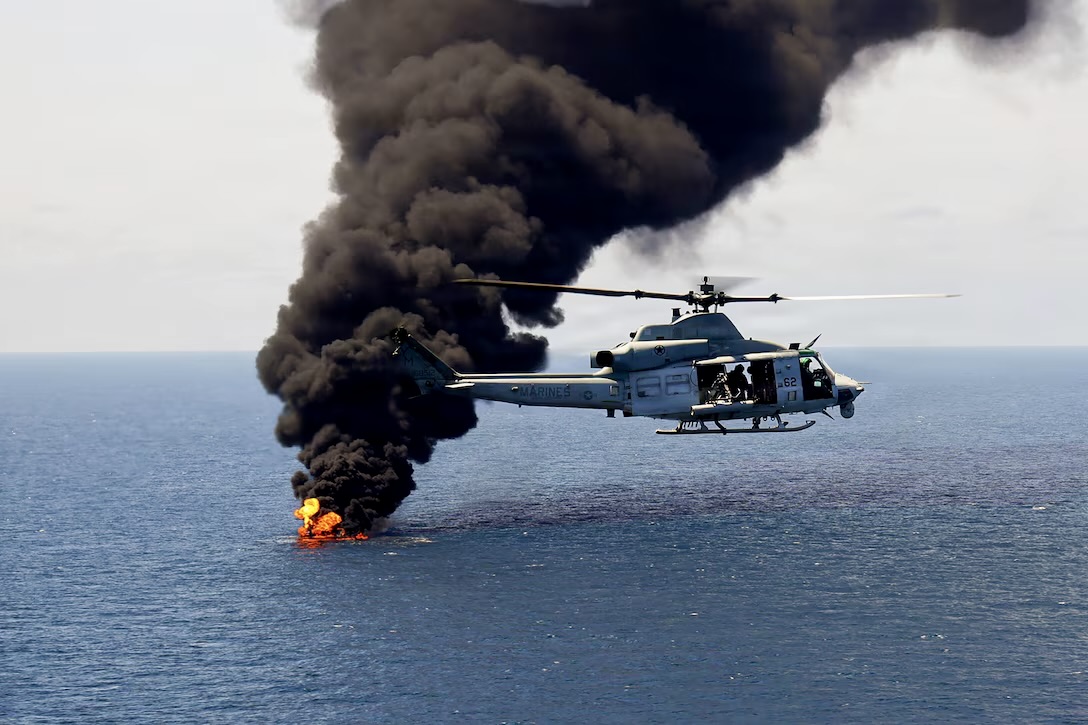
Iran also signalled the possibility of using its Houthi allies in Yemen to close the Bab el-Mandeb Strait at the southern end of the Red Sea. On July 17, armed men seized a vessel off the coast of Yemen, raising concerns about the security of another key oil supply chokepoint.
Brent crude oil prices rose 3% and are heading for a third consecutive week of gains.
Casualties and Humanitarian Consequences
According to Iran’s Health Ministry, at least 38 people have been killed and more than 400 wounded in US strikes on southern provinces since June 22.
Iranian officials also said US strikes forced the evacuation of a children’s cancer hospital in Ahvaz.
UN Secretary-General António Guterres expressed concern over the escalation, particularly “attacks on civilian infrastructure in Iran and across the region.”
US Position: “Open to Diplomacy” Amid Escalation
Despite the escalation, the White House continues to profess readiness for diplomacy. Press Secretary Karoline Leavitt said: “The president is always open to diplomacy.” She added that Trump would not allow Iran to attack vessels in the strait with impunity.
At the same time, according to Reuters, President Trump is considering large-scale strikes on Iranian infrastructure and has not ruled out a ground operation on the Iranian coast or islands.
The US-Iran conflict is rapidly expanding. The shift to striking bridges, railways, and other infrastructure targets means both sides have entered a new, more dangerous phase that threatens further destabilisation of the entire region. The involvement of US Gulf allies — Kuwait, Bahrain, Qatar, and Jordan — makes the scale unprecedented.
As an Iranian military command spokesman warned, if the US continues its infrastructure attacks, Iran could strike “all infrastructure in the region.” The question of whether diplomacy can halt the slide toward full-scale regional war remains open.