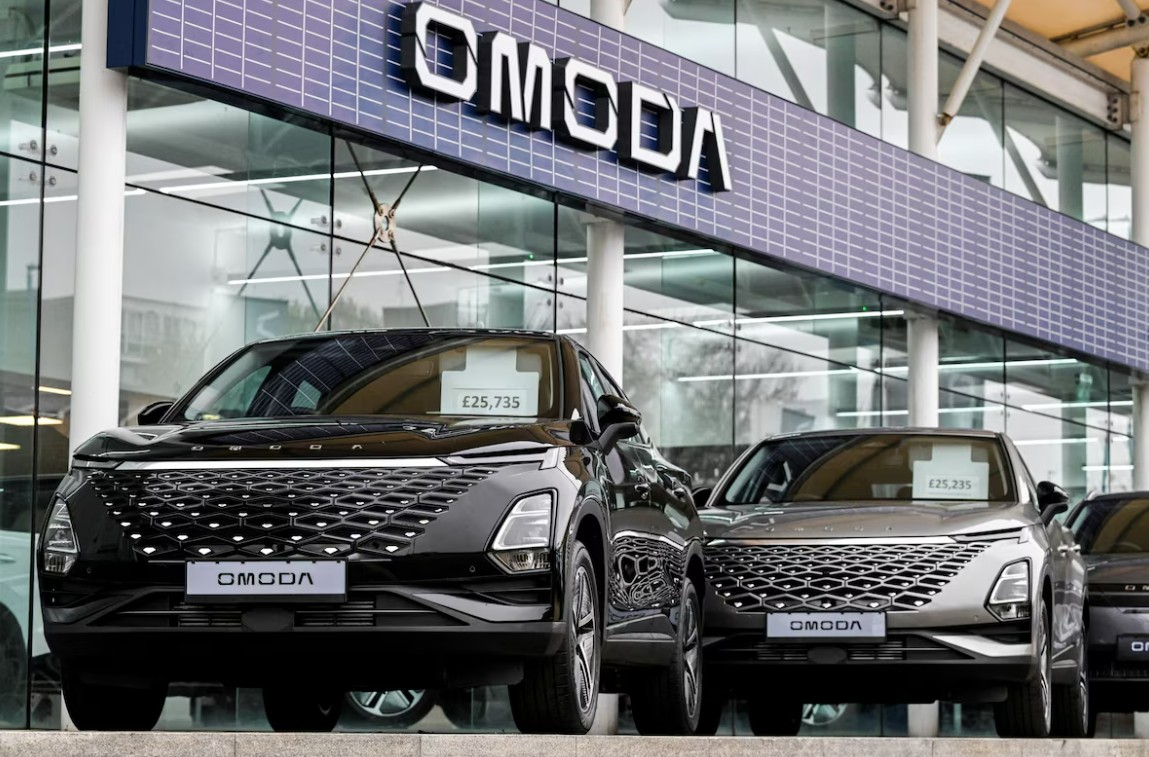
LONDON (Realist English). Negotiations between the United Kingdom and the European Union on a new economic partnership have come to the brink of collapse due to disagreements over Chinese electric vehicles. This is evidenced by the draft final communique of the summit, which is due to take place on November 20 in Brussels.
The Substance of Brussels’ Demand: Tariffs in Exchange for Access
The EU is seeking to have London commit to “ensuring in its policy and national legislation the same outcomes with respect to other international partners” as Brussels, in the agreed sectors. In practice, this means that the UK must impose tariffs on Chinese electric vehicles similar to European ones in order to gain access to the “Made in Europe” program.
France and Germany agreed in October on a compromise: to include the British automotive industry in the “Made in Europe” scheme on condition that London brings its tariffs and conditions for foreign investment into line with European ones. Currently, the UK applies a standard 10 percent duty on Chinese electric vehicles, whereas the EU has charged up to 45% since 2024, and the US — 100%.
Why London Is Resisting
The British government plans to reject the EU’s demand, fearing retaliatory measures from Beijing. This is reported by the Financial Times, citing the draft communique. In the latest version of the document, the wording on “trusted partnership” was removed, and the commitment to align policy was replaced with a softer one: “to strive to consistently protect supply chains in our markets and prevent potential circumvention risks.”
Business Minister Jonathan Reynolds previously stated: “When we make trade decisions with respect to the EU, they are based on the UK’s interests, not on requests from other countries.” He noted that the British automotive industry is an export-oriented sector, and the introduction of tariffs would hit companies with large supplies to China, in particular Jaguar Land Rover.
The Chinese Factor: Investment Versus Tariffs
Economic interests lie behind London’s refusal. Chinese brands — BYD, Chery, MG, Xpeng — are actively expanding their presence in the British market. The share of Chinese cars in new car sales in the UK reached 17.8% over the ten months of 2026, doubling compared to the same period in 2025. Xpeng plans to expand its dealer network to 100 outlets by 2027, and Chery has established a research center in the UK and is considering assembly in northern England.
The British automotive industry is counting on Chinese investment to load idle capacity. Nissan is in talks with Chery about assembling Chinese cars at its Sunderland plant. “Britain needs these industrial investments,” noted Philip Nothard of Cox Automotive.
The Risk of Becoming an “Easy Target”
Analysts warn that refusing to align with the EU could cost London dearly. Peter Hill, a former European Commission trade negotiator, noted: “The risk for the UK is that it becomes an easy target for Chinese retaliation because it is relatively vulnerable and does not have the EU’s protection.” Beijing has already stated that it “firmly opposes any discriminatory practices” against Chinese goods and will “respond accordingly.”
The Chinese Embassy in London emphasized that the issue has already been raised with the British authorities. The Chinese Foreign Ministry did not comment directly on the situation but had previously warned of its readiness for retaliatory measures.
What Is at Stake for the Summit
The November 20 summit was supposed to mark a “reset” in London-Brussels relations after Brexit. Agreements were expected on agri-food trade, youth mobility, and the UK’s connection to the EU emissions trading system. However, the issue of automobiles proved to be the most difficult.
British Prime Minister Andy Burnham, who is seeking closer ties with the EU, finds himself in a difficult position: he wants to gain access to “Made in Europe” for British automakers but is not prepared to pay for it with confrontation with Beijing.
As observers note, the key feature of the situation is the gap between the desire for European integration and dependence on Chinese investment. For the British automotive industry, the immediate effect will be visible primarily in whether London can obtain an exemption from the “Made in Europe” rules without imposing tariffs — and that is precisely where the balance between access to the European market and preserving Chinese investment is most sensitive.