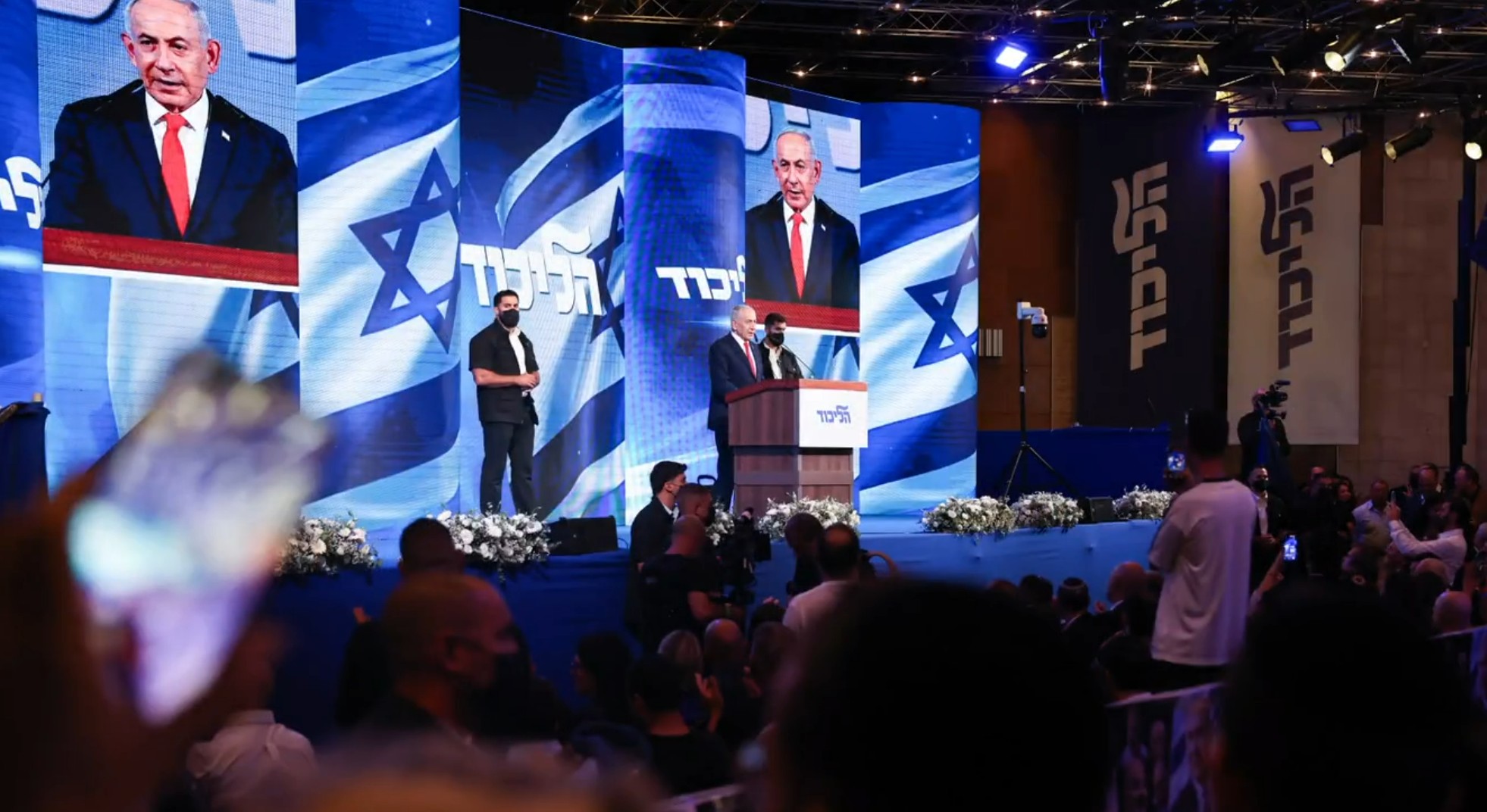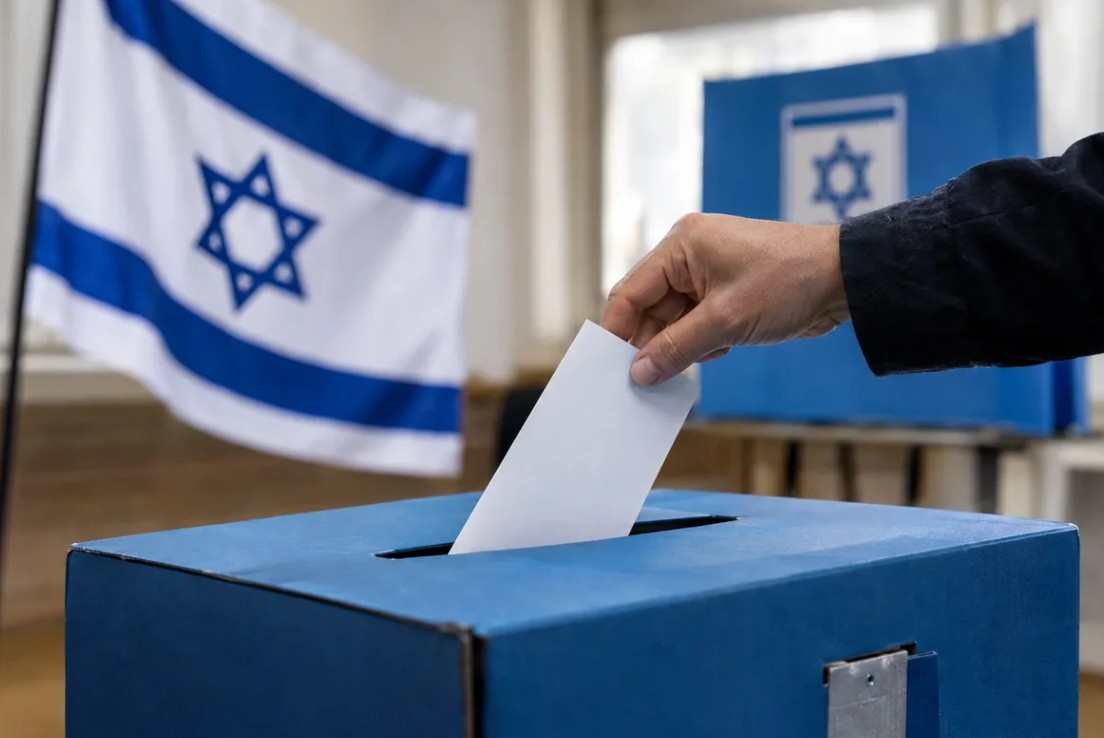
JERUSALEM (Realist English). On October 27, Israel held snap elections to the 26th Knesset. According to the Central Elections Commission, after 85% of ballots were counted, Prime Minister Benjamin Netanyahu’s bloc (Likud and allied right-wing and religious parties) receives 53–54 seats, the opposition bloc “Change” led by former Chief of Staff Gadi Eisenkot — 48–49 seats, Arab parties — 19 seats. A stable cabinet requires 61 seats out of 120.
Balance of forces
Likud remains the largest faction with 26–27 seats, but its representation has shrunk compared to the previous Knesset. Eisenkot’s party “Yashar” (“Direct Path”) receives 20–22 seats, Bennett’s bloc “Together” — about 11, Golan’s “Democrats” — 8, “Israel Our Home” — 8. The religious parties Shas and United Torah Judaism have 7 seats each, the far-right Otzma Yehudit and Religious Zionism — 7 and 6 respectively.
Turnout exceeded 77.7% — the highest since 1999. More than half of voters cast ballots for parties opposed to the current government, which is seen as a vote of no confidence in Netanyahu’s cabinet.
Arab parties as kingmaker
The main sensation of the campaign was the surge in support for Arab parties. The Joint List and Ra’am together receive 19 seats — almost double their representation in the previous Knesset.
Joint List leader Yousef Jabarin stated his readiness to help remove Netanyahu from power in partnership with Jewish opposition parties, calling the current government a “government of bloodshed.” However, most parties in Eisenkot’s bloc, with the exception of the Democrats, had previously ruled out cooperation with Arab factions.
Possible scenarios
Experts identify three main paths out of the impasse:
Netanyahu’s government. President Isaac Herzog will most likely first grant the mandate to the leader of the largest party. Netanyahu may try to lure lawmakers from right-wing opposition factions or form a national unity government with the participation of Yashar and Together, excluding far-right partners Smotrich and Ben-Gvir. This scenario is supported by US President Donald Trump and Herzog himself.
Eisenkot’s minority government. The opposition may try to form a cabinet relying on external support from Arab parties without their formal inclusion in the coalition. However, this would require overcoming the refusal of most Jewish parties to cooperate with the Joint List.
Repeat elections. If neither bloc can assemble 61 seats within the established timeframe, Israel will again find itself in a cycle of snap elections, as already happened in 2019–2022.
The Central Elections Commission will publish the final results on November 4, after which official consultations with the president will begin. So far, none of the scenarios has guaranteed support: Netanyahu has a relative advantage as leader of the largest faction, but his coalition potential is limited by the loss of seats among allies and the increased role of Arab parties, whom a significant part of the political spectrum refuses to allow into power. The key question remains whether Yashar and Together are ready to ally with Netanyahu, whose personal rating is toxic to the opposition electorate — or to try to form an alternative coalition, risking a new round of political instability.