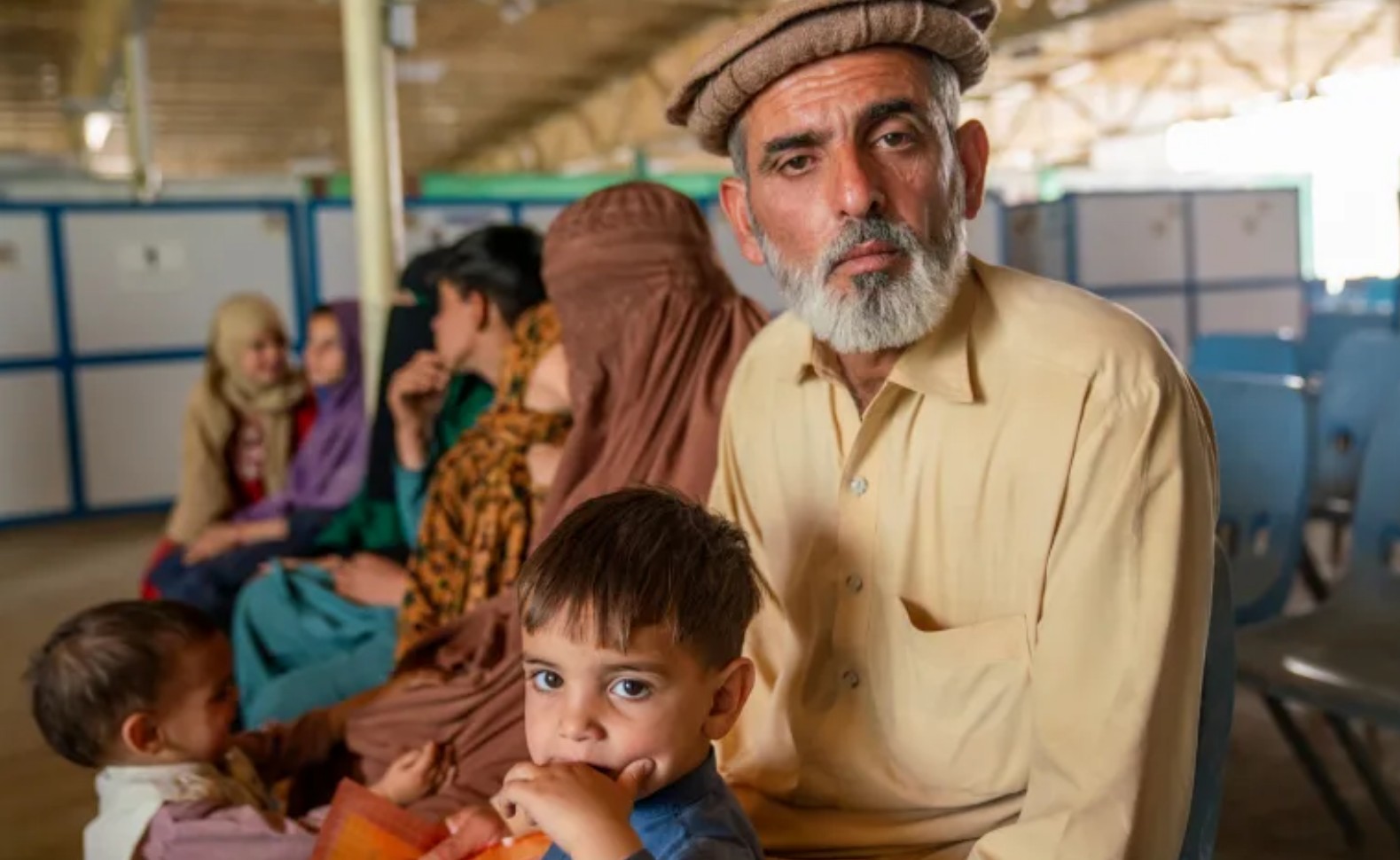
KABUL (Realist English). The mass return of Afghan refugees from Iran and Pakistan has become one of the most serious challenges to Afghanistan’s economy and social stability. According to the International Organization for Migration (IOM), nearly 6.5 million Afghans have returned home since mid-September 2023. In 2026 alone, according to the UN, about 1.3 million people returned, while between 2023 and 2025 the figure was about 4.9 million.
Labor market: unemployment and lack of skills
Returnees face a critical shortage of jobs. According to UN Development Programme (UNDP) estimates, unemployment among returnees stands at 80–95%. IOM data paint a similar picture: 69% of respondents were not employed in the 30 days before the interview, and among those who did work, 71% were only partially employed. Only 11% of adult returnees had full-time employment at least eight months after returning.
At the same time, 53% of returnees have no completed education, and 50% have no specialized experience. Host communities are also feeling the economic consequences. “Since the returnees arrived, there is less work for locals,” AFP quoted 83-year-old Ghulam Sakhi Barat, a resident of Jawzjan province, as saying. Mason Faqir Muhammad Khudabakhsh, who worked in Iran for twenty years, now finds work only three days a week: “Everyone who returned needs housing and work, but they have neither.”
Housing: rents up 150–300%
The housing situation is no less acute. According to AFP, rents have risen 150% in recent years. In the western provinces, which have received more than 2 million returnees from Iran, rents have jumped 300%. In Kabul, Herat, Mazar-i-Sharif, and Nangarhar, prices have doubled over the year: housing that previously cost 5,000–6,000 afghanis now rents for 10,000–12,000.
According to IOM estimates, 77% of returnees live in temporary housing, and 51% lack safe housing. The share of those in need of housing rose from 42% in the first survey round to 67% in the third. The Taliban government has allocated more than 70,000 land plots, but, as UNHCR notes, support “is not keeping pace with the enormous needs.”
Food, water, and social tension
Almost a third of Afghans — 15.9 million people — face crisis-level food insecurity. In Jawzjan province, where Sheberghan is located, drought is worsening the situation: most water is unsuitable for drinking and agriculture. In the Akcha district, the UN forecasts population growth of more than 26% due to returnees, and water is becoming a “critical point of tension.”
The UN warns that competition for jobs, land, and basic services risks undermining economic recovery and social stability. “Competition for scarce resources risks increasing discontent, raising displacement, and contributing to instability,” said Georgette Gagnon, Deputy Special Representative of the UN mission in Afghanistan.
Authorities’ response and limits of capacity
Saifuddin Mukhtasem, a provincial information department official, told AFP that “there are no unemployed in Afghanistan unless someone loves comfort too much and chooses not to work.” He also announced the creation of a committee to control rents, but according to AFP, local residents have not heard of such a committee, and rents have doubled in 18 months.
Former Kabul University economics professor Mohammad Bashir Dudyal told VOA that “poverty, lack of jobs, and disease could become serious problems for the integration of returnees,” adding that “it seems there are no such plans.” Khan Jan Alokozai, head of the Afghan branch of the Pakistan-Afghanistan Joint Chamber of Commerce, noted that neither the government nor the private sector has the capacity to receive millions of Afghans at once.
The return of millions of Afghans is not just a humanitarian burden but a structural shock to an economy already in deep crisis. The labor market cannot absorb the workforce, the housing stock cannot cope with the influx, and water and food resources are being depleted.
Against this backdrop, competition between returnees and host communities is becoming a risk factor: the UN directly warns of possible destabilization. While international aid is shrinking and the Taliban government denies the scale of unemployment, Afghanistan is approaching a point where social tension could spiral out of control. The question is not whether people will return — they already have. The question is whether the country and the international community will have enough resources to give them work, shelter, and water before discontent turns into conflict.