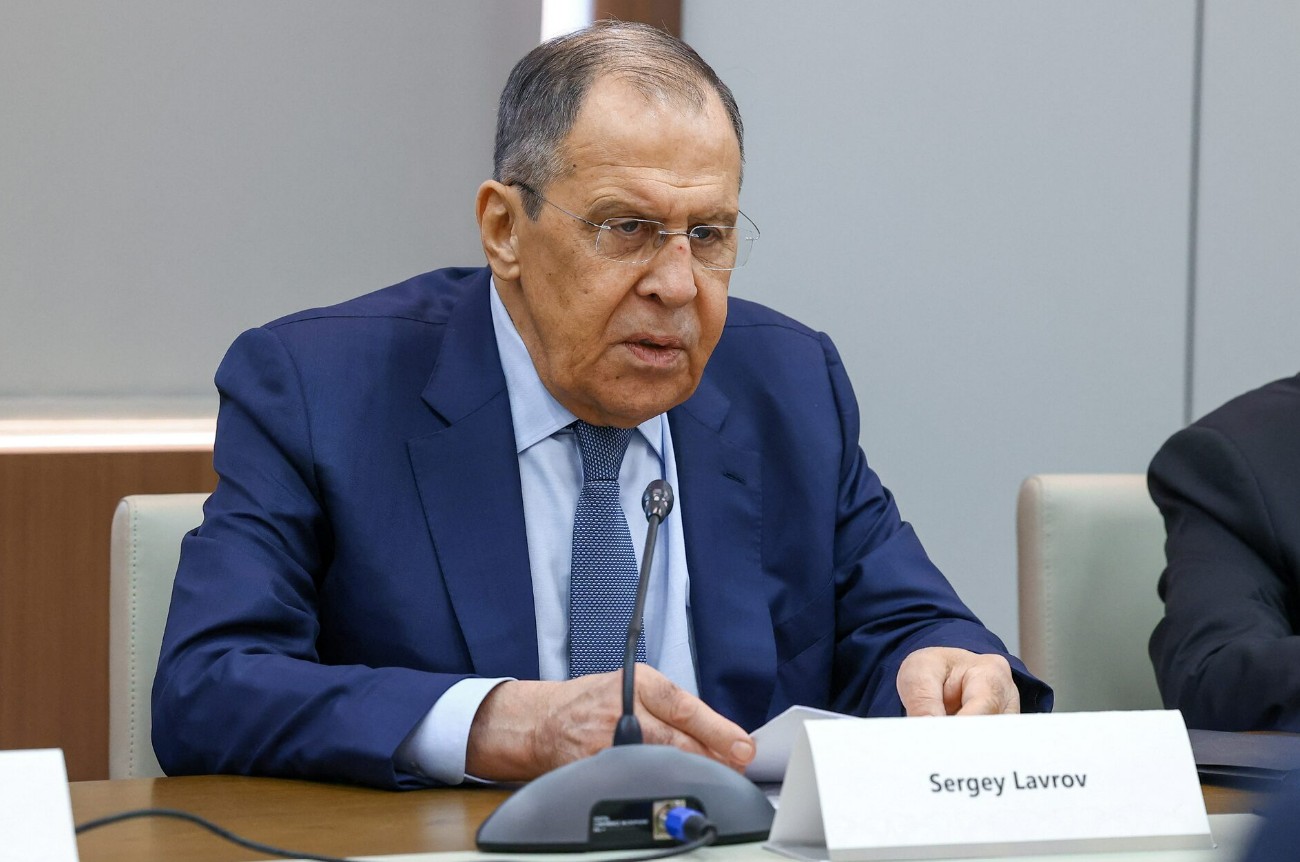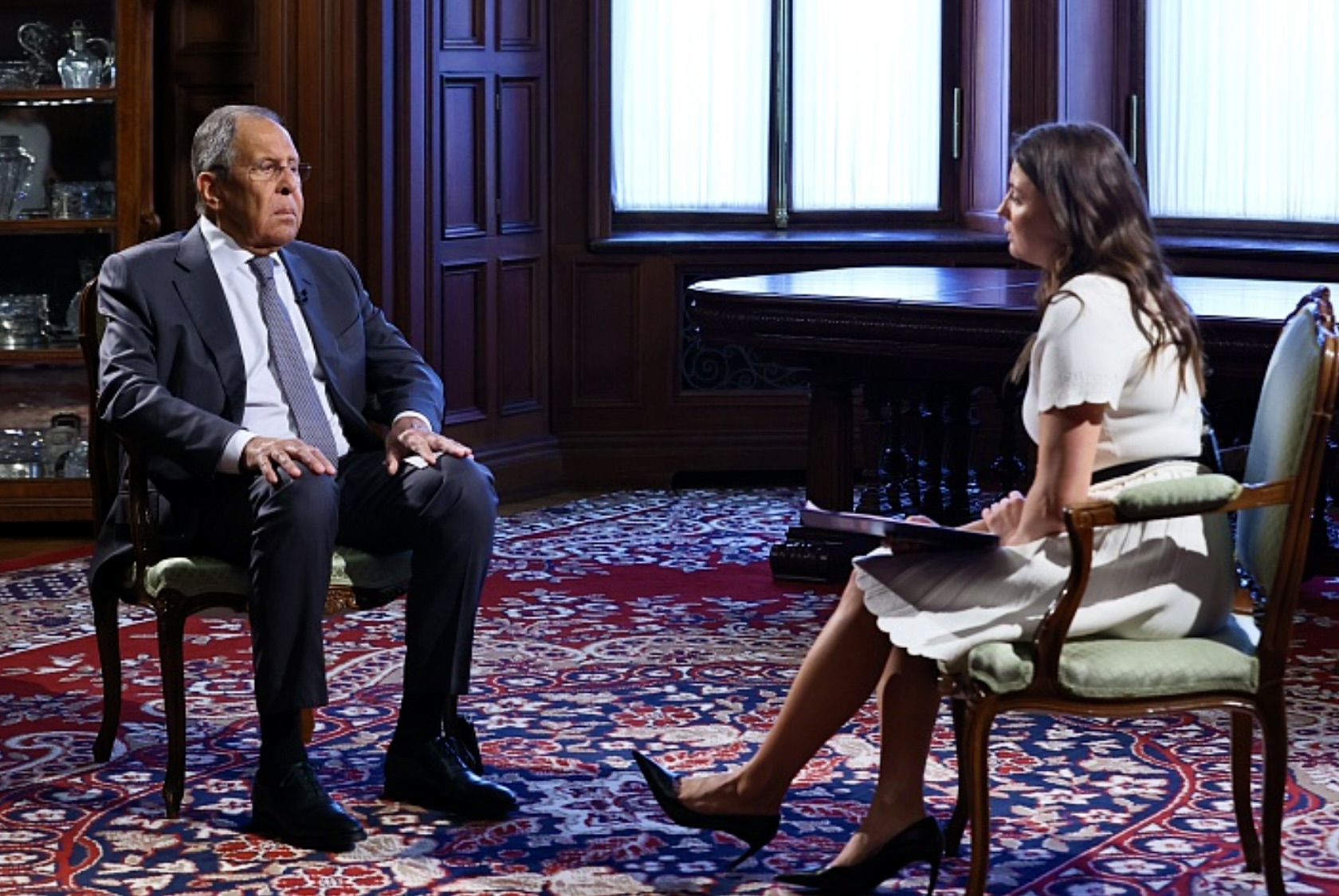
MOSCOW (Realist English). Russian Foreign Minister Sergei Lavrov has given a wide‑ranging interview to the VGTRK television channel, covering key aspects of Moscow’s foreign policy – from Japan’s military doctrine and the EU’s “pirate” actions to Turkey’s mediation efforts and Western pressure on Serbia.
On Japanese militarisation: from Abe to the Washington course
Lavrov noted a radical shift in Tokyo’s approach to relations with Moscow following the departure of Prime Minister Shinzo Abe. While Abe was an “absolutely correct politician” who understood the need for interaction with Russia, his successors have bet on militarisation in alliance with the United States.
“Those who replaced him believe that national interests must be secured together with the United States through the militarisation of Japan,” the minister said.
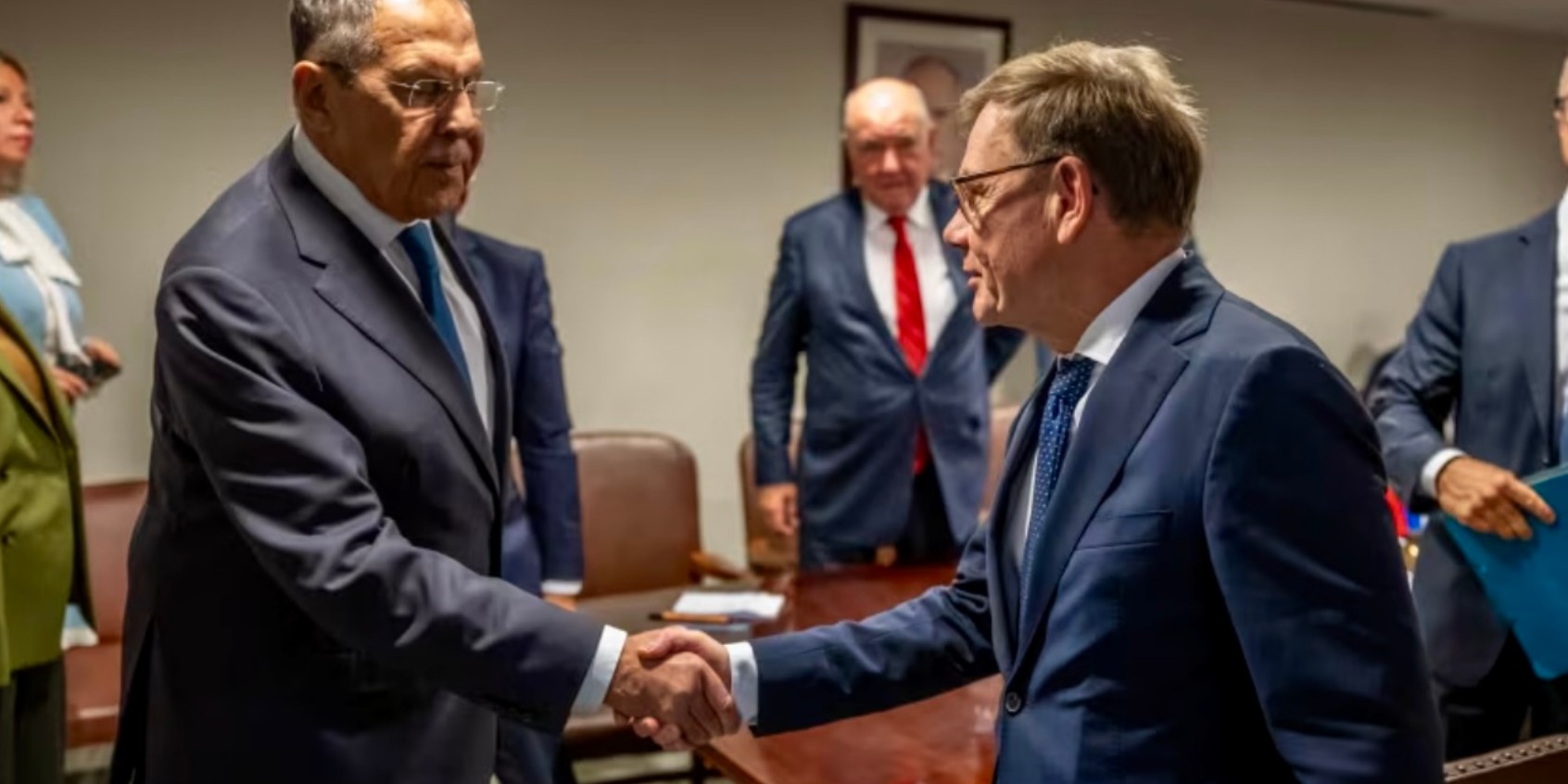
To illustrate the current level of dialogue, Lavrov recalled an episode at ASEAN events in the Philippines: his Japanese counterpart approached him from behind during a banquet, shook his hand and later claimed they had “discussed bilateral and regional issues” – though no such discussion had taken place.
The ‘shadow fleet’ and EU piracy: the response will be mirror‑like
Lavrov called the EU’s actions against Russian merchant vessels “robbery and piracy.” According to him, Brussels has banned trade in Russian energy resources and declared all vessels that do not obey it – under any flag – a “shadow fleet.”
“They have allowed themselves not just to stop and inspect vessels, but to seize cargo and sell it, to obtain revenue and transfer it to Ukraine to strengthen its Nazi regime,” Lavrov stressed.
Russian President Vladimir Putin, the foreign minister reminded, has already given a clear response: Moscow will respond in a mirror‑like manner, choosing targets among vessels working in the interests of countries that have declared robbery their official policy.
Victory over Nazism cannot be crossed out
Answering a question about methods of dealing with “dishonest adversaries,” Lavrov said that Russia would not stoop to the enemy’s methods but would make its own “much tougher.”
“We must stop only when there is a long‑term, reliable, sustainable settlement. If we were to stop now at the line of contact, we would allow the feat of our grandfathers and great‑grandfathers, who defeated Nazism, to be crossed out,” the minister said.
He also noted that the regime in Kyiv, after every terrorist attack on civilian facilities, “boasts” on social media about how “great” they were to attack beaches and dormitories.
On Serbia: EU pressure and Vučić’s courage
Lavrov confirmed that the EU is blackmailing Serbia, demanding recognition of Kosovo’s independence and accession to anti‑Russian sanctions. President Aleksandar Vučić, according to the minister, has been “courageously withstanding this pressure for years.”
Commenting on Vučić’s signing of a document on military support for Ukraine, Lavrov suggested it was a gesture aimed at “somewhat easing the pressure from the EU.”
“This pressure is blatant, boorish. They act as if they already have the ‘Fourth Reich’,” the foreign minister said.
Turkey’s mediation: ‘traces’ of NATO membership are inevitable
Lavrov confirmed that Turkey has once again offered its mediation services on the Ukrainian settlement. However, he noted that Ankara, as a NATO member, is forced to take into account its obligations to the bloc.
“Turkey wants to be a NATO member, to have relations with the EU, and to have good relations with Russia. I think the ‘traces’ that remain due to NATO membership are inevitable,” the minister explained.
He also mentioned that Turkey and the US, according to available information, have sent signals to Kyiv about the inadmissibility of strikes on the Caspian Pipeline Consortium infrastructure. However, Western partners have not publicly condemned these actions.
On talks with the US: Kushner and Witkoff
Lavrov confirmed President Vladimir Putin’s readiness to receive Donald Trump’s special envoys – Steve Witkoff and Jared Kushner. However, he noted that previous initiatives brought by Witkoff a year ago were derailed due to pressure from the EU and NATO on Trump.
“Putin accepted Trump’s proposals, but then a pause. Then sanctions against Lukoil and Rosneft. At the same time, the heads of the EU and NATO, together with Zelensky, rushed to Washington to dissuade Trump from further initiatives,” Lavrov said.
Personal: on upbringing, humour and a ‘C’ in conduct
In the final part of the interview, Lavrov answered questions about himself: about the influence of his grandmother and grandfather, about the freedom of the courtyard where “the principle ‘we shook on it – we agreed’ worked,” and even about a “C” in conduct at school.
Asked what quality helps him in his work, the minister replied: “I always treated what I did very responsibly, so as not to let down those who offered me, who appointed me.”
He also shared his views on diplomatic humour: “A diplomat should have a sense of humour, be cheerful, as soon as he has done his job well and it has been accepted.” On the remark that he cannot be embarrassed, Lavrov replied: “You can embarrass me, but you won’t notice it.”
Sergei Lavrov confirmed that all goals of the special military operation will be achieved. He called for focusing on the president’s “strong statements” and the voices of servicemen from the front: “The enemy will be defeated, victory will be ours, our cause is just.”
“I would sometimes like to add something, but I’m afraid they’ll bleep it out,” the minister joked in conclusion.