LONDON (Realist English). The Bab-el-Mandeb Strait, whose name in Arabic means “Gate of Tears,” is a narrow waterway at the southern end of the Red Sea, separating the Arabian Peninsula from the Horn of Africa. Today it is becoming the second strategic epicenter of the Iran war after the Strait of Hormuz.
The Houthis’ Blitzkrieg
On September 10–11, the Houthis conducted a military operation that Al Jazeera called a “blitzkrieg.” According to Agence France-Presse, forces captured the port of Mokha, located about 70 kilometers north of the strait, within a few days, and then occupied Perim Island in the center of the strait, as well as Great and Little Hanish. A Yemeni government army officer told AFP: “All the areas we controlled on the western coast are lost.”
Houthi military spokesman Saree stated that shipping through the Bab-el-Mandeb Strait is “safe for all countries except Saudi Arabia.” However, since July, the Houthis have repeatedly attacked Saudi tankers and declared a naval blockade of Saudi Arabia.
Strategic Importance of the Strait
The Bab-el-Mandeb Strait is about 100 kilometers long, and at its narrowest point — only about 30 kilometers. Together with the Suez Canal, it forms the shortest sea route between Asia and Europe. Before the war in Gaza began in 2023, about 12% of the world’s oil and about 30% of container traffic through the Red Sea passed through the strait.
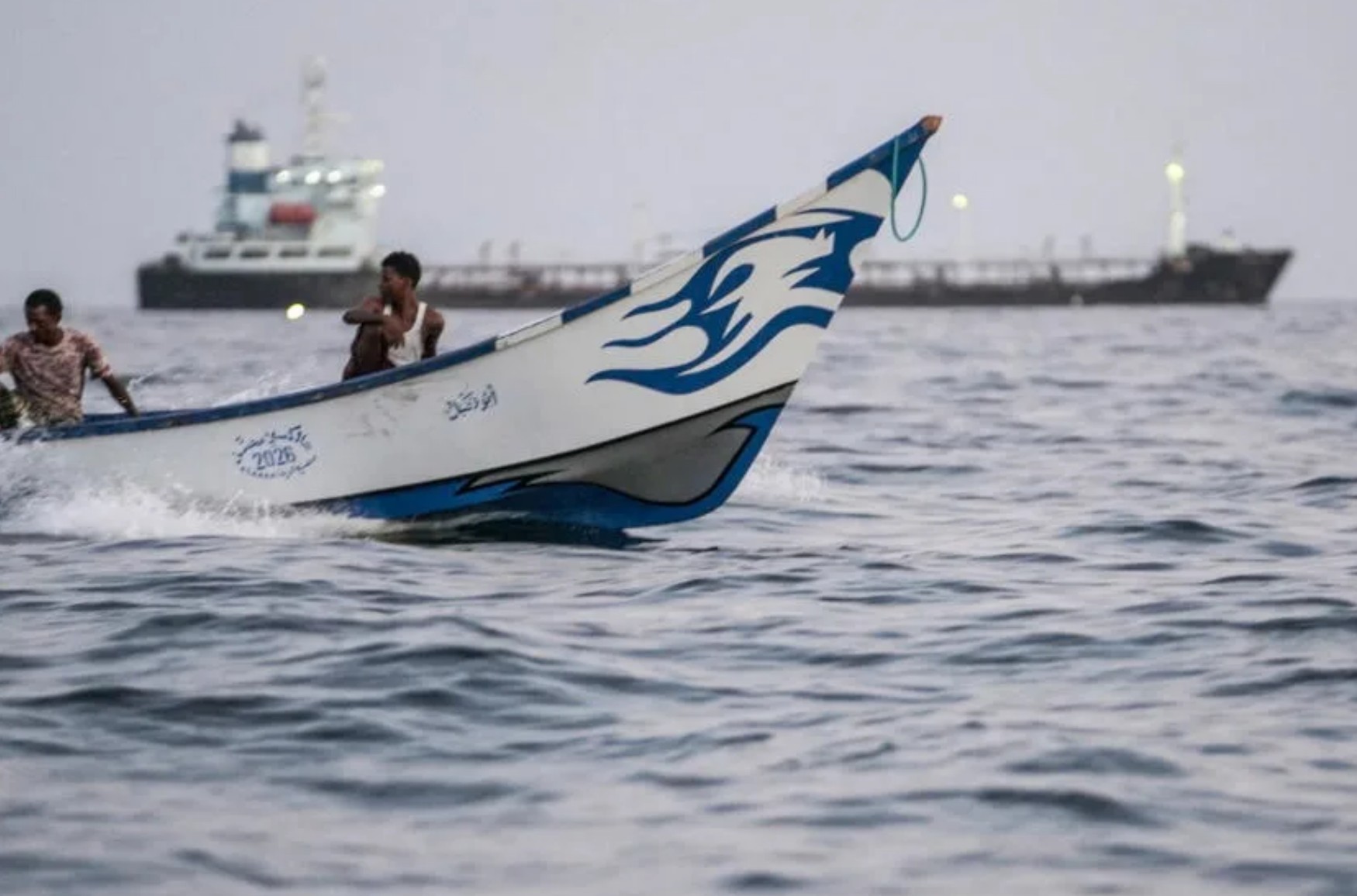
Geographic characteristics make the strait extremely vulnerable. Large cargo ships in the narrow corridor cannot maneuver and are forced to pass close to the shore, making them an ideal target for coastal missiles and drones. Control over the Yemeni coast and Perim Island means possessing the tactical ability to “turn off the tap” of the Red Sea.
The Effect of a Double Blockade
The uniqueness of the current crisis is that the Strait of Hormuz and the Bab-el-Mandeb Strait are under threat simultaneously. Since February 28, after US and Israeli strikes on Iran, Tehran has established a de facto blockade of the Strait of Hormuz. To bypass it, Saudi Arabia redirected crude oil exports to the port of Yanbu on the Red Sea coast via the East-West Pipeline (Petroline).
Data shows that exports through Yanbu reached about 4 million barrels per day in the spring — about 4% of pre-war global demand. Andreas Krieg, a security expert at King’s College London, notes: “A simultaneous crisis in the Strait of Hormuz and the Bab-el-Mandeb Strait would have a far greater effect than any single blockade.”
However, on September 10, the Saudi East-West Pipeline was closed “as a precautionary measure” after a drone attack that is alleged to have been launched from Iraqi territory.
With a capacity of about 7 million barrels per day, the shutdown of this pipeline sharply reduces Yanbu’s export capabilities. PVM analyst John Evans notes that exports through Yanbu have already fallen to about 75% of Saudi Arabia’s peacetime level, and after the pipeline’s closure this figure could decline further.
Shipping Costs and Pressure on Routes
According to Kpler, last week an average of about 32 vessels passed through the Bab-el-Mandeb Strait daily, compared to 50 before the Houthi blockade. On August 11, the cargo ship Tihama under the flag of Tanzania was attacked in the strait, and 3 crew members died — the first case of seafarer deaths as a result of Houthi attacks since the start of the US-Iranian war.
Major container operators — Maersk, MSC, CMA CGM, COSCO, and Hapag-Lloyd — have suspended or redirected voyages through the Suez Canal since spring. The bypass route around the Cape of Good Hope lengthens the voyage by 10–14 days, and shipping costs increase by 25–30%. According to the Africa Center for Strategic Studies, the bypass around the southern tip of Africa adds almost 6,000 nautical miles and about two weeks, while simultaneously raising insurance premiums.
Impact on Regional Economies
Egypt is one of the hardest-hit countries. According to estimates by the Africa Center for Strategic Studies, Egypt has lost 30–40% of the approximately $9.4 billion in annual Suez Canal revenue due to reduced shipping. Ethiopia, almost 90% of whose trade depends on the Djiboutian port of Doraleh, faces growing risks for a country with a population of more than 130 million.
Iran’s “Second Front”
Iran warned back in March that in the event of “foolish actions” by the US in the Strait of Hormuz, it would open a “new front” in Bab-el-Mandeb. The semi-official Tasnim agency, citing a military source, reported: “If the enemy tries to undertake ground actions on our islands or any territory… we will open other fronts through surprise attacks.”
Coordination between the Houthis and Iran intensified in the summer. Euronews reported that the Houthis consulted with Tehran about introducing a “safe passage fee” system through the Bab-el-Mandeb Strait to further pressure the global economy. Adviser to Iran’s Supreme Leader Mokhber congratulated the Houthis on their advance, calling it a “loud victory.”
Outlook
The situation in the Bab-el-Mandeb Strait repeats the scenario of Hormuz, but with new complexity. The Houthis do not need to immediately completely close the strait — control over Perim Island and the western coast of Yemen in itself gives Tehran an additional lever of pressure.
Saudi Arabia’s position is especially acute: the Strait of Hormuz is controlled by Iran, the East-West Pipeline is closed after the attack, and the Bab-el-Mandeb Strait has come under Houthi control.
The world’s largest oil exporter has essentially lost all alternative export routes. Riyadh has formed a multinational naval security alliance of 15 countries (including 6 African ones), but the effectiveness of this mechanism is still unclear.
Senior analyst at the International Crisis Group Ahmed Nagi previously warned that if the US imposes a blockade on Iranian ports and Iran feels pressure, “the Houthis will most likely escalate in the Bab-el-Mandeb Strait.” This forecast is coming true. As negotiations between the US and Iran reach a dead end, and Trump rejects the Iranian plan and hints at resuming bombing after the midterm elections, the “Gate of Tears” risks living up to its name.