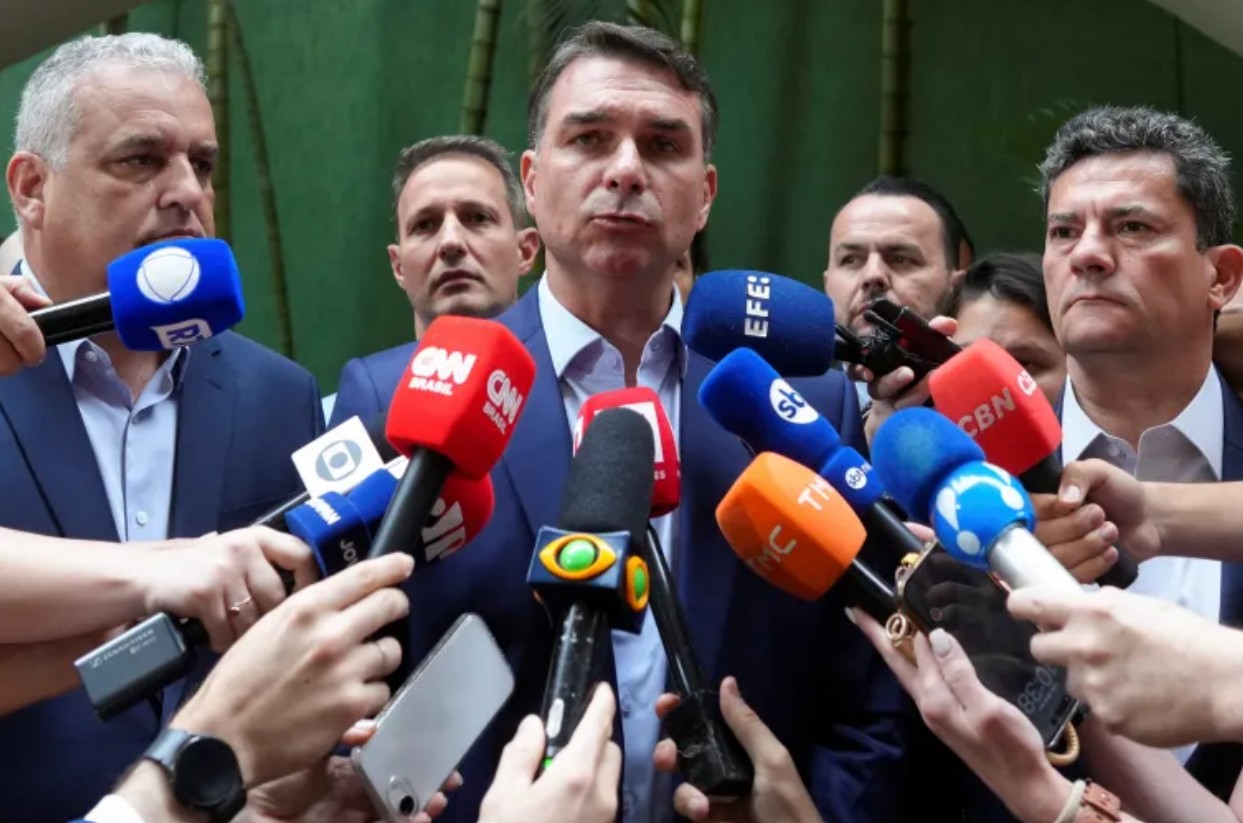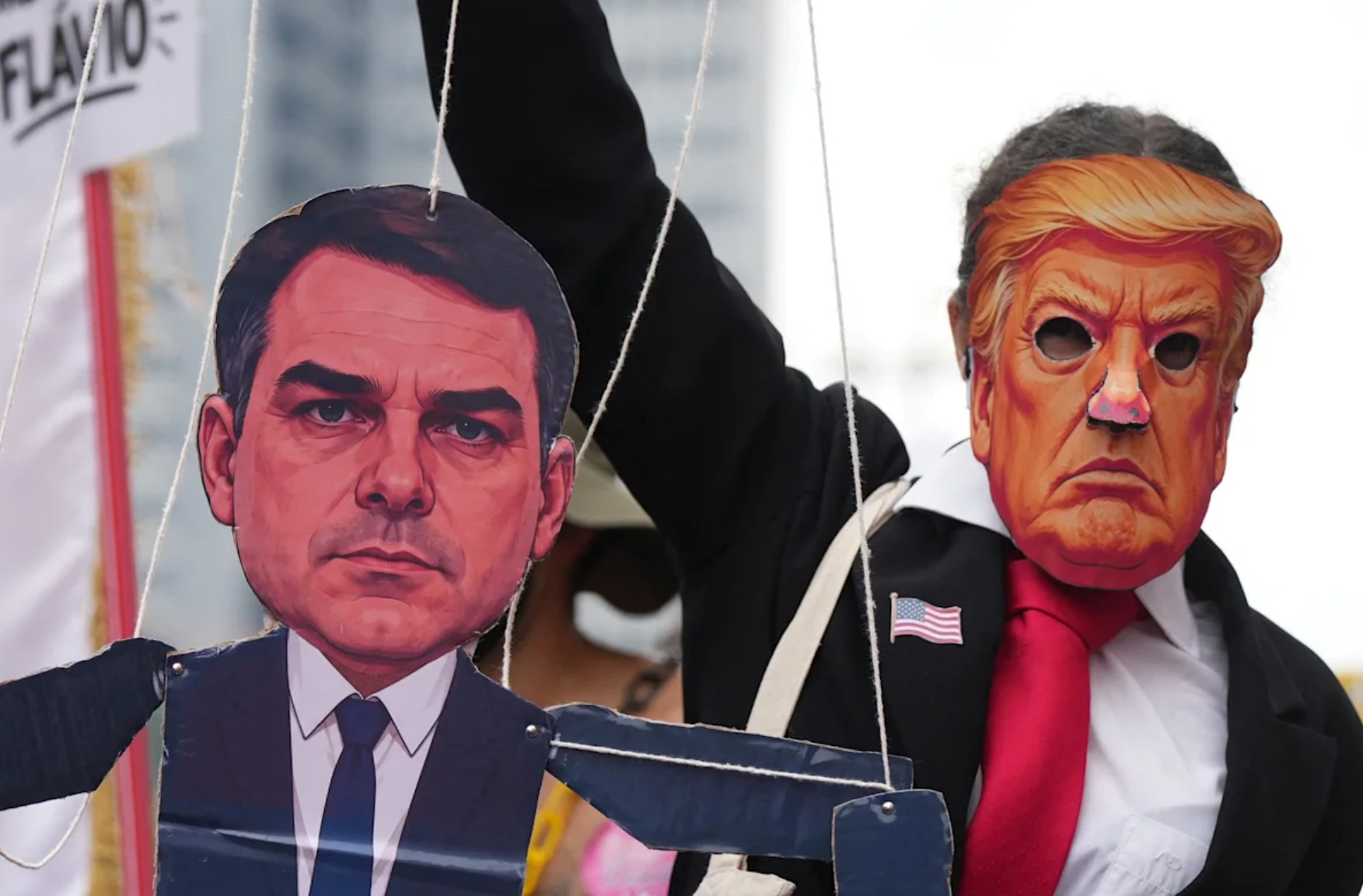
WASHINGTON (Realist English). US President Donald Trump approved the entry into the country of Brazilian Senator Flávio Bolsonaro, who was defeated in the second round of Brazil’s presidential election. Trump’s adviser told CNN this. According to him, administration officials knew that Bolsonaro had about 24 hours left to surrender his passport and made it clear to the losing candidate that he would be allowed to enter the US.
What happened
On October 25, Brazil’s Supreme Court, through Justice Alexandre de Moraes, ordered the confiscation of Bolsonaro’s passports — both regular and diplomatic — and banned him from leaving the country as part of an investigation into alleged money laundering and corruption. The deadline for surrendering the documents expired on Tuesday, October 27, at noon.
However, Bolsonaro did not comply with the decision. Brazil’s Federal Police annulled his passports after he failed to surrender them within the established deadline. On Tuesday, the senator flew to the US and has already arrived in Florida, where he met with his brother Eduardo, who lives in Texas.
US reaction
The State Department confirmed that it would issue visas to Bolsonaro and his family. “The State Department will issue visas to Flávio Bolsonaro and his family and allow them entry into the United States,” a senior department official said on condition of anonymity due to visa confidentiality laws. The official did not specify which visas the senator would receive or how long they would be valid.
Trump, commenting on Bolsonaro’s defeat, once again stated that the Brazilian elections “looked like another rigged election,” without providing any evidence.
Why Bolsonaro left Brazil
Bolsonaro is under investigation by the Supreme Court on charges of corruption, money laundering, and tax evasion, which he denies. One of the investigations is related to potentially illegal online betting platforms, another — to the production of a biographical film about his father, “Dark Horse,” in which, according to federal police, funds from Banco Master — a collapsed bank that became the center of a scheme resembling a $7 billion financial pyramid — may have been used.
Bolsonaro is also a suspect in a case involving alleged payments by former banker Daniel Vorcaro for a film about Jair Bolsonaro; the senator admitted that he mediated the transfer of more than 60 million reais for these purposes.
Trump’s decision to grant asylum to Bolsonaro is not just a visa issue. It is a signal that Washington is prepared to use immigration mechanisms as a tool of political support for an ally, even if that ally is under investigation and has violated a court decision of a foreign state. For Brazil, this creates a delicate situation: the new president, Luiz Inácio Lula da Silva, commenting on his rival’s departure, limited himself to the phrase “Those with nothing to hide have nothing to fear,” but it is obvious that the Bolsonaro case will remain an irritant in bilateral relations.
For Bolsonaro himself, this is not the end of his political career but a change of venue: from a senator losing immunity in February 2027, he is turning into a political emigrant, retaining influence through the diaspora and ties with Republicans. The question is whether other Brazilian politicians under pressure from the courts will follow him — and whether the US will become a haven for right-wing populists losing power at home.