Realist: news and analytics

Русский / English / العربية

  • News
  • Russia
  • Caucasus
  • Opinion
  • Interviews
  • Experts
No Result
View All Result
Realist: news and analytics
  • News
  • Russia
  • Caucasus
  • Opinion
  • Interviews
  • Experts
No Result
View All Result
Realist: news and analytics

Israel and the world remember Holocaust victims

Yom HaShoah under the shadow of war: Netanyahu draws parallel between Iran and Nazi Germany.

     
April 14, 2026, 21:52
People & Culture
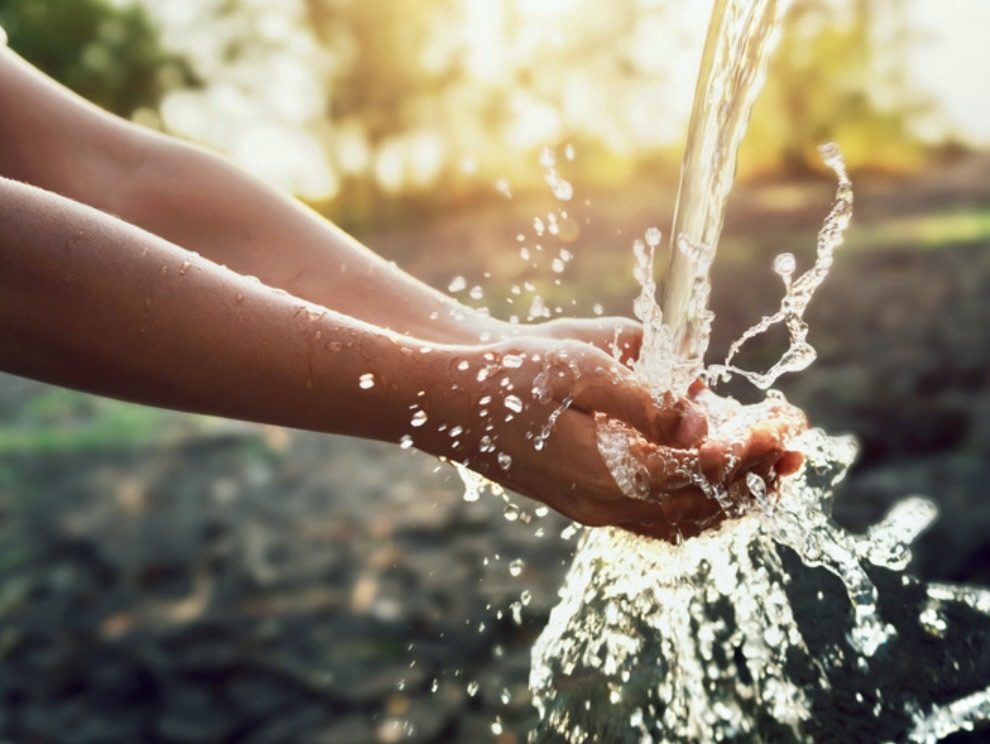
Israel and the world remember Holocaust victims

Photo: Times of Israel

JERUSALEM (Realist English). In 2026, Israel commemorates the victims of the Holocaust in April, linking Yom HaShoah (Holocaust Remembrance Day) to the anniversary of the Warsaw Ghetto Uprising. The memorial days fell on April 13–14.

In Israel, Yom HaShoah is not just a date on the calendar but a nationwide pause, a moment of absolute national unity. Traditions formed over decades have turned it into a powerful ritual of collective memory.

A nationwide halt 

At 10:00 a.m., life across the country comes to a standstill for two minutes. Work stops, people freeze in place on the streets, and drivers pull over and step out of their vehicles to stand and honor the six million. This is a voluntary ritual that Israelis observe without legal compulsion.

It is important to note that the mourning siren is not confused with an air raid warning — it sounds continuously, unlike the rising and falling tone of the alert siren.

State ceremony at Yad Vashem

The main memorial events take place at Yad Vashem, the national Holocaust memorial in Jerusalem. On the evening of April 13, an opening ceremony is held with the participation of the president and prime minister, where six torches are lit — in memory of the six million murdered. In 2026, due to the war with Iran, the ceremony was not held live but was pre‑recorded for security reasons.

Wreath‑laying ceremony 

On the morning of April 14, after the siren, a state wreath‑laying ceremony takes place at the memorial in Yad Vashem, attended by the president, prime minister, and other officials.

Reading of names (“Every person has a name”)

At 11:00 a.m., the reading of Holocaust victims’ names begins at the Knesset and at Yad Vashem. This event, which also takes place in schools and communities, helps convey the scale of the tragedy by restoring individuality to each victim.

Closure of entertainment venues

During the mourning period, restaurants, cafes, cinemas, and other places of entertainment are closed across the country.

Connection to the present 

In 2026, special emphasis was placed on parallels between Holocaust history and current events: in his speeches, Prime Minister Benjamin Netanyahu linked the necessity of the war with Iran to preventing a “second Holocaust.” The ceremonies also highlighted the role of the family during the Holocaust and gave examples of survivors who sacrificed their lives for the State of Israel, while their descendants fell heroically in battle.

Holocaust Remembrance Day 2026 showed that this topic remains acute and relevant, becoming a tool not only for preserving history but also for political rhetoric

From January 14 to February 4, a large‑scale “Week of Remembrance” took place in Russia, reaching millions of people, while Western countries and Israel held their own memorial events, once again underscoring the lessons of the Holocaust against the backdrop of modern military conflicts. In Russia, it was marked by an unprecedented scale of events, emphasizing national unity and memory.

In Israel, it became another argument in justifying the military campaign against Iran. Despite differences, all events shared a common goal: to remember a tragedy that has no statute of limitations and to pass this experience on to future generations so that the horrors of the past are never repeated.

In 2026, events in the Russian Federation covered 80 regions, 328 municipalities, and more than 3,200 institutions. More than 400,000 people took part.

The date of January 27 was chosen for a reason. On that day in 1945, soldiers of the 1st Ukrainian Front of the Red Army under Marshal Ivan Konev liberated the most terrible Nazi death camp — Auschwitz-Birkenau (Oświęcim). The liberators witnessed horrific evidence of genocide: gas chambers, crematoria, and 7,500 emaciated prisoners whom the Nazis had not had time to kill.

Poland is the site of the most terrible extermination camps: Auschwitz-Birkenau, Treblinka, Sobibor, and Majdanek. Every year (usually in April), thousands of young Jews from around the world march from Auschwitz to Birkenau to honor the victims. In 2026, the March of the Living took place on April 14, as part of Holocaust Remembrance Day.

According to various estimates, between 1.5 and 4 million people died in Auschwitz during the war, most of them Jews. In 2005, the United Nations General Assembly adopted a resolution establishing the International Day of Commemoration in memory of the victims of the Holocaust. The Secretary‑General delivers an annual message, reminding of the need to fight hatred, anti‑Semitism, and xenophobia worldwide. In 2026, the theme of the message was “Memory and Human Dignity: Protecting the Future from the Distortion of the Past.”
Holocaust RemembranceIsraelIsrael’s Domestic Policy
Previous Post

5% of Azerbaijani citizens use injection drugs: Aliyev’s regime under the thumb of drug mafia

Next Post

A Second Attempt in Islamabad? Washington and Tehran Try to Reach a Deal Before the Ceasefire Expires on April 21

Related Posts

55% of Israelis want Netanyahu to go: opposition bloc overtakes Likud for first time
People & Culture

55% of Israelis want Netanyahu to go: opposition bloc overtakes Likud for first time

19 May, 2026
“Restrictions Alone Are Not Enough — Children Need to Be Engaged”: Paata Amonashvili on Meaningful Alternatives to Gadgets
People & Culture

“Restrictions Alone Are Not Enough — Children Need to Be Engaged”: Paata Amonashvili on Meaningful Alternatives to Gadgets

18 May, 2026
Raúl Castro remains Cuba’s “shadow king”
People & Culture

Raúl Castro remains Cuba’s “shadow king”

17 May, 2026
85% of Africans adhere to Christianity or Islam
People & Culture

85% of Africans adhere to Christianity or Islam

16 May, 2026
Cuba runs out of diesel and fuel oil: energy collapse sparks protests in Havana
People & Culture

Cuba runs out of diesel and fuel oil: energy collapse sparks protests in Havana

14 May, 2026
Metropolitan Shio Moudjiri elected Patriarch of the Georgian Orthodox Church
People & Culture

Metropolitan Shio Moudjiri elected Patriarch of the Georgian Orthodox Church

12 May, 2026
Most Popular
Most Popular
“Restrictions Alone Are Not Enough — Children Need to Be Engaged”: Paata Amonashvili on Meaningful Alternatives to Gadgets

“Restrictions Alone Are Not Enough — Children Need to Be Engaged”: Paata Amonashvili on Meaningful Alternatives to Gadgets

18 May, 2026

TBILISI (Realist English). Restrictions alone are not enough to overcome children’s dependence on gadgets — children must be offered meaningful...

US and Iran fail to reach Hormuz deal as Trump threatens new strikes

US and Iran fail to reach Hormuz deal as Trump threatens new strikes

18 May, 2026

WASHINGTON (Realist English). The United States and Iran remain far from reaching an agreement to end the war and reopen...

Israel prepares for new war with Iran – from bombing to commando landings

Israel prepares for new war with Iran – from bombing to commando landings

17 May, 2026

TEL AVIV (Realist English). With US‑Iran talks deadlocked, the Israeli leadership has stepped up preparations for a resumption of full‑scale hostilities....

Raúl Castro remains Cuba’s “shadow king”

Raúl Castro remains Cuba’s “shadow king”

17 May, 2026

HAVANA (Realist English). From the very moment in April 2021 when legendary General Raúl Castro, brother of the great Fidel, handed...

Opinion

Replacing Baathists with Islamists: why Kurds and other minorities in Syria have not seen equality

Replacing Baathists with Islamists: why Kurds and other minorities in Syria have not seen equality

19 May, 2026

HASAKAH (Realist English). The overthrow of Bashar al‑Assad and the rise to power in Damascus of radical Islamist groups has not...

Russia seeks its place in China’s new transport corridor

Russia seeks its place in China’s new transport corridor

17 May, 2026

MOSCOW (Realist English). Ahead of Russian President Vladimir Putin’s official visit to Beijing, experts are increasingly discussing the hidden contradictions...

From Hormuz to Solar Panels: How Iran Accelerated the Global Shift to Renewables

From Hormuz to Solar Panels: How Iran Accelerated the Global Shift to Renewables

16 May, 2026

WASHINGTON (Realist English). An analytical article by Benjamin Bradlow, professor of sociology and international affairs at Princeton University, published in...

China No Longer Seeks U.S. Approval

China No Longer Seeks U.S. Approval

15 May, 2026

BEIJING (Realist English). U.S. President Donald Trump’s visit to China on May 14–15 passed with surprising calm and almost none...

All rights reserved.

© 2017-2026

  • About Us
  • Mission and Values
  • Contact Us
  • Privacy Policy

Follow Realist English

No Result
View All Result
  • News
  • Russia
  • Caucasus
  • Opinion
  • Interviews
  • Experts

Русский / English / العربية