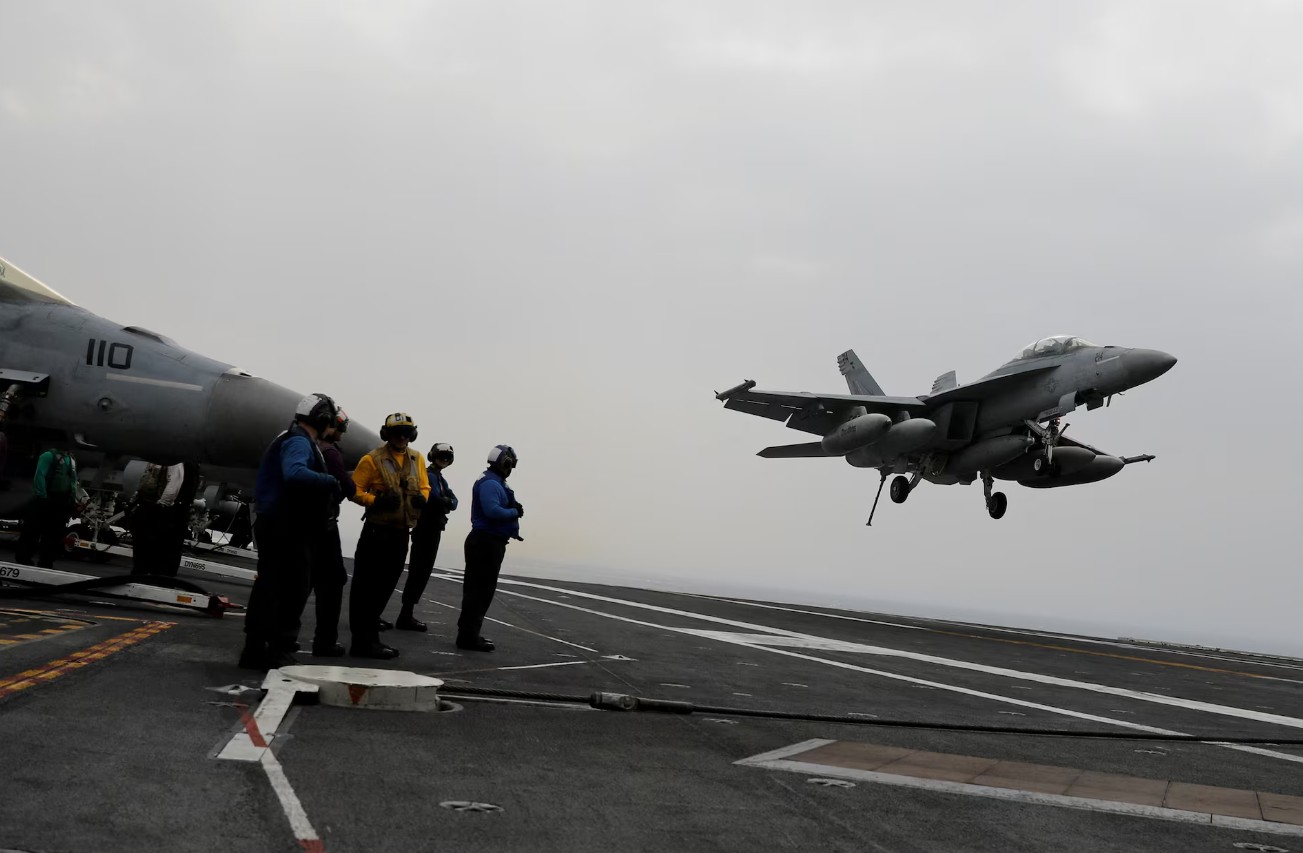
WASHINGTON (Realist English). The contract, signed following a lengthy competition, provides for a “full-scale development phase” and includes the construction of several test aircraft for ground testing, airworthiness verification, onboard systems and weapons integration.
According to Breaking Defense, Boeing beat its only remaining competitor — Northrop Grumman, which proposed a “highly survivable, digitally advanced sixth-generation fighter.”
This is Boeing’s second major victory in the past 18 months: in March 2025, the corporation won the contract to build the F-47 fighter for the US Air Force. As Breaking Defense notes, the double success effectively “freezes” Lockheed Martin and Northrop Grumman out of the manned sixth-generation fighter market for years to come.
Technical Details: Range, Stealth and Unmanned Wingmen
Technical and program details of the F/A-XX remain classified in accordance with US national security and export control laws. However, key requirements are known: the new fighter must have increased flight range, improved stealth and the ability to operate in environments saturated with enemy air defenses.
“The F/A-XX will dominate contested airspace, expand operational capabilities and provide a decisive combat advantage,” said Deputy Secretary of Defense for Acquisition and Sustainment Michael Duffey.
Particular emphasis is placed on interaction with unmanned systems. As Chief of Naval Operations Admiral Daryl Caudle stated during Senate hearings in May 2026, the next-generation system must “extend range, survivability and lethality” and will operate jointly with drones.
The F/A-XX is being developed with the expectation of controlling prospective unmanned wingmen — aircraft that the US Navy is creating for a future air wing.
| Parameter | Value |
| Contract | >$20 billion (full-scale development) |
| Program | Next Generation Air Dominance (NGAD) |
| Service entry | 2030s |
| Replaces | F/A-18E/F Super Hornet, EA-18G Growler |
| Will fly alongside | F-35C, unmanned CCA |
| Competitor | Northrop Grumman (lost) |
| Production | Boeing plant in St. Louis, Missouri |
“Political Battle”: How the Program Survived Freeze Attempts
The F/A-XX’s path to the contract was not easy. After Boeing’s victory in the F-47 competition in 2025, the Pentagon attempted to freeze the carrier-based fighter program, citing a shortage of engineering and production capacity to simultaneously develop two sixth-generation aircraft. In July 2025, the White House stated that continuing work on the F/A-XX would “jeopardize the success of the F-47.”
However, Congress intervened, allocating $750 million in the 2025 tax and spending law and an additional $1.4 billion in the 2026 fiscal year. As AeroTime notes, the funds were allocated on the condition that the development contract be signed before the end of the fiscal year, that is, by 30 September 2026. The award came literally at the last moment.
“Delivering two modern fighters in parallel has always been our plan, and we have invested accordingly,” said Steve Parker, head of Boeing Defense, Space & Security.
“A New Era for the Navy”: Reaction and Consequences
Acting Secretary of the Navy Hung Cao called the contract a “generational leap in air superiority” that will provide “unprecedented capabilities to fight, win and return home safely.”
Boeing confirmed that construction continues at its St. Louis plant, which the company calls the largest facility of its kind in the US, designed to produce multiple products with next-generation capabilities.
Northrop Grumman expressed disappointment but said it awaits additional information about the decision. Boeing shares rose 2.4% after the close of trading, while Northrop shares fell 3.6%.