MOSCOW (Realist English). President Vladimir Putin has stated that the situation on the domestic fuel market is under the personal supervision of Prime Minister Mikhail Mishustin, and that emerging problems are being consistently addressed.
At the same time, the head of state acknowledged that “not all issues have been resolved” and that certain inconveniences for citizens remain.
President’s statement
On 23 August, in an interview with the Vesti information service, Vladimir Putin told journalist Pavel Zarubin that the fuel situation is under the constant supervision of the prime minister.
“Just the day before yesterday, we met and discussed this topic with the prime minister. Yes, not all issues have been resolved yet, but they are being addressed. The prime minister is keeping these issues under control. A special commission has been created,” the president said.
Putin also noted that the government must keep the situation under control: “Yes, of course, there are some inconveniences for people, but the government must, of course, keep this under control.”
Fuel shortage and government measures
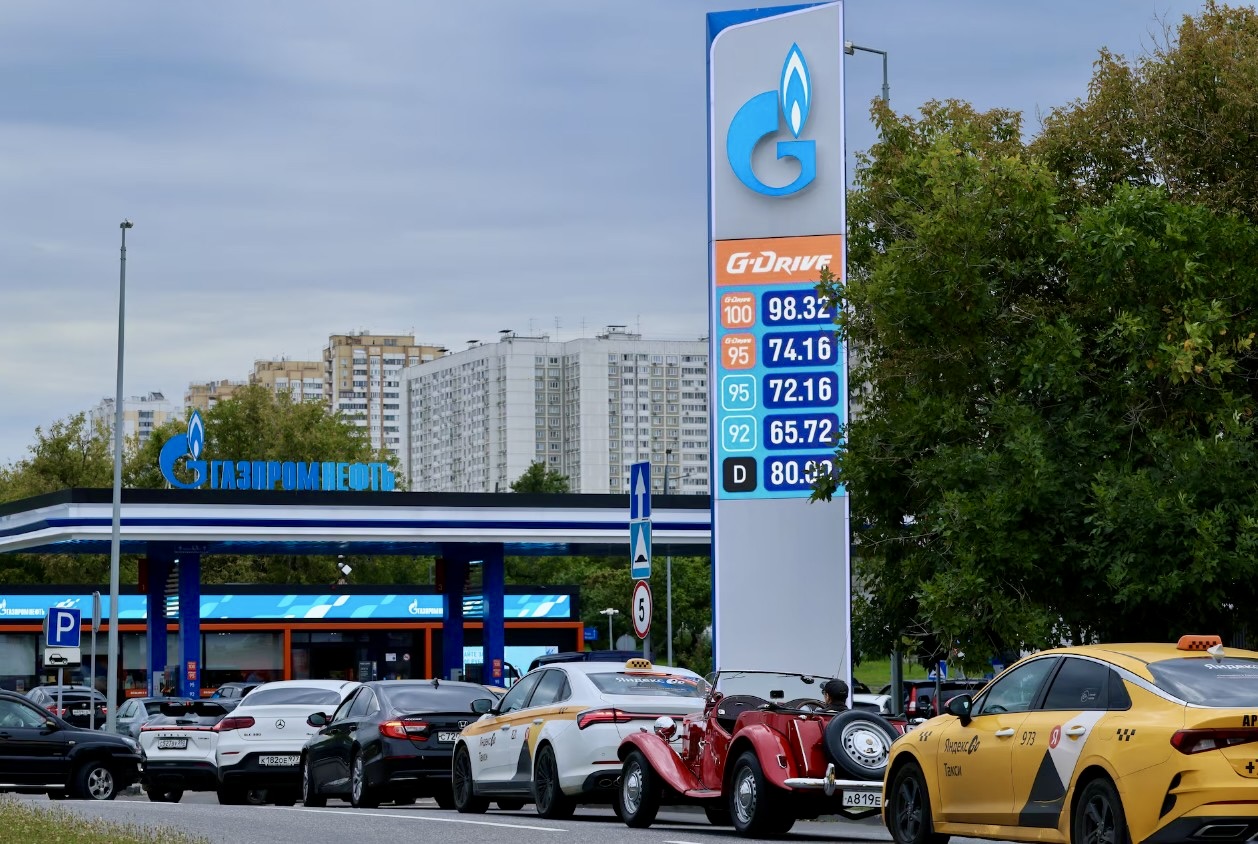
The president’s statement came amid continuing tensions in the domestic fuel market. Some Russian regions have once again faced fuel shortages.
| Region | Restrictions |
| Orenburg Region | Limits on fuel sales per person |
| Sochi | Recommendations to avoid private car use; fuel sale restrictions |
Authorities have already taken a number of measures to stabilise the situation:
| Measure | Description |
| Export ban on fuel | Restricting fuel exports to boost domestic supply |
| Tax incentives for imports | Encouraging fuel imports from abroad |
| Increased domestic production | Boosting refining output and fuel production |
| Agreements with oil companies | Fuel supplies to independent filling stations through regional operators |
| Gasoline imports | Beginning purchases of gasoline abroad to boost domestic supply |
| Import damping mechanism for diesel | Extending the mechanism previously used for gasoline to diesel fuel |
| Diesel export ban | Temporary export restriction to build up winter stocks |
Russia has already begun importing gasoline to boost domestic supply, and the government has extended the import damping mechanism to diesel fuel. At the same time, diesel exports remain banned to build up reserves for the winter.
Government assessment
Putin’s statement signals that the government is keeping the situation under control, although problems in the fuel market persist. The president’s admission that “not all issues have been resolved” indicates continuing tensions in a number of regions where fuel sale restrictions have been imposed.
The creation of a special commission and the prime minister’s personal oversight reflect a systematic approach by the government to addressing the problem. However, as experts note, real volumes of imported fuel from abroad are unlikely to significantly change the situation on the domestic fuel market.
The key question is whether the measures already taken – the export ban, import supplies and tax incentives – will be sufficient to fully stabilise the situation by the autumn‑winter period, or whether regions will have to extend their restrictions.