MOSCOW (Realist English). Russian grain exports finished 2025 in a paradoxical situation: a record harvest did not bring farmers the expected income due to a collapse in world prices and the strengthening of the ruble. At the end of the agricultural season, Russia maintained its global leadership in wheat supplies (share of about 20%), but foreign exchange earnings fell by more than 30% compared with the peak figures of 2024.
Export figures
According to the Federal Customs Service and the Russian Ministry of Agriculture, in 2025 Russia exported 50 million tons of grain, including 41 million tons of wheat. Supplies went to 115 countries. The bulk (about 78%) went to African and Middle Eastern nations.
Exports of pulses for the first time exceeded a symbolic mark: with a record harvest of 8 million tons, about 3 million tons were shipped abroad.
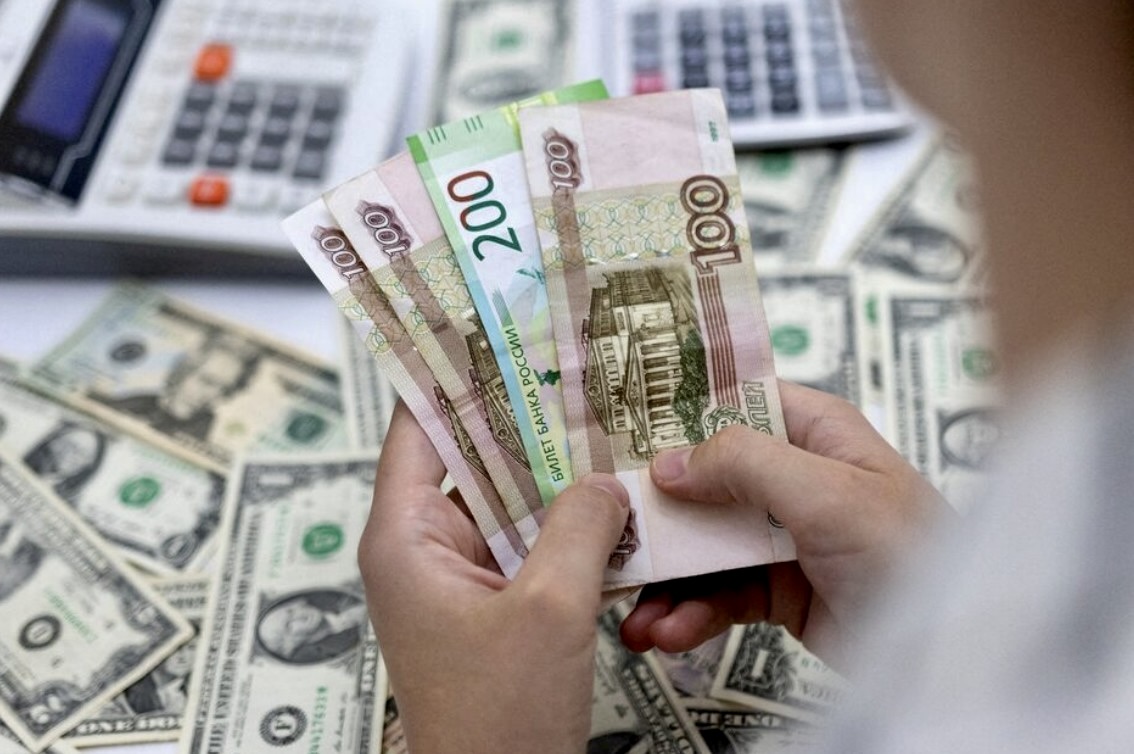
Nevertheless, the main indicator of the industry — foreign exchange earnings from wheat sales — collapsed. Whereas in 2023 and 2024 exporters earned more than $10 billion per year, in 2025, according to preliminary estimates, dollar‑denominated revenues fell by more than a third. The reason was the fall in world grain prices against the backdrop of a record global harvest (FAO forecast — more than 3 billion tons) and the strengthening of the ruble from 101 to 76 per dollar, which made ruble revenues even more modest.
Record harvest: 141 million tons
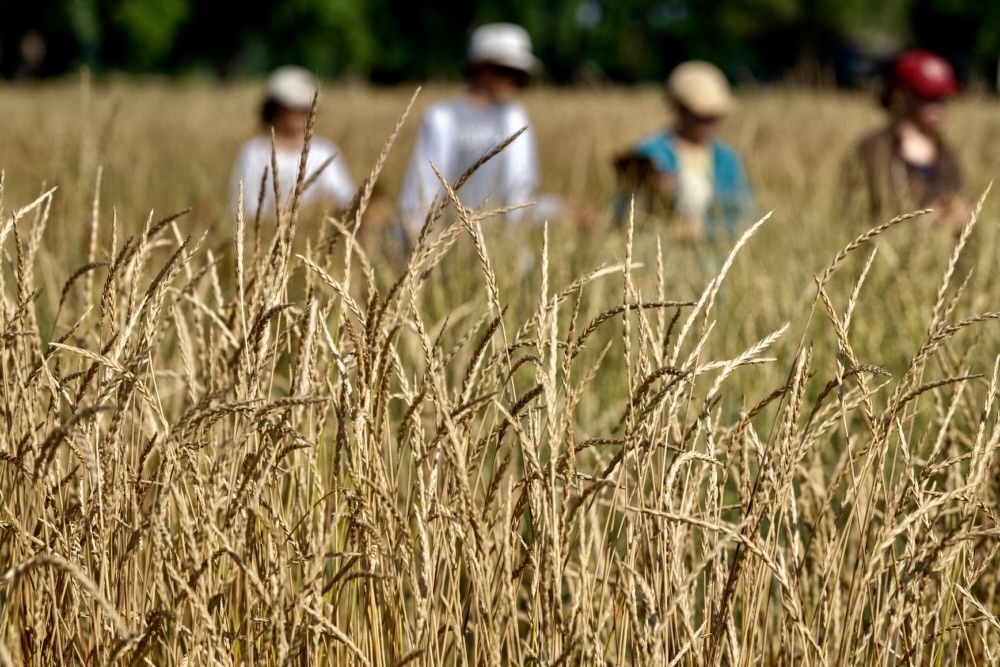
The ground for exports was prepared by a record harvest. According to final Rosstat data published in March 2026, the gross harvest of grains and pulses in 2025 amounted to 141.15 million tons in clean weight. For comparison: a year earlier, 125.9 million tons were harvested.
- Wheat: 91 million tons (82.6 million tons in 2024).
- Barley: 19.7 million tons (16.67 million tons in 2024).
- Corn: 14.8 million tons (final Rosstat data turned out to be 2 million higher than preliminary estimates).
- Pulses: 7.95 million tons (of which 5.7 million tons of peas) — a record.
- Oilseeds: 34.36 million tons (30.2 million tons in 2024).
Where the grain went
The largest buyers of Russian wheat in the first half of the 2025/26 season (July–December) remain traditional partners, although the geography is expanding to Africa and South Asia.
| Rank | Country | Volume (million tons) | Dynamics |
| 1 | Egypt | 5.1 | slight decrease from 5.5 in 2024 |
| 2 | Turkey | ~4.4 | 2.2‑fold growth due to crop failure in Turkey itself |
| 3 | Iran | 1.7 | 2.9‑fold growth (rose from 8th place) |
| 4 | Bangladesh | 1.45 | decrease due to competition with Brazil and Argentina |
| 5 | Israel | 1.1 | stable import |
Large African buyers also significantly increased purchases: Sudan increased imports 2.2‑fold to almost 1 million tons.
Duties as a “buffer” and a “penalty”
Throughout the year, the Ministry of Agriculture actively used the floating export duty mechanism introduced in 2021. Their size depends on the world price and the ruble exchange rate; the duty is 70% of the difference between the indicative and base prices.
In August 2025, the Ministry of Agriculture temporarily zeroed export duties on wheat, barley and corn (as a weekly measure), but by September the rates were raised again.
At the end of the year, Deputy Prime Minister Dmitry Patrushev confirmed that the authorities do not plan to abandon the duty mechanism. “The duty is a mechanism that will work for now,” he said.
Forecasts for 2026: cautious optimism
Despite the difficult year of 2025, the agricultural department gives cautiously optimistic forecasts. Minister of Agriculture Oksana Lut said that in 2026 Russia could export about 55 million tons of grain, which is 5 million more than in 2025. The reason is high carryover stocks (more than 139 million tons) and readiness to supply partners.
Russia will maintain its leadership in wheat exports (share of about 20%), according to Dmitry Rylko, head of IKAR. However, he noted that the market has become more competitive: the EU, Kazakhstan and Argentina also harvested large crops, which narrowed the circle of importers. Importers adhere to a “just‑in‑time” strategy, buying exactly as much as they need here and now, without building up stocks.
By 2030, Russia has set ambitious goals: to harvest 170 million tons of grain and export 80 million tons.
Expert and official opinions
Igor Pavensky, head of the analytical centre of Rusagrotrans: at the end of the 2025/26 season (July 2025 – June 2026), Russia could export 57.8 million tons, including 44 million tons of wheat. The drop in exports at the beginning of 2025 was stopped by November, in part thanks to the abolition of duties.
FAO experts: the record global harvest of 2025 (more than 3 billion tons) and the growth of world stocks to 925.5 million tons will put pressure on prices, which will keep conditions difficult for Russian exporters in 2026 as well.
Dmitry Patrushev, Deputy Prime Minister of the Russian Federation: it is important to review the base price for calculating grain duties annually so that the mechanism does not “strangle” exports. Russian grain remains in demand, but the world market has entered a phase of lower prices.
Results
Russian grain exports in 2025 demonstrated a classic “success trap” — a record harvest coincided with a fall in prices and a strengthening of the ruble. As a result, while physical volumes of supplies were maintained, real revenues of the agricultural sector fell. In 2026, the Ministry of Agriculture hopes to increase supplies by 5 million tons through carryover stocks, but competition and global market conditions remain the main risk factors.