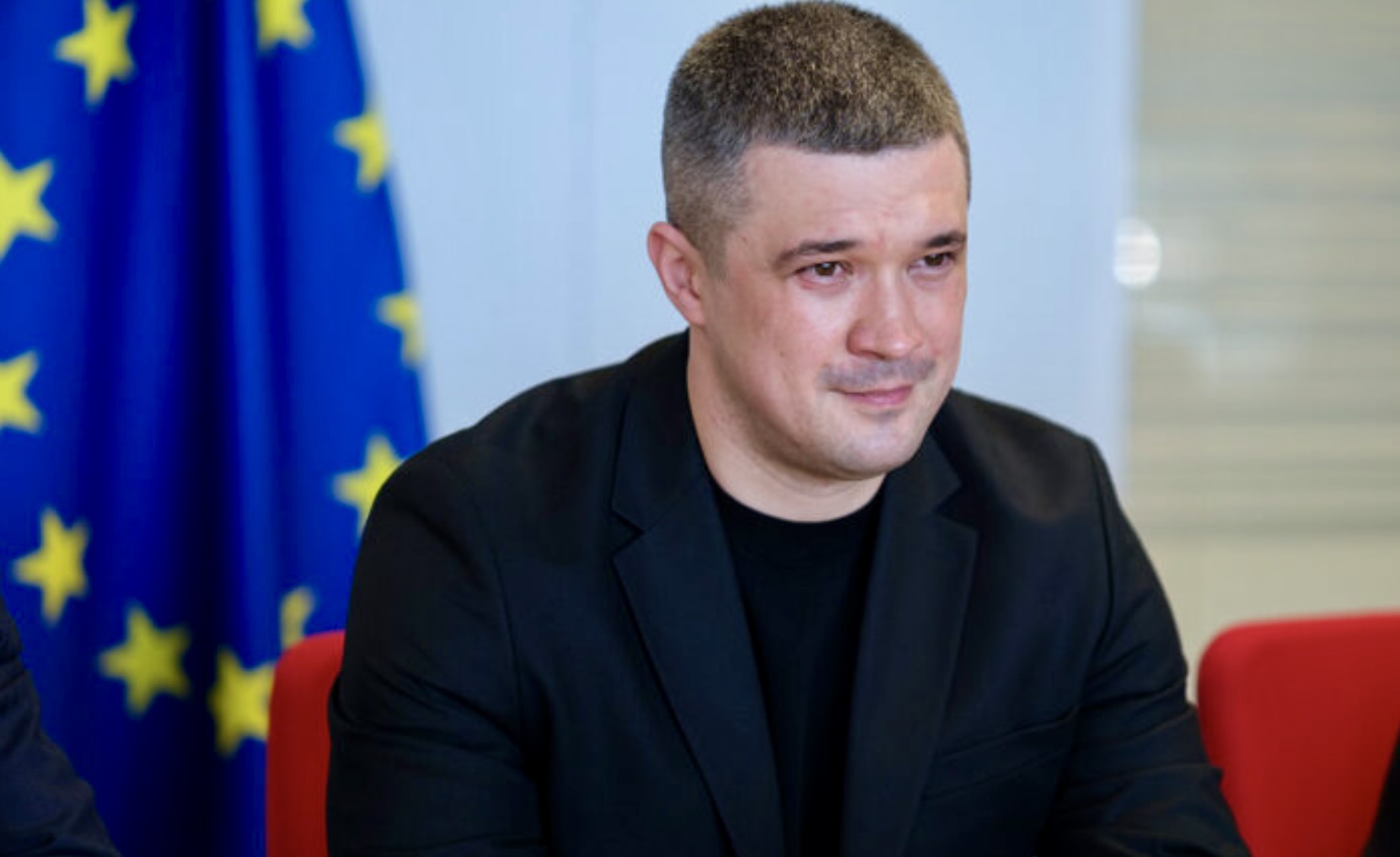
WASHINGTON (Realist English). Former Ukrainian Defence Minister Mykhailo Fedorov, dismissed from his post in July 2026, arrived in the United States this week to launch an ambitious project — a private defence technology fund that, in his words, is set to “write a new history of war” against Russia.
In an interview with the Financial Times, the 35‑year‑old Fedorov said he is seeking support from venture capitalists, private investors and US technology companies. “It’s not quite a classic venture fund,” he explained. “We are writing a new history of war.” According to him, the fund will go beyond the traditional model, not only investing in existing Ukrainian startups but also creating its own enterprises to develop critical technologies.
“Drone Army” in Exchange for Patriots
Fedorov’s visit to the US is not just a search for money. The former minister has offered Washington a direct trade: he is ready to help America “build a drone army” in exchange for Patriot interceptor missiles. “I would be very happy to help America build a drone army — especially in exchange for Patriot interceptors, so that we can survive this winter. I am ready to make that deal,” he said. According to him, such an exchange is critical because Ukraine is facing an acute shortage of Patriot missiles amid intensified Russian strikes on cities and infrastructure.
Fedorov noted that Ukraine has already tested high‑speed drones capable of downing Russian UAVs, and with additional investment they could be put into mass production. “We need more jet‑powered drones, cheap missiles, AI‑guided missiles,” he stressed. “There is no other way to talk to Putin. He only understands force.”
Three Priorities: Robotics, Interceptors and AI‑Guided Missiles
Fedorov revealed the fund’s priorities. In its initial phase, it will focus on three key areas:
| Area | Essence |
| Combat robotics | Reducing Kyiv’s dependence on manpower and cutting frontline casualties |
| High‑speed interceptor drones | Countering new Russian jet‑powered attack UAVs |
| Affordable AI‑guided missiles | Creating low‑cost precision‑strike weapons with artificial intelligence elements |
Fedorov warned that Russia is likely to prolong the war, and if the conflict continues for another two to three years, his fund will help develop advanced “battlefield solutions” and give investors access to Ukraine’s unique combat experience.
Political Subtext: Dismissal, Protests and the Presidential Race
Fedorov’s project cannot be viewed outside its political context. In July 2026, President Volodymyr Zelenskyy dismissed him, citing unsatisfactory work on mobilisation and irreconcilable differences with Commander‑in‑Chief Oleksandr Syrskyi. The dismissal triggered mass protests across Ukraine and became Zelenskyy’s most serious political challenge during his presidency.
Now Fedorov, whose approval rating reportedly rose after his dismissal, is positioning himself as an independent political figure. In early August, he called for presidential elections to be held during wartime, stating that this was not directed against Zelenskyy but was necessary to renew the governance system. He then accepted an offer to become an unpaid adviser to Italy’s defence minister on innovation and announced he would seek similar roles in other partner countries, including France and the US.
Private Initiative or Political Challenge?
Fedorov insists his new fund is neither a business venture nor a political démarche but a tool for Ukraine’s survival. However, he did not specify whether he would personally manage the fund or receive any financial benefit from it. Moreover, his statement about being ready to “build a drone army” for the US in exchange for Patriots sounds like a direct attempt to conduct parallel diplomacy, bypassing official Kyiv.
While Ukraine’s new Defence Minister Yevhen Khmara is lobbying for a €45 billion loan in Europe, his predecessor is seeking private money in the US and offering Washington a trade that officially does not exist. This raises the question of whether Fedorov is acting as a private individual or as a “minister in exile” with his own foreign‑policy agenda.
Open questions remain. Can Fedorov attract the promised investment now that he is no longer an official representative of Ukraine? Will his fund compete with state defence procurement, creating a parallel structure for managing the war? And most importantly — is the Trump administration ready to make a direct deal with Zelenskyy’s political opponent, risking complicating relations with official Kyiv?
For now, Fedorov is touring Western capitals, offering investors a “new history” while the old one continues on the front lines. Whether he can turn his ambitious project into real weapons will determine not only his political future but also the fate of thousands of Ukrainian soldiers on the battlefield.