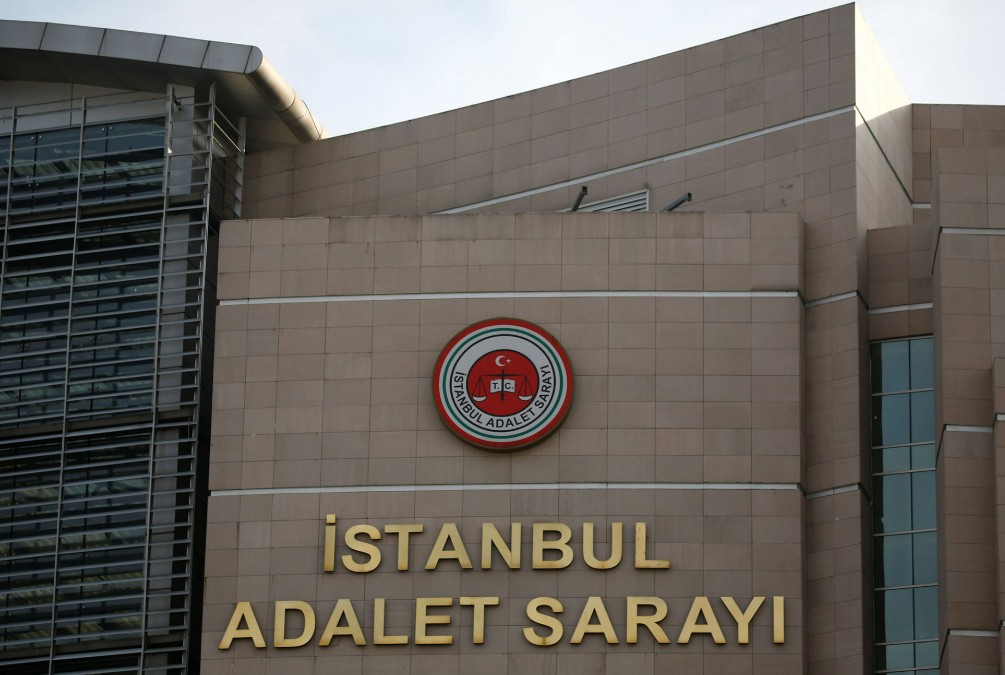
ANKARA (Realist English). The arrest decision was made after the Istanbul prosecutor’s office completed questioning of seven detainees. Four other suspects — Bulls Yatırım board chairman Kemal Akkaya, Ruzy Madencilik head Mehmed Nureddin Çevik, Lydia Holding head Enver Çevik and Ayhan Yazkan — were released under judicial supervision with a ban on leaving their homes.
Who is Yunus Arıncı
Yunus Arıncı headed Takasbank — Turkey’s central clearing and depository bank — since June 2024. Before that, for almost nine years, from 2015 to 2024, he served as chairman of the State Supervisory Council (DDK) — a key oversight body under the president.
It was his move from the supervisory agency to the leadership of the infrastructure organization providing settlements on the stock market that made him a central figure in the investigation. In early November, Arıncı testified to prosecutors and resigned, after which he was released under judicial supervision, but a week later his status changed to arrest.
Scale of the crisis: 131 funds and 455,000 investors
The investigation that led to Arıncı’s arrest began in September 2026, when several investment funds failed to meet investor redemption requests. The regulator — the Capital Markets Board (SPK) — decided to liquidate 131 funds managed by seven companies. The total number of affected investors exceeded 455,000, and assets under management were estimated at $18–21 billion.
According to investigators, from August 2026, funds affiliated with a number of companies artificially inflated prices of illiquid stocks through cross-trades, achieving growth of more than 3,000% in eight months. When the regulator limited concentration of such securities, the schemes collapsed, triggering a wave of redemption demands and subsequent liquidation of the funds.
Scandal goes beyond the financial market
The case has already affected not only financiers but also political figures. In early November, former Minister of Family and Social Policy, former deputy chair of the ruling Justice and Development Party Fatma Betül Sayan Kaya was arrested. According to investigators, she and her husband earned about 2.17 billion lira from selling shares immediately before the funds collapsed.
Kaya herself rejected the accusations, stating that she had not received insider information and had invested family savings. Justice Minister Akın Gürlek said the investigation had identified 214 individuals and legal entities that withdrew funds from the funds on the eve of the crisis, with alleged illegal profits of 187.6 billion lira.
The arrest of the former head of Takasbank is a qualitative shift in the investigation. If at the first stage the suspects were fund managers and businessmen, now the investigation has reached the top of the financial oversight infrastructure.
Arıncı headed the DDK — a body designed to control the state apparatus — and then found himself at the head of a structure providing clearing and settlements on the market that, according to investigators, was used for manipulation. For the Turkish authorities, this is both a demonstration of determination to punish those responsible and an admission that the crisis arose not only from market speculation but also from weakness or collusion of regulators.
The key question is whether the case will stop at individual suspects or lead to systemic reform of oversight institutions. While arrests continue and the number of detainees grows, the Turkish stock market and foreign investors will assess not only the scale of losses but also the state’s ability to restore trust in a system that must guarantee the safety of assets.