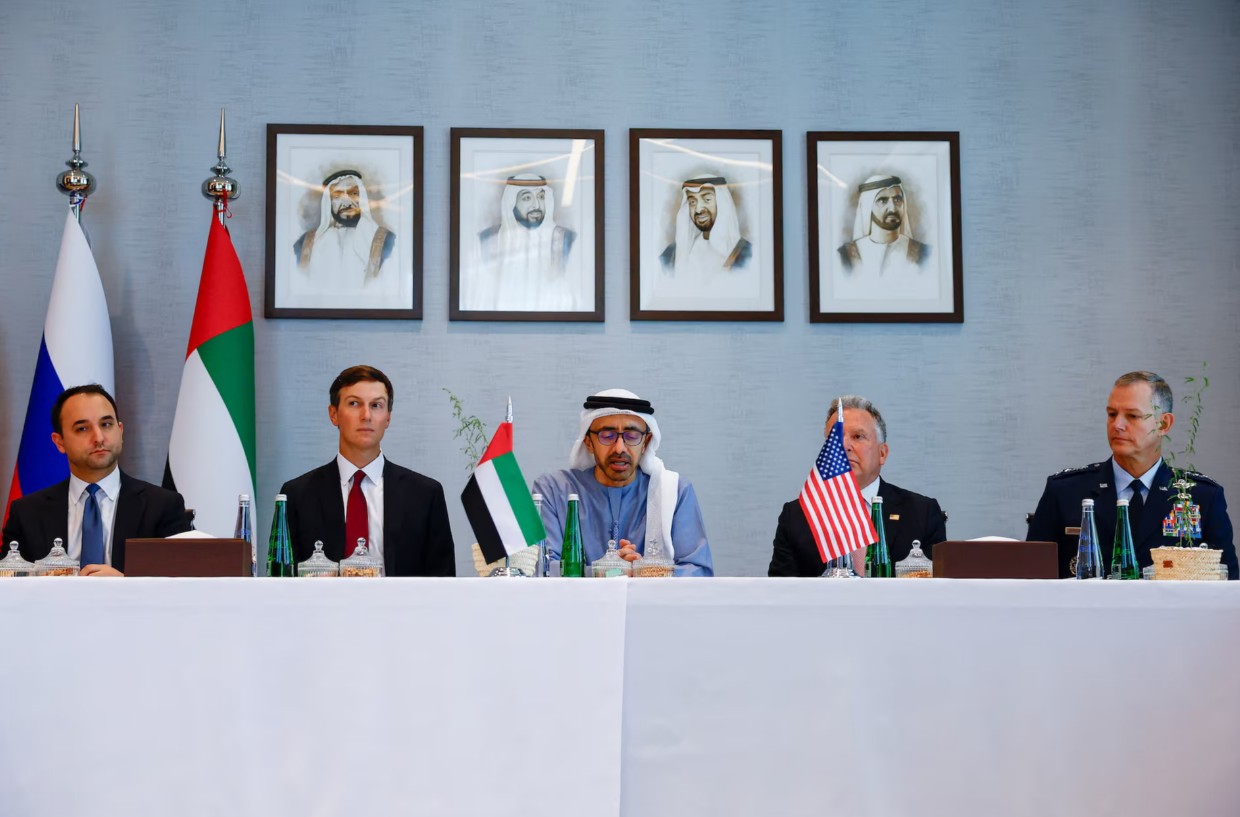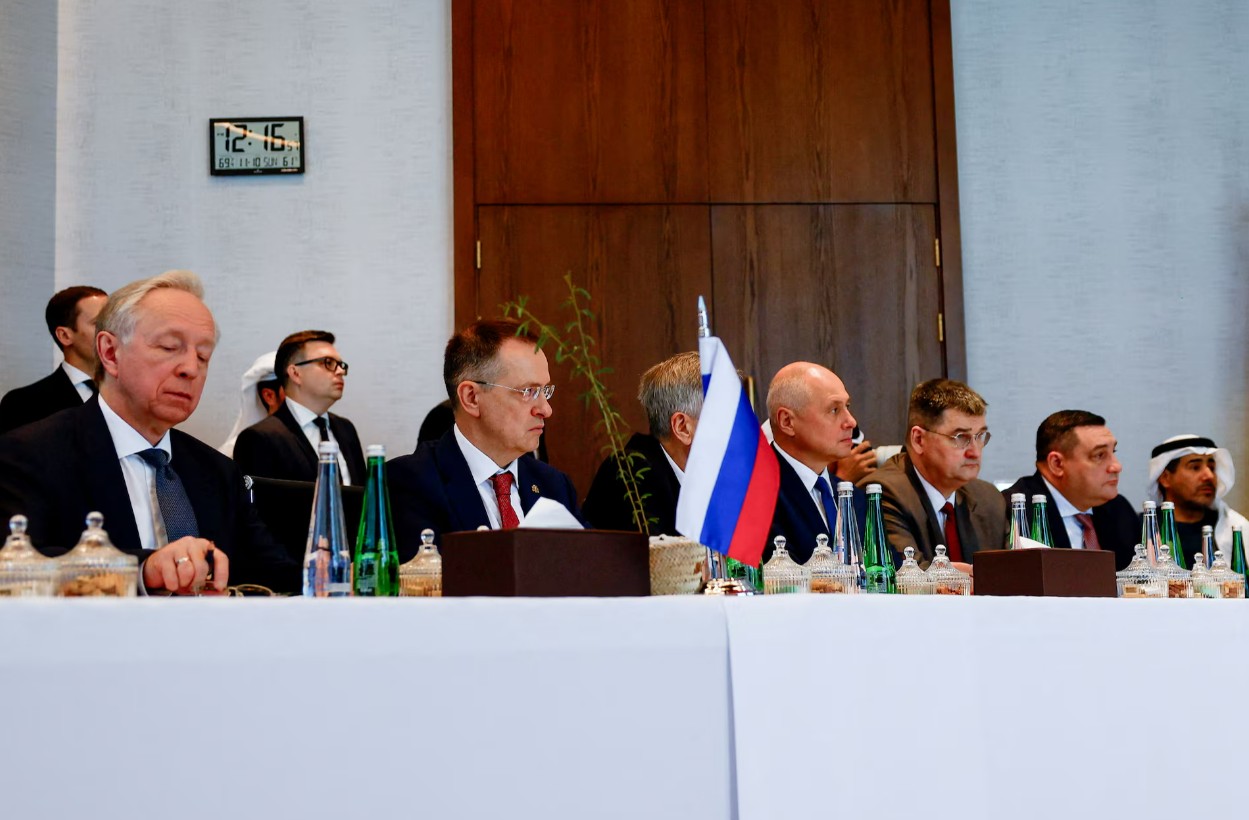
ABU DHABI (Realist English). The talks, which became the first trilateral contact since February 2026, are being held under the mediation of US special envoy Steve Witkoff and Donald Trump’s son-in-law Jared Kushner. The US delegation is also represented by Commander of US Forces in Europe General Alexis Grynkewich. The Russian delegation is headed by presidential aide Vladimir Medinsky, the Ukrainian delegation by head of the Foreign Intelligence Service Rustem Umerov.
Agenda: from humanitarian issues to territorial ones
According to sources, the talks program focuses on four key blocks: cessation of hostilities, security guarantees in the post-conflict period, restoration of Ukraine’s economy and humanitarian issues.
On the first day, the main focus was on mechanisms for monitoring a ceasefire and long-term security guarantees. Vladimir Zelensky confirmed that the talks discussed humanitarian issues, including a large-scale exchange of prisoners, the return of detained civilians and children taken from Ukraine.
According to the Ukrainian president, US officials plan to travel to Russia for further discussion of this issue.
Assessments by the parties: “constructive,” but without illusions
US Secretary of State Marco Rubio described the first day as “very productive” but urged patience: “There is still a lot of work ahead. This is not something that will be resolved in the next 24 hours.”
Jared Kushner, opening the meeting, said the goal of the talks is to “create a new structure and a new understanding, building on various institutions and agreements of the past” in order to ensure “decades, if not centuries, of peace.”
Zelensky, speaking in Copenhagen, called the talks “constructive and quite substantive” and noted that he sees “changes” in the approach of the American mediators: “I am very pleased with what I hear.” At the same time, he stressed the need for security guarantees for Ukraine.
Europe’s role: an apple of discord
One of the stumbling blocks at the talks was the question of Europe’s participation. The US insists on expanding the trilateral format to include European countries, and Rubio directly stated that Europe “is part of the solution to this problem.” However, Russia, according to sources, continues to object to the European approach to a ceasefire and security guarantees for Ukraine.
Before the talks began, the Ukrainian delegation held separate consultations with representatives of Europe, NATO and the European Union, as well as with US mediators.
In a joint statement, the parties confirmed “a common commitment to a strong post-war architecture of European security.” Zelensky also said that “the time has come” for Europe to choose its representative for the talks.
Diplomatic background
The second day of talks in Abu Dhabi confirms that the parties are ready for dialogue, although a number of issues remain difficult. Humanitarian topics — the exchange of prisoners, the return of children — appear to be the most realistic area for achieving concrete results. The territorial issue, which according to sources should be raised on the second day, remains the most difficult.
The key intrigue is linked to Europe’s role: Washington insists on its inclusion in the process, Moscow maintains its position, and Kyiv calls on Europe to decide on a single representative. Whether a formula for EU participation can be found may determine not only the fate of the current round but also the durability of any future agreement. For now, the talks are more supportive of the diplomatic channel than they are bringing a settlement closer.