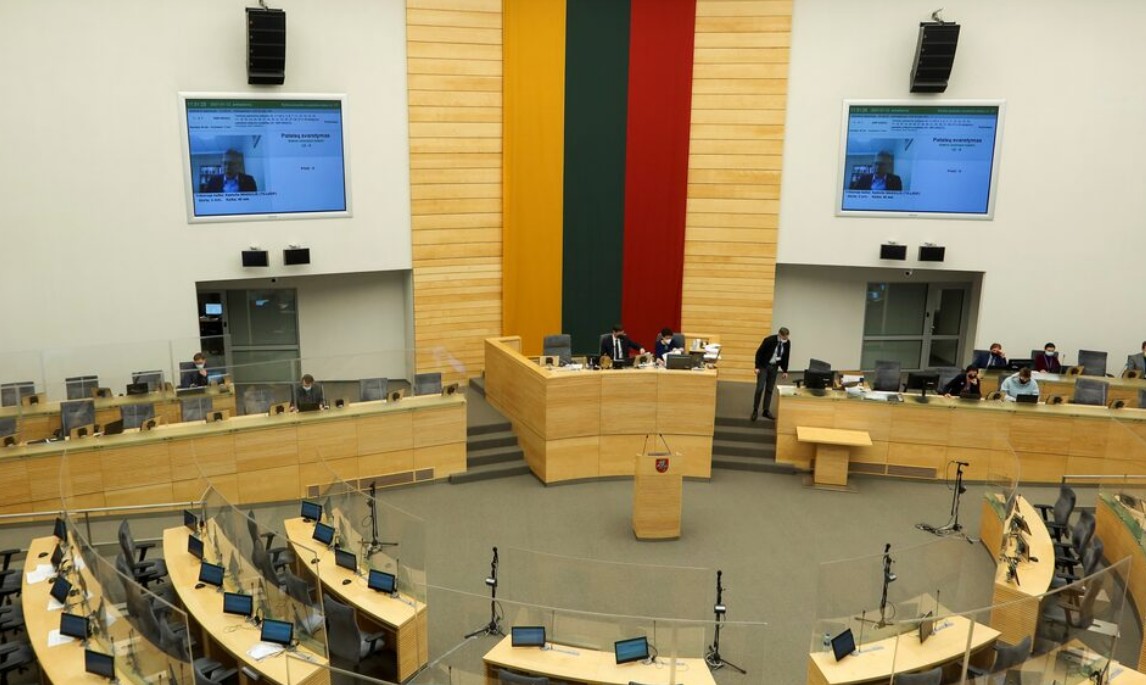
MOSCOW (Realist English). The Kremlin reacted sharply to the decision of the Seimas of Lithuania, which in the first reading adopted a constitutional amendment lifting the ban on the deployment of nuclear weapons and foreign military bases on the country’s territory. Moscow called this “a step toward escalation” and threatened retaliatory measures.
What the Seimas of Lithuania decided
On October 6, the Lithuanian parliament in the first reading supported an amendment to the Constitution repealing Article 137. This article prohibits the deployment of weapons of mass destruction and foreign military bases on Lithuanian territory. 106 deputies voted for the amendment, 18 against, and 6 abstained.
For final adoption, the amendment must pass three votes with an interval of at least three months. The final vote is scheduled for January 12, 2027. Amending the Constitution requires the support of at least 94 of the 141 deputies.
The Kremlin’s position
Russian Presidential Press Secretary Dmitry Peskov stated that Lithuania’s decision “cannot be perceived other than as a step toward escalating tensions.” According to him, the approach of NATO military infrastructure to Russian borders and the deployment of nuclear weapons in a neighboring state “will not contribute to stability and predictability in Europe.”
Peskov emphasized: “Russia will be forced to take all necessary measures to guarantee its own security.”
What stands behind Lithuania’s decision
Lithuanian authorities explain the amendment by the need to fully participate in NATO’s nuclear deterrence system. Seimas Speaker Jozas Olekas stated that Lithuania remains the only NATO country whose constitution enshrines such a ban.
Defense Minister Robertas Kaunas indicated that the country is “reacting to Russia’s aggression”: “If Russia had not started the war in Ukraine, we probably would not be having these discussions today.” He also confirmed that Lithuania is participating in discussions about a possible expansion of the US nuclear presence in Europe.
Warnings were voiced earlier
Back in September 2026, Peskov warned that if nuclear weapons aimed at Russia appeared on Lithuanian territory, then “the territory of that country will also be in the sights of our nuclear weapons.”
The amendment does not yet mean that nuclear weapons will be deployed in Lithuania immediately. It only removes a constitutional obstacle. The final decision will depend on negotiations with NATO allies and further developments in the security situation.