WASHINGTON (Realist English). Over the past weekend, US losses in the war with Iran reached 17 service members.
Three Americans were killed in two attacks — in Jordan and Iraq — within 48 hours.
The escalation, dubbed “Operation Furious Fire,” has plunged the Middle East into a state close to all-out war.
Two Deaths in Jordan, One in Iraq
The first attack occurred on July 17 in Jordan. Iran launched a massive barrage of ballistic missiles and drones at the Muwaffaq Salti air base in Zarqa. Two US service members were killed, and one went missing. Four other soldiers were evacuated to hospitals but were released after treatment.
On July 18, tragedy struck again in northern Iraq. During a controlled detonation of unexploded ordnance from a downed Iranian kamikaze drone, another US service member was killed, and a second received minor injuries.
US Central Command (CENTCOM) reported that the incident occurred “during a controlled detonation of unexploded ordnance from a downed Iranian kamikaze drone.”
The following day, CENTCOM announced the discovery of unidentified remains at the site of the attack in Jordan. According to sources, these are likely the body of the missing service member.
Total Losses: 17 Killed and Over 430 Wounded
Since the start of the war on February 28, 2026, US casualties include:
- 17 service members killed;
- more than 430 wounded.
Among the dead:
- 6 soldiers killed on March 1 in a strike on a command centre in Kuwait;
- 1 service member killed on March 8 in an attack on Prince Sultan Air Base in Saudi Arabia;
- 6 Air Force personnel killed on March 12 in the crash of a KC-135 tanker aircraft in Iraq;
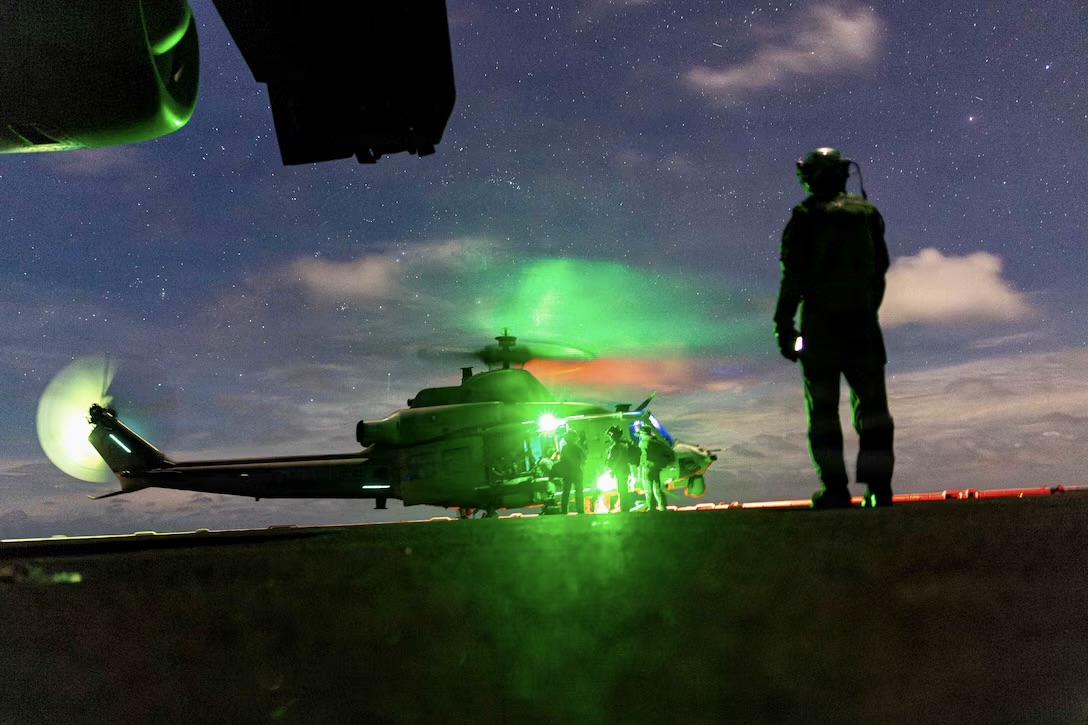
- a naval aviator killed in early July in a helicopter crash in the Arabian Sea.
In Iran, according to the country’s Health Ministry, at least 50 people have been killed and more than 500 wounded in US strikes over the past three weeks.
‘Punitive’ Strikes and the Eighth Night of Bombings
Washington responded to the military deaths with a new wave of airstrikes, marking the eighth consecutive night of bombing Iranian targets. Targets included coastal surveillance systems, air defence sites, and Islamic Revolutionary Guard Corps (IRGC) forces responsible for the attack in Jordan.
CENTCOM stated that the strikes were intended to “swiftly punish” Iran and “degrade Iran’s ability to threaten commercial shipping” in the Strait of Hormuz.
At the same time, the US is deploying additional F-16 fighter jets from Germany and F-35s from air bases in the UK to the region. The State Department issued a global warning to US citizens about the “potential for unintended escalation” in the Middle East.
Iran’s Response: Strikes on Allies and Threats of ‘Unforgettable Lessons’
Tehran responded in kind. On July 19, Iran carried out fresh strikes on US allies in the region:
- Kuwait — a power plant and desalination facility were hit for the second time in two days;
- Bahrain — Iranian drones were intercepted;
- Jordan — air defence forces shot down three Iranian missiles, with a fourth falling in an uninhabited area.
Jordan, in turn, summoned Iran’s chargé d’affaires in Amman, demanding an immediate halt to “unjustified and blatant Iranian attacks” and stating that the kingdom’s security is a “red line that cannot be crossed.”
Iran’s Supreme Leader, Ayatollah Mojtaba Khamenei, in a written statement, accused the US of “repeated violations” of the June agreement, saying that “the US president’s signature is absolutely worthless and devoid of any credibility.” He promised that Iran had “unforgettable lessons” in store for Washington.
Strategic Deadlock: Ceasefire Shattered, Diplomacy Fails
The June ceasefire between Washington and Tehran has effectively collapsed. Trump declared it “over” on July 8.
As The New York Times notes, the deaths of US service members “compound Trump’s dilemma” in a war he launched together with Israel more than four months ago. Despite repeated promises that the campaign would be “short and successful,” it has turned into a protracted conflict that is roiling global energy markets.
The US‑Iran conflict is rapidly expanding. As US Defence Secretary Pete Hegseth stated, the casualties “only strengthen our resolve.” However, analysts warn that the escalating cycle of strikes and counter‑strikes threatens to spiral into full‑scale regional war.
Iran continues to maintain control over the Strait of Hormuz and demonstrates a willingness to expand the geography of its attacks on US allies across the region.