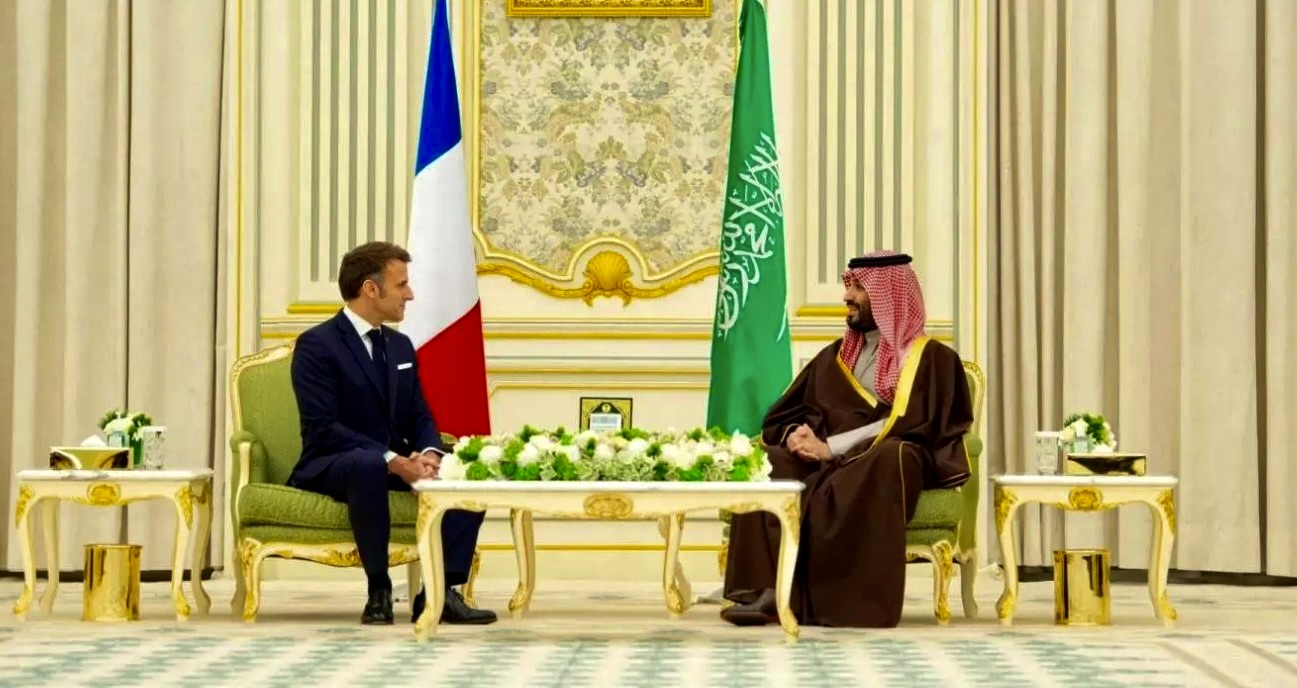
PARIS (Realist English). On 23 August, French President Emmanuel Macron is hosting Saudi Crown Prince Mohammed bin Salman in Paris. The two‑day visit of the Saudi leader, which begins with the closing ceremony of the Esports World Cup, includes high‑level talks.
The main topic is the search for alternative transport routes for energy supplies amid the de facto blockade of the Strait of Hormuz by Iran.
Visit programme: from esports to the Strategic Council
The Saudi Crown Prince arrived in Paris on 23 August at Macron’s invitation. The visit will last two days – 23 and 24 August.
The official programme opens on Sunday evening: Macron will invite the Saudi prince to the closing ceremony of the Esports World Cup in Paris. This is a symbolic gesture – the tournament, which bin Salman actively supports, is being held outside Saudi Arabia for the first time.
The main talks are scheduled for Monday, 24 August. On that day, the leaders will hold the first meeting of the France‑Saudi Arabia Strategic Partnership Council. The talks will cover “key economic and strategic issues structuring the Franco‑Saudi partnership,” including energy, aviation and defence.
Main topic: alternatives to the Strait of Hormuz
The central item on the agenda will be the situation around the Strait of Hormuz, which has been effectively closed to commercial shipping since the start of the US‑Israeli war against Iran on 28 February.
According to Bloomberg, the sides will discuss the diversification of transport routes for energy supplies and logistics. Options under discussion include:
- alternative maritime routes, including developing trade through Omani ports outside the Gulf;
- expanding or duplicating capacity of the pipeline network in Saudi Arabia and other countries;
- building new railway lines in the region.
As Bloomberg notes, the leaders will focus on diversifying energy supply routes due to shipping disruptions through the Strait of Hormuz. On Monday, a ministerial meeting on energy supply will also take place amid the ongoing war and the closure of the strait.
War and blockade
The talks come amid a sharp escalation around the Strait of Hormuz. US President Donald Trump on 23 August again posted a map on Truth Social designating the strait as “new US territory.” Earlier, he declared that he considers the strait “US territory.”
In response, Iran’s Supreme National Security Council Secretary Mohsen Rezaei warned that any state joining US sanctions against Tehran would be considered an enemy. Iran is also threatening to cut off all oil exports from the Persian Gulf if its neighbours support the US sanctions campaign.
| Side | Position on the Strait of Hormuz |
| US (Trump) | The strait is “new US territory”; the US has “full control” |
| Iran (Rezaei) | The strait is closed and will remain closed until the US “corrects its behaviour” |
| France and Saudi Arabia | Seeking alternative routes to bypass the blockade |
Bilateral agreements and economic cooperation
Beyond geopolitics, the second day of the visit will see the signing of “numerous agreements.” According to French officials, these are contracts in the fields of:
- healthcare;
- transport;
- energy.
As Franceinfo notes, the visit marks a turning point in relations between Paris and Riyadh. Eight years after the murder of journalist Jamal Khashoggi and the subsequent international isolation of bin Salman, the Saudi prince is once again a full partner of France.
The presidential administration calls this an “ambitious rapprochement” and “coordination with partners in the Gulf for stability and peace in the Middle East.”
Diplomatic manoeuvring amid conflict
For France, bin Salman’s visit is an opportunity to strengthen its position in the Middle East, cementing its role as a key European partner for Saudi Arabia at a time when the US under Trump is pursuing an unpredictable policy in the region. Paris is seeking to distance itself from Washington and offer an alternative pole of influence.
For Saudi Arabia, the talks with Paris are a way to diversify transport routes for its energy resources at a time when the Strait of Hormuz remains closed and Trump is threatening to declare it “US territory.” Riyadh is also looking for ways to reduce its dependence on US military support.
However, questions remain. Can Paris and Riyadh find practical solutions to bypass the Strait of Hormuz, or will their dialogue remain declaratory amid the escalating US‑Iran confrontation that continues to grow by the day?
Furthermore, bin Salman, who has previously been the subject of Western criticism, risks being accused of using European platforms to legitimise his regime. The coming days will show whether this visit marks a genuine strategic reset or simply another chapter in the complex dance between Gulf powers and European capitals.