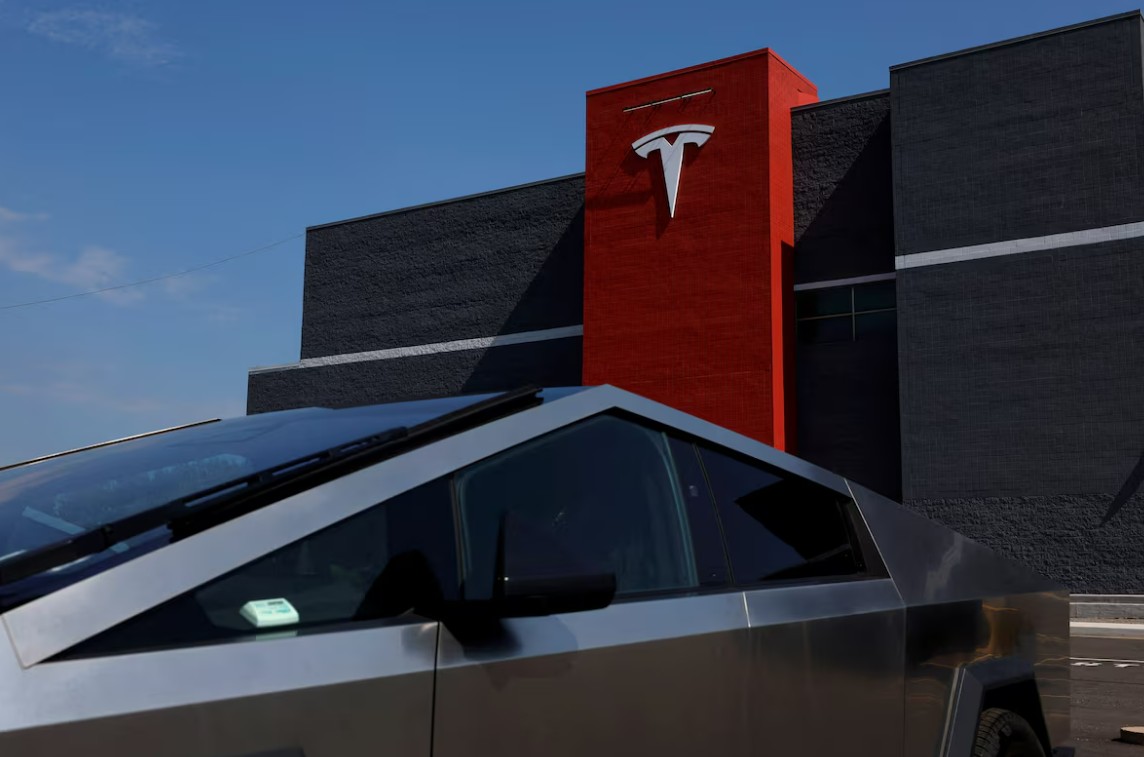
AUSTIN (Realist English). “The rate of orders for Cybertruck significantly exceeds our production rate,” Musk wrote on social media X on 9 November. “We will try to build as many vehicles as possible before halting the line in about eight months, but many will have their deposits refunded.” The statement followed the 6 November announcement that Tesla is winding down Cybertruck production at Gigafactory Texas by mid-2027, freeing capacity to ramp up output of the Cybercab robotaxi.
From ambition to line shutdown
Cybertruck debuted in November 2019, with customer deliveries beginning in November 2023. Musk initially forecast annual sales of 250,000 vehicles, but actual figures proved far more modest.
According to Kelley Blue Book, US sales in 2025 totaled 20,237 units — a 48% drop from 38,965 units in 2024. In January–September 2026, about 11,586 vehicles were sold, 28% less than in the same period last year.
Despite weak demand, Musk insists the decision to halt production is driven not by the model’s unprofitability but by the opportunity to reallocate resources to Cybercab. “This is not a case of Cybertruck unprofitability, as legacy media incorrectly reported, but a situation where the opportunity cost of Cybertruck’s complexity is significantly outweighed by the value of additional Cybercab output,” he said.
Additional shift and the fate of deposits
In the week of 2–8 November, Musk said Tesla would add an additional production shift to fulfill as many remaining orders as possible before dismantling the line.
The shutdown is scheduled for around mid-2027, after which freed-up capacity and engineering resources will be redirected to Cybercab — a two-seat autonomous electric vehicle without a steering wheel or pedals, unveiled in October 2024 and central to Tesla’s strategy to build a robotaxi network.
Exactly how many orders remain unfulfilled is not disclosed. At the same time, the company appears to continue accepting new orders on its website despite the announced production halt. This creates uncertainty for customers: placing a deposit no longer guarantees receiving a vehicle, since some orders will be closed by refunds.
Community reaction and strategic pivot
The decision to end Cybertruck production drew a mixed reaction. On 7–8 November, supporters of the model launched a campaign on X urging Musk to keep the pickup, but the entrepreneur responded that Tesla engineers “can only do a limited number of things” and that Cybercab matters more for the company’s future. “If we have to maintain a complex production line, supply chain and dedicate engineers to Cybertruck, we won’t be able to use those people, factory space and equipment to scale Cybercab — a vehicle that will radically transform the world of ground transport,” he wrote.
The cancellation of Cybertruck is not Tesla’s first step away from its traditional model lineup. Earlier this year, the company discontinued Model S and Model X, freeing space for production of the Optimus humanoid robot. Thus, Cybertruck becomes another casualty of the strategic pivot toward autonomous platforms and robotics.
Refunding deposits amid formally “exceeding production” demand looks paradoxical but reflects Tesla’s real dilemma: the company finds itself between the need to meet obligations to customers and a tight schedule for reorienting capacity toward Cybercab.
Shutting the line in eight months makes it impossible to satisfy all orders, and refunds are not an admission of the model’s failure but a consequence of prioritizing the robotaxi. However, for consumers this means a Tesla deposit ceases to be a guarantee of delivery and turns into an option the company can close unilaterally. The key question is whether Cybercab can live up to Musk’s expectations, or whether Tesla is repeating the Cybertruck scenario: a loud announcement, a long road to market and sales that fail to meet initial forecasts.