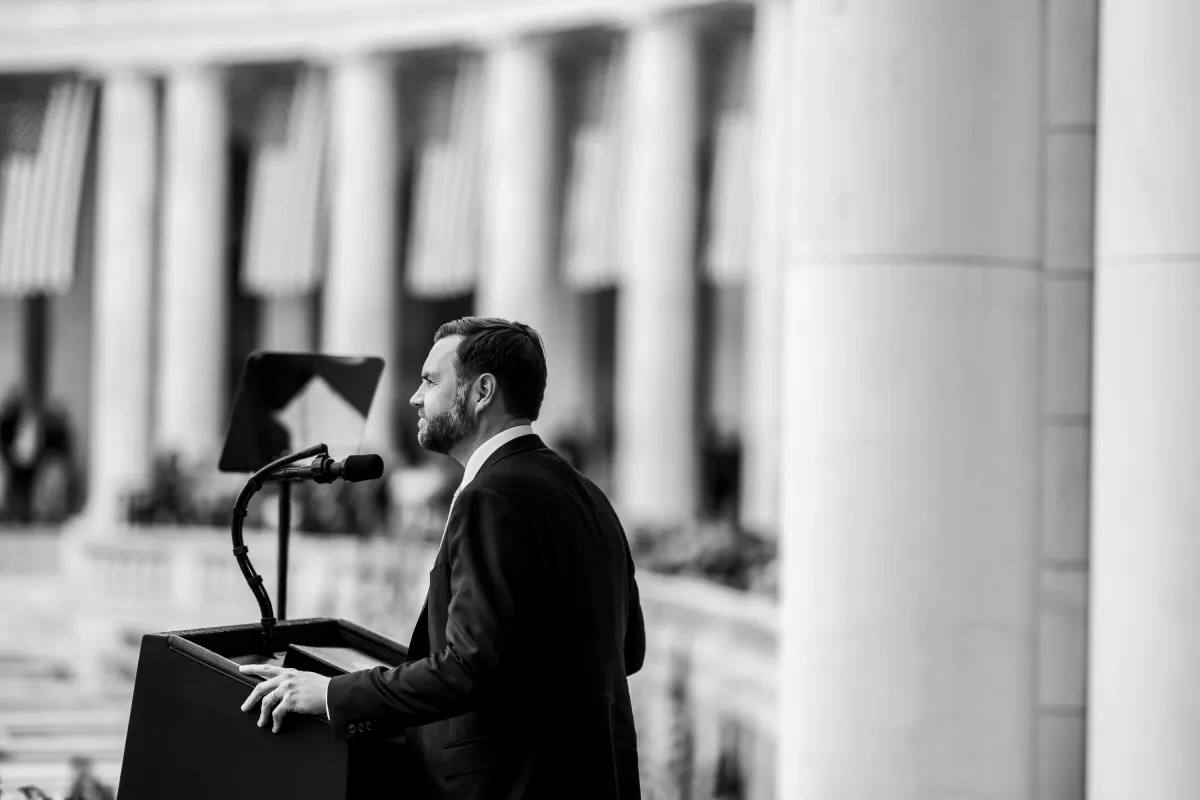
WASHINGTON (Realist English). On September 3, Vice‑President JD Vance held a White House briefing — his first since press secretary Karoline Leavitt’s resignation in August.
During his exchange with reporters, he made two statements that left observers baffled: he refused to call the seven‑month‑old conflict with Iran a “war” and could not say when it would end.
“I wouldn’t call it a war. Right now, there are no active hostilities,” Vance stated. While acknowledging that “there were places where the situation escalated,” he insisted that active combat operations lasted only six weeks after the start of US‑Israeli strikes on February 28.
Three Days of Escalation — and “No Active Shooting”
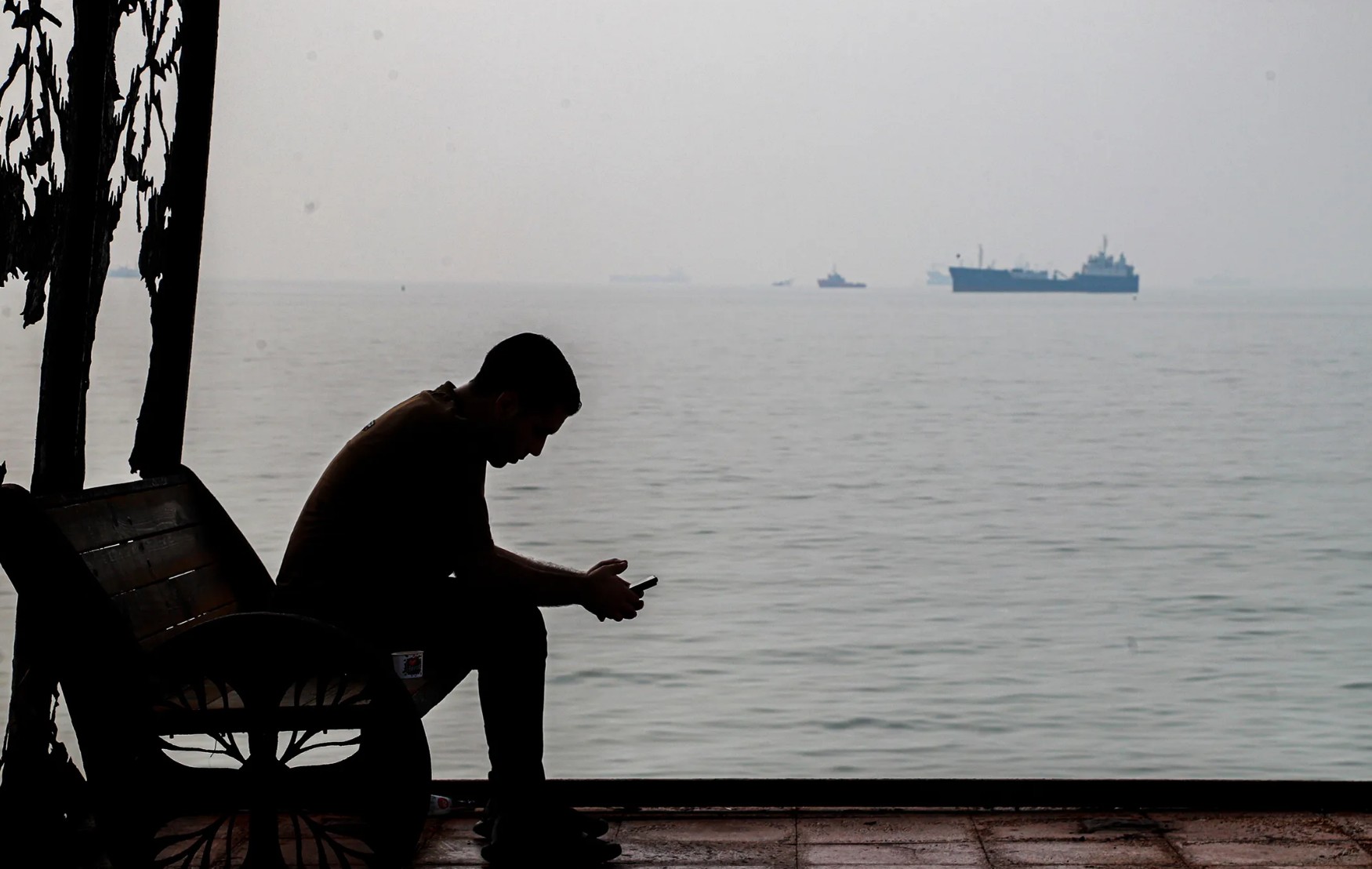
Vance’s remarks came amid three consecutive days of strikes exchanged between the US and Iran. On September 1, US forces conducted the largest operation in the Strait of Hormuz since the start of the war: escorting 40 commercial vessels carrying 18 million barrels of oil while simultaneously striking nearly 60 Iranian military targets. Iran responded with strikes on US bases in Kuwait and the UAE.
The Pentagon updated its casualty figures: since the conflict began, 18 US service members have been killed and 790 wounded. In Iran and Lebanon, thousands are estimated to have died.
| Indicator | Figure |
| US service members killed | 18 |
| US service members wounded | 790 |
| US troops in the Middle East | over 50,000 |
| US warships in the region | nearly 20 |
Source: CNN, ABC News, AP
“Artificial Timeline” and “Unfinished Business”
Asked whether the conflict would end before the November 3 midterm elections, Vance was evasive: “We are not going to set an artificial timeline.” He shifted responsibility to Tehran: “When will the Iranians stop shooting at ships? I don’t know the answer to that question. You’ll have to ask the Iranians.”
Vance also ruled out negotiations with Tehran as long as Iran continues attacking commercial vessels. “The president has been very clear: we are not talking to them and we are not going to talk to them until they stop shooting at ships,” he said.
“Mission Accomplished” and “Semantic Politics”
Vance’s remarks are part of a broader effort by the Trump administration to frame the conflict as over, or at least as not requiring urgent attention. According to The Wall Street Journal, Trump is discussing with advisers the possibility of declaring the Iran war finished. Last week, he posted a photo with a “Mission Accomplished” banner.
However, experts point to the disconnect between rhetoric and reality. Washington Post global security analyst Josh Rogin called Vance’s position “heartless” and accused him of “playing semantics” to avoid accountability under the War Powers Act.
Vance, who initially opposed war with Iran and played a leading role in attempts to reach a diplomatic agreement over the summer, is now forced to defend a protracted conflict that is undermining Trump’s approval ratings and threatening Republican control of Congress.
Investigating the Wedding Strike
Vance also commented on Iranian media reports that US strikes hit a wedding ceremony in Hormozgan province, killing five people. The vice‑president said the US is “investigating” the incident but expressed scepticism about Iranian reports.
“We never target civilians, we never have and we never will,” he said, adding: “Unfortunately, things happen sometimes.”
A War That Cannot Be Named
Vance’s September 3 briefing vividly illustrated the paradox in which the Trump administration now finds itself. On one hand, the vice‑president denies that what is happening is a “war,” insisting there are “no active hostilities.” On the other, the US continues to strike Iranian targets, suffers casualties, and cannot offer a coherent exit strategy.
Open questions remain. If this is not a war, how should the deaths of 18 US service members and the ongoing exchange of strikes be classified? If there are “no active hostilities,” why are more than 50,000 US troops and 20 warships deployed in the region? And most importantly — how much longer will this “non‑war” last, which the administration can neither end nor name?
For now, Vance shifts responsibility to Tehran while Trump tries on a “Mission Accomplished” banner. But as the September 3 briefing showed, the administration has no answer to the simplest question of all: when will it end?